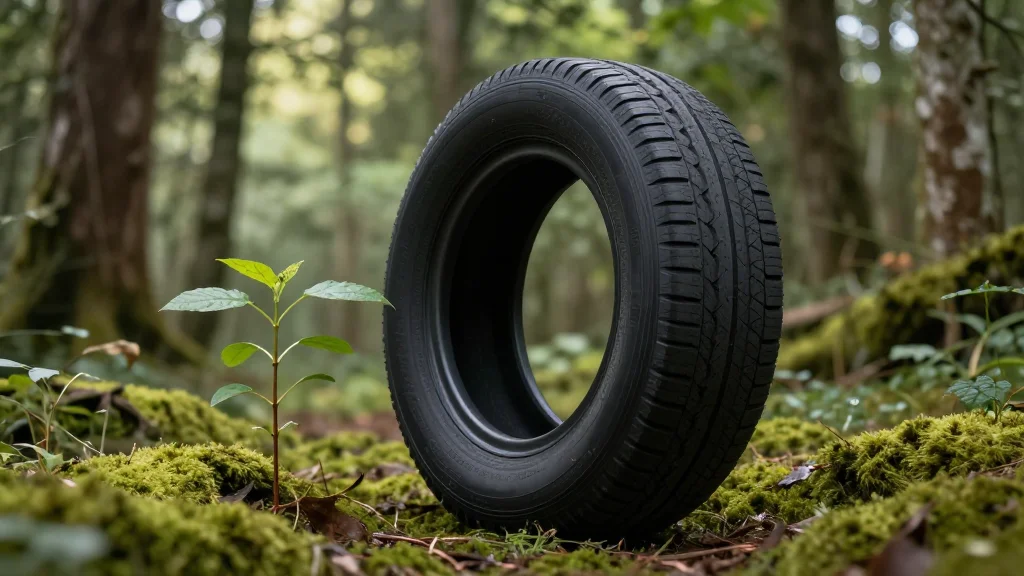
Tire Makers Brace for EU Deforestation Rules as Delays Fuel Frustration

Companies Mentioned
Why It Matters
The EUDR represents the EU’s most ambitious attempt to link commodity trade to forest protection, and its reach into the tire sector could set a precedent for other high‑volume raw‑material industries such as palm oil and soy. By forcing traceability, the regulation pushes the entire natural‑rubber value chain toward satellite‑enabled monitoring, potentially reducing illegal deforestation and improving livelihoods for smallholders who can certify sustainable practices. For manufacturers, compliance is not just a legal hurdle but a market differentiator; early adopters like Michelin and Continental can leverage their green credentials to win contracts in environmentally conscious markets. Moreover, the regulation’s delayed timeline underscores a broader tension between policy ambition and industry readiness. While the EU aims to protect forests, repeated postponements risk diluting the rule’s impact and may encourage a race‑to‑the‑bottom among firms that choose to wait. The outcome will influence how aggressively other regions adopt similar deforestation‑linked trade rules, shaping global supply‑chain standards for years to come.
Key Takeaways
- •Tire makers consume 70% of natural rubber and must prove deforestation‑free sourcing by Dec. 30, 2026.
- •GPSNR members now cover 60% of the rubber supply chain, including most top‑30 tire manufacturers.
- •Six million smallholders produce 85% of global rubber, creating complex traceability challenges.
- •Michelin mapped ~2 million land plots using tools like RubberWay to meet EUDR requirements.
- •Delays have angered European manufacturers, with Tyres Europe’s Marta Conti calling them a ‘headache.’
Pulse Analysis
The EU’s Deforestation Regulation is reshaping the economics of natural‑rubber production more than any technical innovation in the past decade. Historically, the rubber industry has relied on low‑cost, low‑visibility supply chains that insulated manufacturers from the environmental impact of upstream land use. By mandating proof of compliance, the EU is effectively internalizing a previously external cost, forcing firms to invest in satellite mapping, data platforms, and third‑party verification. Early adopters such as Michelin have turned this cost into a branding advantage, positioning themselves as leaders in sustainable mobility—a narrative that resonates with both regulators and eco‑conscious consumers.
However, the regulation also exposes a structural vulnerability: the fragmented nature of smallholder production. While large firms can afford sophisticated geolocation tools, the 6 million independent growers lack the capital and technical expertise to meet stringent traceability standards without external support. This creates a potential bottleneck where compliance could be achieved on paper but not in practice, unless NGOs, governments, or industry consortia step in with financing and capacity‑building programs. The GPSNR’s role as a convenor will be critical; its ability to standardize data collection across disparate regions could determine whether the EUDR drives real deforestation reductions or merely reshuffles compliance paperwork.
Looking forward, the EUDR may serve as a template for other commodity‑linked regulations, especially as the EU expands its green trade agenda. If the tire sector can demonstrate measurable forest‑preservation outcomes, it will provide a proof‑point for policymakers seeking to replicate the model in sectors like palm oil, cocoa, and beef. Conversely, if the delays erode industry momentum, the EU could face a credibility gap that weakens future climate‑policy ambitions. The next six months—culminating in the EU’s final compliance guidelines—will be a litmus test for the regulation’s durability and its capacity to transform global supply‑chain governance.
Tire Makers Brace for EU Deforestation Rules as Delays Fuel Frustration
Comments
Want to join the conversation?
Loading comments...