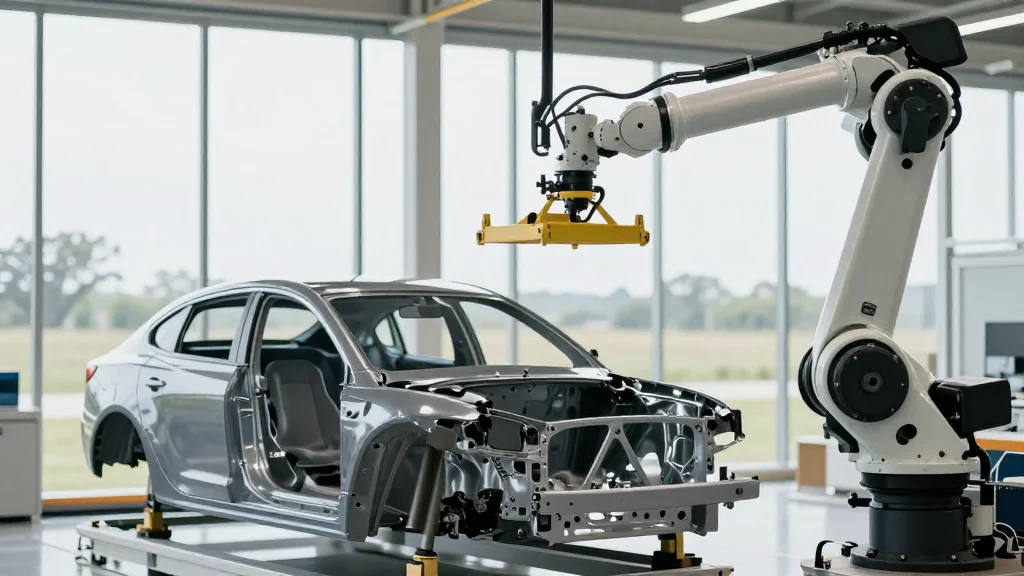
Toyota Files $2 B Texas Plant Filing, Targeting 2,000 Jobs by 2030

Companies Mentioned
Why It Matters
Toyota’s Texas filing underscores a broader shift among global automakers toward reshoring production in response to trade barriers and supply‑chain volatility. By committing $2 billion to a new assembly line, Toyota not only creates thousands of well‑paid manufacturing jobs but also strengthens the U.S. auto supply chain, reducing reliance on cross‑border parts flows that have been strained by geopolitical tensions. The project also serves as a bellwether for how legacy manufacturers will balance traditional truck and SUV demand with the emerging need for hybrid and electric models, influencing investment decisions across the sector. The move could intensify competition for skilled labor and industrial real estate in Texas, prompting other manufacturers to accelerate their own domestic expansion plans. If the plant incorporates advanced automation, it may set a new benchmark for flexible, low‑emission vehicle production, pressuring rivals to upgrade their own facilities to stay competitive.
Key Takeaways
- •Toyota filed a $2 billion Texas plant application with the Texas Comptroller
- •Project Orca aims to create ~2,000 jobs, with production slated for 2030
- •Investment splits: $1.05 billion for buildings, $950 million for machinery
- •Construction expected to start by end‑2026; completion targeted for 2029
- •The expansion aligns with Toyota’s broader $10 billion North‑American investment amid U.S. tariff pressures
Pulse Analysis
Toyota’s Texas filing is more than a regional expansion; it is a strategic hedge against an increasingly protectionist trade environment. By anchoring a new line in San Antonio, Toyota reduces its exposure to the 15 percent tariffs that have made Japanese‑origin vehicles less price‑competitive in the United States. The timing also dovetails with the company’s broader $10 billion North‑American commitment, suggesting a coordinated effort to lock in supply‑chain stability and capture market share in the lucrative pickup and SUV segments.
From a competitive standpoint, the move puts pressure on rivals that have been slower to invest in domestic capacity. Ford’s recent supplier‑quality crackdown and Nissan’s mixed signals on U.S. production highlight a landscape where scale and local sourcing are becoming decisive factors. Toyota’s willingness to pour $2 billion into a facility that can accommodate both conventional and electrified powertrains signals an intent to future‑proof its U.S. operations, potentially outpacing competitors still wrestling with the transition to electric vehicles.
Looking ahead, the success of Project Orca will hinge on three variables: the stability of U.S. tariff policy, the speed at which Toyota can integrate advanced automation, and the ability to attract a skilled workforce in a competitive labor market. If these align, the Texas plant could become a template for other OEMs seeking to balance cost, resilience and flexibility in a post‑pandemic, geopolitically tense world. Conversely, any shift in trade policy or delays in technology rollout could erode the projected economic benefits, making the project a litmus test for the viability of large‑scale domestic auto manufacturing in the coming decade.
Toyota files $2 B Texas plant filing, targeting 2,000 jobs by 2030
Comments
Want to join the conversation?
Loading comments...