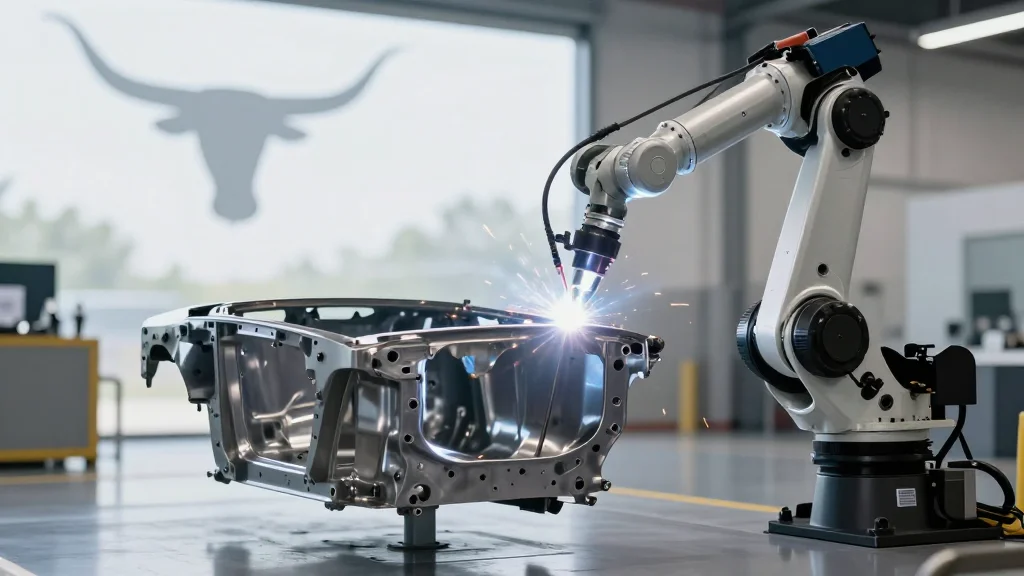
Toyota Seeks $2 B Texas Plant Approval, Pledges 2,000 Jobs by 2030

Companies Mentioned

Why It Matters
Toyota’s Texas expansion illustrates how major automakers are reconfiguring global supply chains in response to trade policy uncertainty and rising demand for larger, higher‑margin vehicles. By investing $2 billion in a new assembly line, Toyota not only secures a domestic production base that can sidestep tariffs but also creates a sizable labor pipeline in a region eager for high‑skill manufacturing jobs. The project underscores the accelerating reshoring of auto manufacturing, a trend that could reshape regional economies, influence component supplier locations, and accelerate the rollout of hybrid and electric models in the United States. If the plant proceeds as planned, it will add a significant production capacity that could shift the competitive balance among U.S. automakers. Toyota’s ability to produce trucks and potentially electric pickups domestically may pressure rivals to accelerate their own U.S. investments, intensifying competition for labor, land, and state incentives. The initiative also provides a testbed for advanced automation and low‑emission technologies, potentially setting new standards for future U.S. auto plants.
Key Takeaways
- •Toyota filed a $2 billion investment request for a new assembly line in San Antonio, Texas.
- •Construction is slated to begin by the end of 2026, with production targeted for 2030.
- •The project, dubbed Project Orca, will create roughly 2,000 jobs between 2028‑2030.
- •Investment splits into $1.05 billion for buildings/property and $950 million for machinery and equipment.
- •The expansion aligns with Toyota’s broader $10 billion North‑American investment plan and aims to mitigate U.S. tariff exposure.
Pulse Analysis
Toyota’s Texas filing is a textbook case of strategic capital allocation under policy uncertainty. By anchoring a $2 billion plant in a low‑tax, logistics‑rich state, Toyota hedges against the 15 percent tariff regime that has rattled Japanese exporters since 2024. The timing also dovetails with the automaker’s broader North‑American push, which includes a $912 million hybrid‑component drive across five states. This dual‑track approach—expanding conventional truck capacity while laying groundwork for electrified models—reflects Toyota’s pragmatic balance between immediate market demand (large trucks remain the most profitable segment) and long‑term regulatory pressure to decarbonize.
From a competitive standpoint, the project could force rivals to accelerate their own reshoring initiatives. Ford, for example, is already tightening supplier contracts to curb costs, while Nissan has hinted at a similar U.S. expansion. The race for skilled labor in Texas may intensify, prompting state and local governments to compete on incentive packages. Moreover, the plant’s advanced automation focus may set a new benchmark for productivity, potentially widening the gap between manufacturers that can integrate Industry 4.0 technologies and those that cannot.
Looking ahead, the key uncertainties revolve around the vehicle mix and the speed of electrification. If Toyota earmarks the line for hybrid or electric pickups, it could accelerate EV adoption in the U.S. light‑truck market, a segment that has lagged behind passenger‑car electrification. Conversely, a focus on internal‑combustion trucks would reinforce the status quo, delaying broader EV penetration. Stakeholders should monitor the Texas approval process, any disclosed tax incentives, and subsequent announcements about the model lineup, as these will shape the plant’s impact on supply chains, labor markets, and the competitive dynamics of North‑American automotive manufacturing.
Toyota seeks $2 B Texas plant approval, pledges 2,000 jobs by 2030
Comments
Want to join the conversation?
Loading comments...