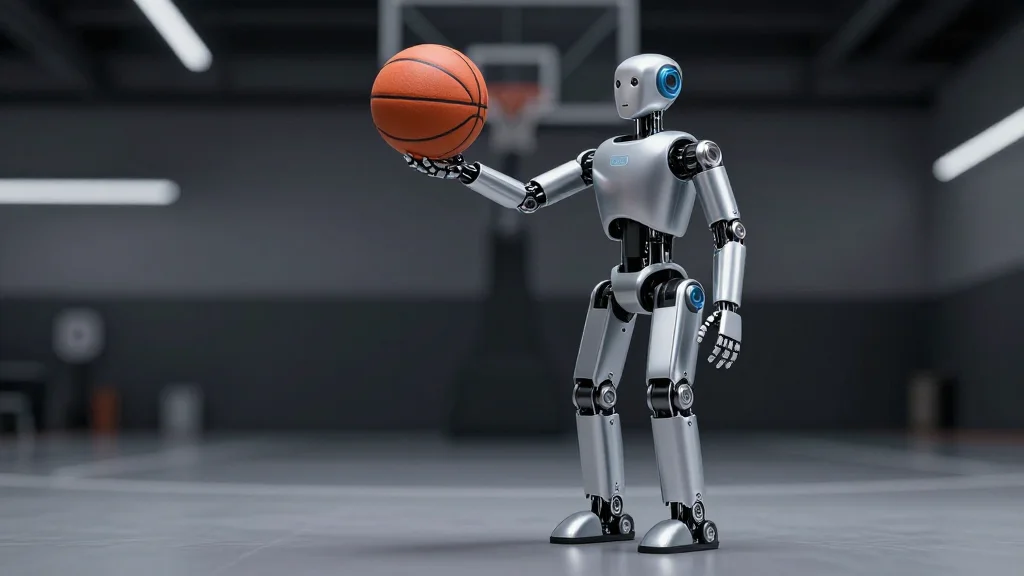
Toyota's CUE7 Humanoid Robot Scores AI-Powered Free Throw at Tokyo Arena

Companies Mentioned
Why It Matters
The CUE7 robot illustrates how AI‑driven learning can overcome the rigidity of traditional industrial robots, opening pathways for rapid re‑tooling and customization in manufacturing. If Toyota succeeds in deploying such humanoids on the factory floor, it could reduce downtime associated with programming new tasks, lower engineering costs, and accelerate product‑to‑market cycles. Moreover, the public spectacle underscores a broader trend of automotive manufacturers leveraging their engineering expertise to enter the robotics market, intensifying competition with dedicated robot makers. This convergence may spur faster innovation, drive down hardware costs, and expand the range of applications for collaborative robots across sectors ranging from automotive assembly to consumer goods packaging.
Key Takeaways
- •Toyota's CUE7 robot performed an autonomous free‑throw before 8,400 fans at Toyota Arena Tokyo.
- •CUE7 uses reinforcement‑learning AI, a shift from the model‑predictive‑control used in earlier CUE models.
- •The robot stands 7 ft 2 in tall, weighs 163 lb—about 40% lighter than its predecessor—and runs on racing‑derived batteries.
- •CUE7 combines lidar, stereo cameras, and AI to calculate trajectory and adjust in real time.
- •Toyota aims to field a factory‑assist prototype of CUE7 by 2027, signaling a push into AI‑enabled industrial robotics.
Pulse Analysis
Toyota’s decision to showcase CUE7 in a public, high‑energy setting reflects a strategic narrative: robotics is no longer a back‑room research curiosity but a marketable capability that can differentiate the automaker in a crowded mobility landscape. By leveraging reinforcement learning, Toyota sidesteps the costly, time‑intensive process of manually coding each new motion, a bottleneck that has historically limited the flexibility of industrial robots. This technology could enable a new class of ‘learning cobots’ that adapt on the fly, a proposition that would be especially valuable for manufacturers facing volatile demand and short product cycles.
Historically, Toyota’s robotics efforts have been incremental, focused on safety and precision in assembly lines. The CUE7 represents a leap toward autonomy that aligns with broader industry moves toward AI‑driven manufacturing, as seen in the rapid adoption of vision systems and predictive maintenance tools. However, the transition from a controlled demonstration to a production environment will test the robustness of the learning algorithms under real‑world constraints such as variable lighting, unexpected human interaction, and strict safety regulations. Success could force traditional robot vendors to accelerate their own AI roadmaps, potentially reshaping the supplier ecosystem.
Looking ahead, the key question is scalability. If Toyota can mass‑produce a cost‑effective version of CUE7 that integrates seamlessly with existing factory infrastructure, it could unlock new revenue streams beyond vehicle sales and position the company as a pivotal player in the next wave of Industry 4.0. Conversely, failure to address integration challenges or to demonstrate clear ROI may relegate CUE7 to a showcase rather than a commercial breakthrough. The next year of trials and partner pilots will be decisive in determining whether this AI‑powered humanoid becomes a cornerstone of modern manufacturing or remains a technological curiosity.
Toyota's CUE7 Humanoid Robot Scores AI-Powered Free Throw at Tokyo Arena
Comments
Want to join the conversation?
Loading comments...