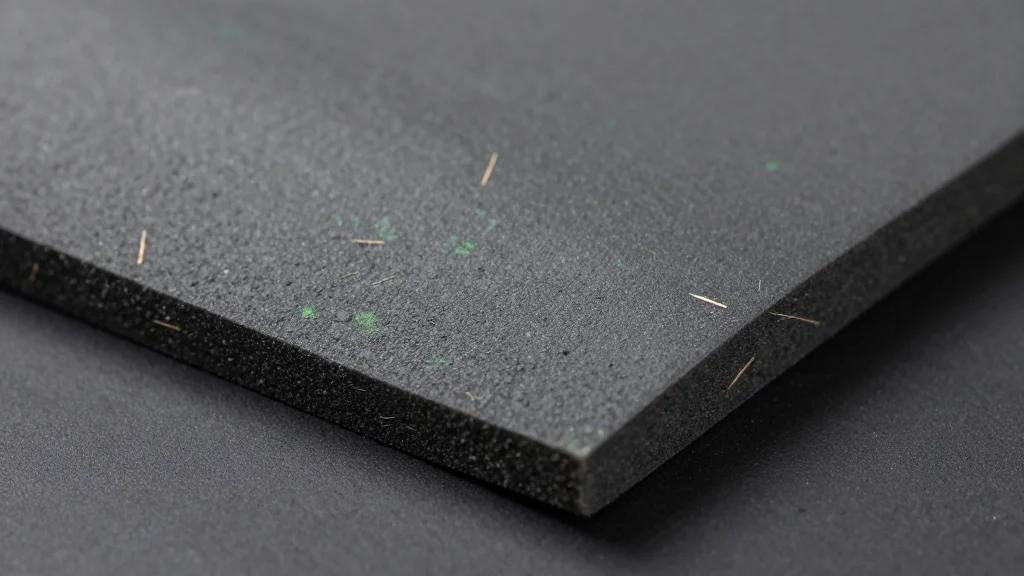
Trelleborg Launches Reduced Carbon Footprint EPDMs
Why It Matters
The launch gives manufacturers a low‑carbon alternative that can slash the embodied emissions of sealed components without sacrificing durability, accelerating industry‑wide decarbonisation goals. It also positions Trelleborg as a leader in circular‑economy polymers, potentially reshaping procurement standards across multiple heavy‑industry markets.
Key Takeaways
- •EPDM grades cut carbon footprint up to 61%
- •Made from cooking oil, straw, forestry residue, tall oil
- •Maintains performance for O‑rings, gaskets, automotive seals
- •Combines recycled carbon black from used tires
- •Validated methodology with Sphera, DEKRA certification pending
Pulse Analysis
The elastomer market has long been dominated by fossil‑derived EPDM, prized for its resilience but notorious for high embodied carbon. As manufacturers face mounting pressure to meet net‑zero targets, Trelleborg’s introduction of bio‑circular EPDM grades marks a pivotal shift. By leveraging renewable raw polymers and integrating recycled carbon black, the company delivers a product that aligns with both performance expectations and sustainability mandates, offering a tangible pathway for OEMs to reduce lifecycle emissions.
Trelleborg’s new grades, E7T11 and E8T12, are formulated from feedstocks such as used cooking oil, agricultural straw, forestry residues and tall oil—materials that would otherwise be waste. The bio‑circular origin is verified through Arlanxeo’s ISCC PLUS certification, which uses a mass‑balance approach to track renewable content. Performance testing confirms that the compounds meet the same hardness, tensile strength, and temperature resistance as traditional EPDM, ensuring seamless substitution in critical applications like O‑rings, gaskets, and seals for engines, HVAC systems, and solar panels. Independent validation by Sphera Solutions and pending DEKRA approval further reinforce the credibility of the reported carbon‑footprint reductions.
For end‑users, the impact is twofold: immediate carbon savings—up to 33 percent for 70 Shore A and 55 percent for 80 Shore A molded parts—and a stronger sustainability narrative for their own products. Industries ranging from automotive to construction can now meet stricter environmental regulations and customer expectations without redesigning components. As circular‑economy polymers gain traction, Trelleborg’s move may set a new benchmark, prompting competitors to accelerate their own bio‑based initiatives and reshaping the supply chain toward greener raw material sourcing.
Trelleborg Launches Reduced Carbon Footprint EPDMs
Comments
Want to join the conversation?
Loading comments...