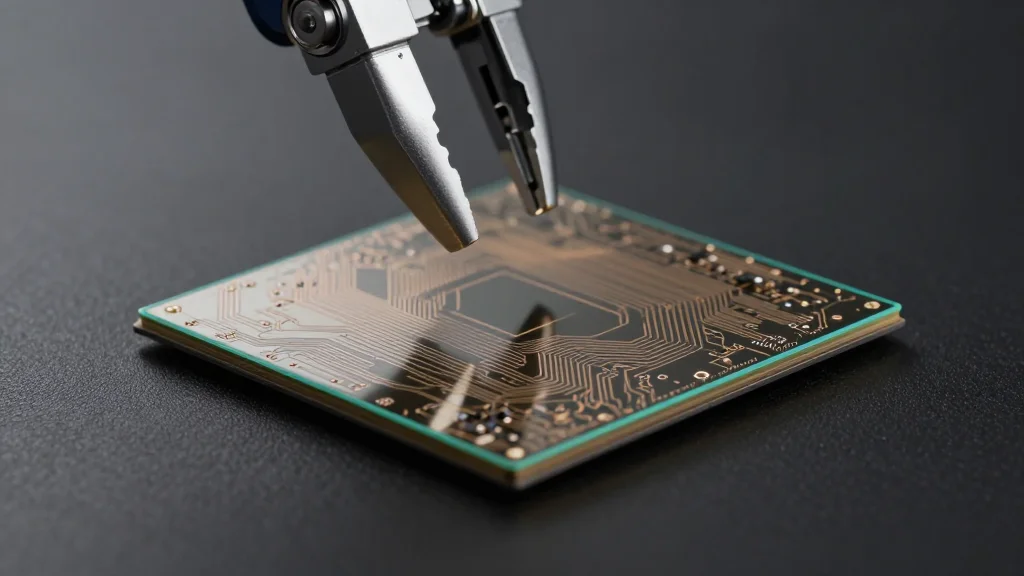
TrendForce Warns AI Surge Is Tightening 3nm Wafer and Advanced Packaging Supply

Companies Mentioned
Why It Matters
The bottleneck in 3nm wafers and advanced packaging directly throttles the rollout of AI accelerators, high‑performance GPUs and next‑gen smartphones, potentially slowing revenue growth for the world’s largest tech firms. A prolonged shortage could also drive up component prices, forcing OEMs to redesign products or shift to less efficient nodes, which would ripple through data‑center economics and consumer pricing. Geopolitically, the concentration of 3nm capacity in a single foundry heightens supply‑chain risk for countries seeking to secure domestic AI hardware capabilities. The pressure on advanced packaging also accelerates interest in alternative interconnect solutions and domestic OSAT capacity, reshaping the competitive landscape of the semiconductor ecosystem.
Key Takeaways
- •TrendForce reports AI demand since 2023 has tightened 3nm–2nm wafer capacity and 2.5D/3D packaging.
- •TSMC’s 3nm capacity is a scarce resource, with Nvidia pre‑securing large volumes while Google faces material delays.
- •Global 3nm capacity expected to exceed 5/4nm by end‑2026 and become the second‑largest node after 28nm by 2027.
- •TSMC plans to boost CoWoS capacity by over 60% by 2027; 2.5D packaging shortage may ease slightly after that.
- •OSAT firms SPIL and Amkor benefit from spillover demand; alternative technologies EMIB and FOEB gain traction.
Pulse Analysis
The current squeeze mirrors past capacity cycles where a single technology node became a choke point—most notably the 7nm transition in 2020‑21. However, the AI shock is broader: it not only inflates wafer demand but also multiplies packaging requirements per chip, turning the supply chain into a multi‑tier bottleneck. TSMC’s dominance at 3nm gives it unprecedented leverage, but also makes the ecosystem vulnerable to any production hiccup in its new fabs.
From a strategic standpoint, Nvidia’s early procurement illustrates how firms with deep supply‑chain clout can lock in capacity and set pricing benchmarks, potentially widening the gap between AI leaders and late‑comers. Intel’s push for domestic advanced packaging and Samsung’s gradual catch‑up suggest a nascent diversification, yet both face steep capital and time hurdles. The rise of EMIB and FOEB indicates that the industry is already hedging against CoWoS scarcity, but these alternatives still lag in density and performance.
If TSMC’s expansion and the projected 60% CoWoS uplift materialize on schedule, the most acute pressure may subside by 2027, allowing AI hardware designers to shift toward the emerging 2nm node. In the interim, however, pricing volatility and delayed product launches could reshape competitive dynamics, rewarding firms that secured early allocations and penalizing those that relied on spot market purchases. The next six months will be a litmus test for how quickly the supply chain can adapt to AI‑driven demand spikes.
TrendForce warns AI surge is tightening 3nm wafer and advanced packaging supply
Comments
Want to join the conversation?
Loading comments...