Trio Set to Scale Polyester-to-Polyester Recycling
Why It Matters
The breakthrough offers a viable route to close the loop on polyester waste, reducing reliance on virgin petroleum‑based PET and supporting circular‑economy targets for the fashion and packaging sectors.
Key Takeaways
- •Rewind process produced tens of tonnes of BHET from mixed polyester textiles
- •Trial operated at 1,000‑tonne‑per‑year capacity, a step toward commercial scale
- •Partnership bridges French chemical expertise with Japanese recycling infrastructure
- •BHET output can be repolymerised into virgin‑quality PET fibers
- •Technology addresses growing regulatory pressure on textile waste in Europe and Asia
Pulse Analysis
Polyester dominates global textile and packaging markets, yet its durability creates a waste challenge that traditional mechanical recycling cannot fully solve. Chemical recycling, which breaks polymer chains back to monomers, promises true circularity by delivering feedstock indistinguishable from virgin material. The Rewind process, developed by Axles, IFPEN and JEPLAN, leverages depolymerisation to convert mixed‑use polyester fabrics into bis(2‑hydroxyethyl) terephthalate (BHET), the building block for new PET. By integrating collection, sorting and depolymerisation in a single flow, the technology sidesteps the quality loss typical of mechanical methods and opens a pathway for high‑value textile‑to‑textile recycling.
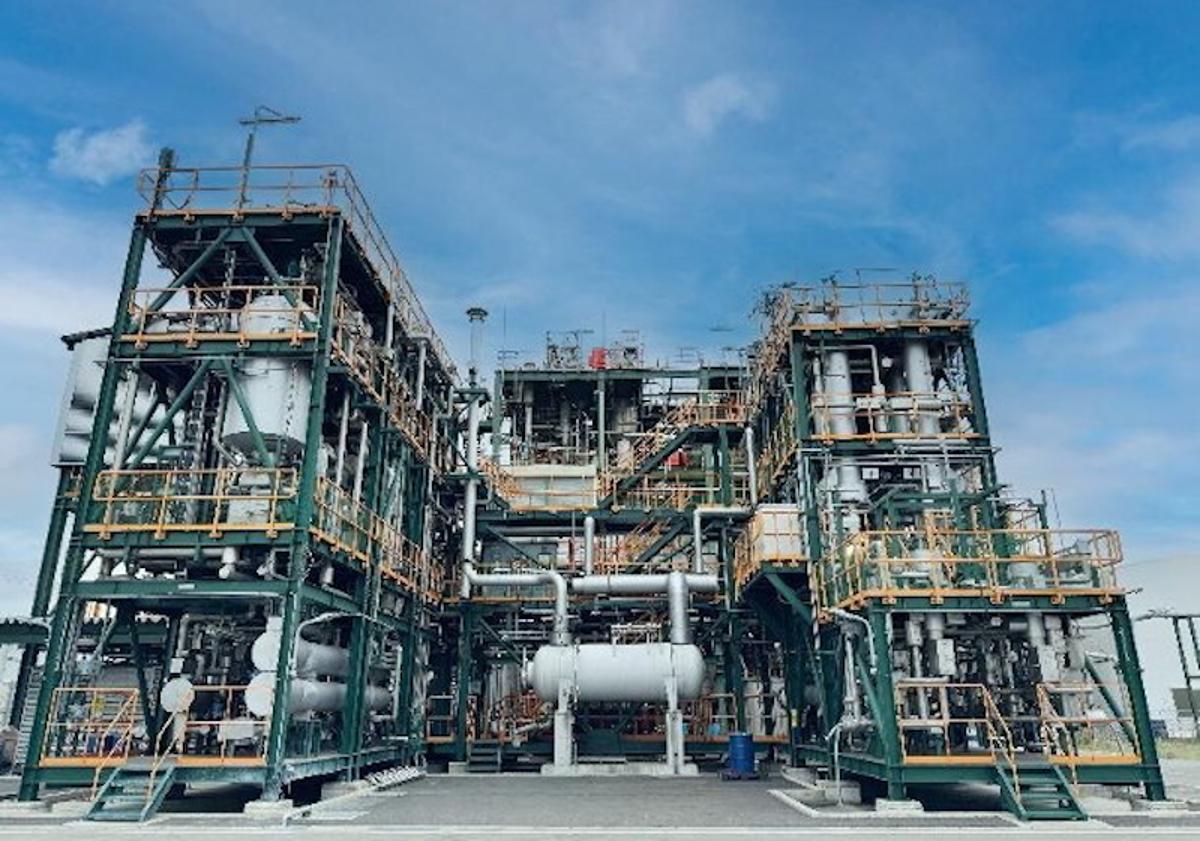
The semi‑industrial trial at JEPLAN’s Kitakyushu Hibikinada Pilot plant demonstrated the process at a 1,000‑tonne‑per‑year scale, producing several tens of tonnes of BHET from textiles sourced in France. This output validates the chemistry’s robustness against real‑world feedstock variability and confirms that the resulting monomer meets specifications for repolymerisation into virgin‑grade PET fibers. The collaboration blends Axens’ catalytic expertise, IFPEN’s energy‑focused research, and JEPLAN’s advanced recycling infrastructure, creating a cross‑continental value chain that could be replicated in other high‑volume textile hubs.
If the Rewind technology scales to commercial volumes, it could reshape the polyester supply chain by reducing demand for fossil‑derived PET and lowering the carbon footprint of both apparel and beverage packaging. Investors are likely to view the proven pilot as a de‑risking milestone, potentially unlocking financing for larger plants in Europe and Asia. Moreover, the process aligns with emerging extended‑producer‑responsibility regulations that mandate higher recycled content, positioning early adopters to meet compliance while differentiating their brands through sustainable sourcing. The next steps will involve securing feedstock contracts, optimizing plant economics, and navigating certification pathways to bring recycled PET fibers to market at competitive prices.
Trio set to scale polyester-to-polyester recycling
Comments
Want to join the conversation?
Loading comments...