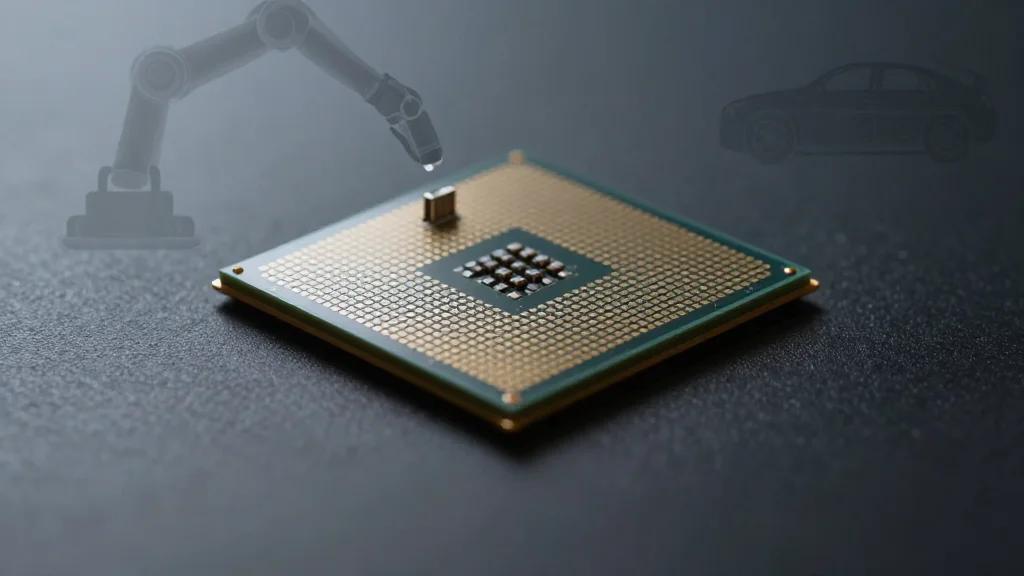
TSMC and Sony Form Joint Venture to Build Next‑Gen Image Sensors in Kumamoto

Companies Mentioned
Why It Matters
The TSMC‑Sony joint venture directly addresses the surging need for advanced image sensors that power AI applications across multiple industries. By co‑locating design and manufacturing in Kumamoto, the partnership reduces lead times and leverages Japan’s skilled workforce, bolstering regional semiconductor capacity. For the broader manufacturing sector, the venture signals a shift toward tighter integration of design and fab operations, a model that could become a template for other high‑value components. Furthermore, the collaboration strengthens the competitive landscape against South Korean and Chinese sensor makers, potentially reshaping supply chains for automotive and robotics OEMs that rely on cutting‑edge vision systems. Government backing underscores Japan’s strategic push to revive its semiconductor ecosystem, making Kumamoto a focal point for future tech investments.
Key Takeaways
- •TSMC and Sony sign non‑binding MOU to create a joint venture for next‑gen image sensors in Kumamoto.
- •Sony will hold a majority stake; the JV will use Sony's new Koshi City fab for dedicated lines.
- •Kevin Zhang (TSMC) and Shinji Sashida (Sony) highlighted the partnership’s role in AI‑era sensing.
- •Investment will be phased based on market demand, with expected support from the Japanese government.
- •The JV adds a sensor‑focused production stream to TSMC’s existing Kumamoto wafer fab via JASM.
Pulse Analysis
The TSMC‑Sony alliance reflects a broader industry trend of vertical integration, where design leaders partner with foundries to lock in capacity and technology roadmaps. Historically, image sensors have been a battleground for market share, with Sony dominating high‑end smartphone modules while TSMC has supplied the manufacturing muscle for a range of customers. By formalizing their relationship, both firms mitigate supply‑chain volatility and create a joint platform that can rapidly iterate on sensor architectures tailored for AI workloads.
From a competitive standpoint, the venture positions the partners to challenge Samsung’s ISOCELL line and SK Hynix’s emerging sensor portfolio. The combined expertise could accelerate the rollout of sensors with on‑chip AI processing, a capability increasingly demanded by autonomous vehicles and industrial robots. However, the success of the JV will depend on securing early adopters and navigating the capital‑intensive nature of advanced node fabs. Phased investment tied to demand is a prudent approach, but it also introduces uncertainty if market uptake lags.
Looking ahead, the Kumamoto joint venture could serve as a catalyst for further collaborations between Japanese design firms and Taiwanese foundries, reinforcing Japan’s strategic goal of revitalizing its semiconductor sector. If the partnership delivers on its promise of higher‑performance, lower‑power sensors, it may spur a wave of AI‑centric device innovation, reinforcing the importance of localized, high‑precision manufacturing in the global supply chain.
TSMC and Sony Form Joint Venture to Build Next‑Gen Image Sensors in Kumamoto
Comments
Want to join the conversation?
Loading comments...