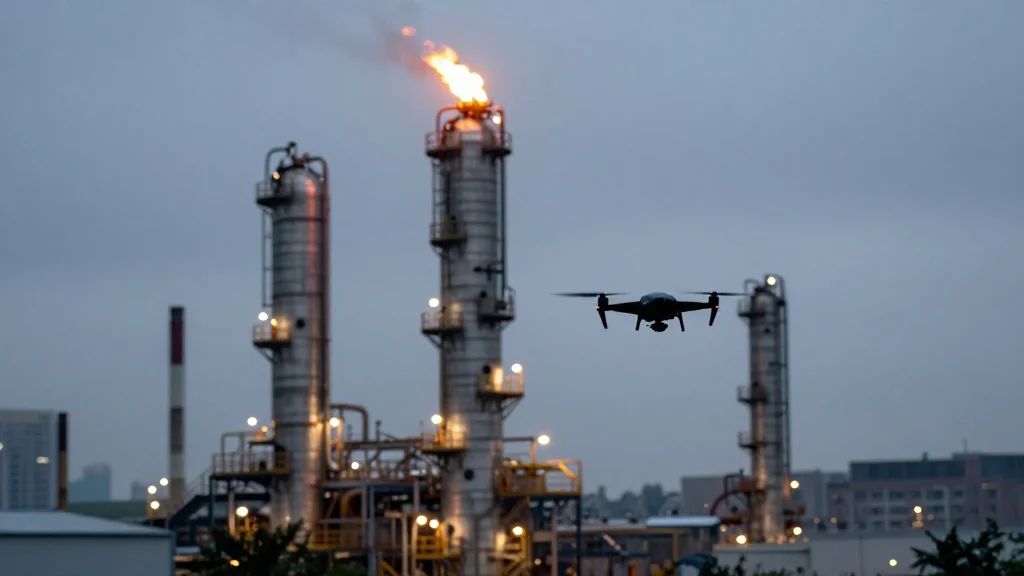
Ukrainian Drone Strike Sets Ryazan Oil Refinery Ablaze, Halting 17.1M‑Ton Output

Why It Matters
The Ryazan refinery is a linchpin in Russia’s domestic fuel supply chain, feeding both civilian markets and the military’s logistical network. Its sudden shutdown not only threatens fuel availability for Russian manufacturers but also raises the risk of price volatility in neighboring European markets that already grapple with supply constraints. Moreover, the attack underscores a strategic shift in modern warfare, where drones can cripple high‑value industrial assets without a conventional ground assault, forcing governments and corporations to rethink security investments. For the broader manufacturing sector, the incident serves as a cautionary tale about supply‑chain resilience. Companies that depend on Russian petrochemicals may need to diversify sources or increase inventory buffers to mitigate the risk of sudden output losses caused by geopolitical conflict or targeted attacks.
Key Takeaways
- •Ukrainian drones ignited a fire at Ryazan Oil Refinery, halting its 17.1 million‑ton annual capacity
- •At least four civilians killed; dozens injured, including children, according to Governor Pavel Malkov
- •Residents reported "black rain"—oil‑laden precipitation—falling over the city after the strike
- •The refinery is located 180 km from Moscow and supplies fuel to both civilian and military sectors
- •The outage could tighten European diesel markets and force Russian manufacturers to seek alternative fuel sources
Pulse Analysis
The Ryazan strike marks a turning point in how modern conflicts intersect with industrial manufacturing. Historically, oil refineries have been high‑value targets, but the use of relatively inexpensive commercial‑grade drones to achieve strategic disruption is a new development. This lowers the barrier for state and non‑state actors to inflict outsized economic damage, forcing a re‑evaluation of risk models that previously emphasized large‑scale missile attacks.
From a market perspective, the immediate impact on Russian fuel output is likely to be modest in volume but disproportionate in perception. Traders already priced in a premium for European diesel, and the news of a 2 % capacity loss could amplify that premium, especially if other refineries come under similar threat. In the longer term, sustained attacks could accelerate Russia’s push to modernize its refining infrastructure with hardened, automated systems—an investment that may be hampered by sanctions and capital constraints.
For manufacturers, the incident is a stark reminder that geopolitical risk cannot be siloed from operational risk. Companies with supply chains tied to Russian petrochemicals should accelerate diversification strategies, including exploring alternative feedstocks, increasing on‑site storage, and establishing contingency contracts with non‑Russian suppliers. The Ryazan fire may well become a case study in corporate risk committees worldwide, illustrating how a single, well‑placed drone can ripple through global manufacturing ecosystems.
Ukrainian Drone Strike Sets Ryazan Oil Refinery Ablaze, Halting 17.1M‑Ton Output
Comments
Want to join the conversation?
Loading comments...