Ultra-Thin Optical Film Pushes Budget Resin Printers Toward Professional Precision
Companies Mentioned
Why It Matters
The film offers a low‑cost, space‑efficient path to bring professional precision to entry‑level resin printers, expanding their applicability across critical sectors. Its adoption could shift market dynamics by reducing reliance on expensive LED‑lens assemblies.
Key Takeaways
- •Ultra‑thin double‑sided film improves LCD backlight collimation
- •Prototype achieves 81% intensity uniformity and <10° FWHM beam
- •Film integrates without enlarging printer footprint
- •Budget resin printers can approach professional‑grade precision
- •Provides cheaper alternative to high‑cost LED‑lens modules
Pulse Analysis
Resin‑based vat photopolymerization remains the gold standard for high‑detail 3D parts, yet most low‑cost machines rely on LCD panels whose backlights scatter light unevenly. Inconsistent angular distribution leads to surface roughness and dimensional errors, limiting adoption in fields such as dental prosthetics and micro‑fluidic devices where tolerances are tight. Improving light uniformity without inflating the printer’s size or price has therefore been a persistent engineering challenge.
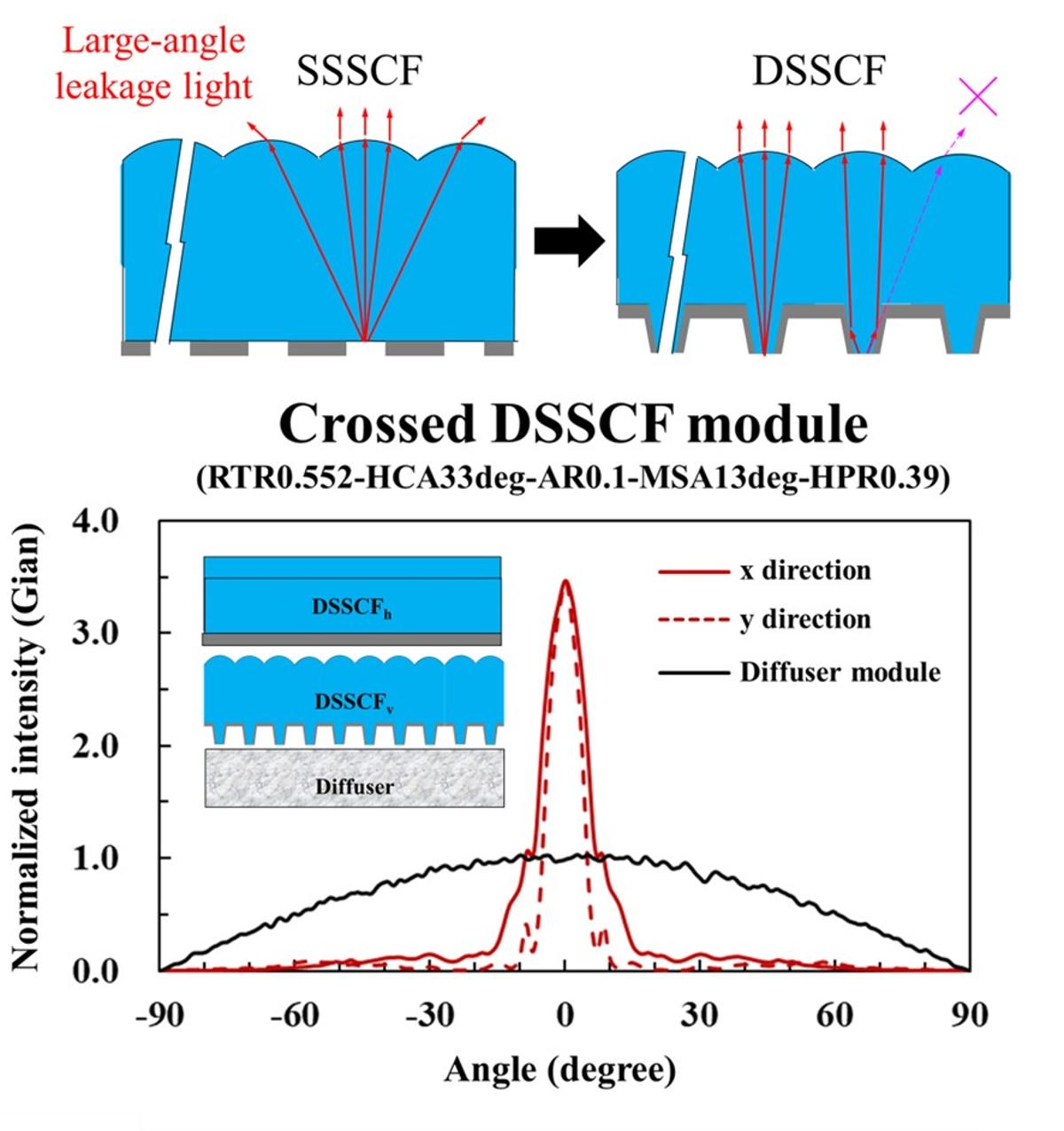
The Taiwanese team’s solution—a double‑sided collimation film—leverages microscopic lenticular lenses and trapezoidal microstructures on both faces of a sub‑millimeter sheet. Optical simulations identified the optimal geometry to redirect stray rays back into the reflective cavity, effectively sharpening the beam while preserving overall brightness. Laboratory tests reported an 81% uniformity index and a full‑width‑half‑maximum angle below 10°, metrics comparable to Formlabs’ high‑end Form 4 that uses a dedicated LED‑lens array. Unlike bulky lens stacks, the film adds negligible thickness, making it a drop‑in upgrade for existing LCD modules.
If manufacturers can mass‑produce the film at scale, the impact on the resin‑printing ecosystem could be profound. Affordable printers would gain the accuracy needed for medical models, orthodontic aligners, and small‑batch tooling, reducing the need for costly outsourcing. Moreover, the technology could democratize advanced manufacturing by allowing hobbyists and small enterprises to achieve professional results without major capital outlay. Future work will focus on minimizing energy loss and extending spectral compatibility, paving the way for a new generation of cost‑effective, high‑precision 3D printers.
Ultra-Thin Optical Film Pushes Budget Resin Printers Toward Professional Precision
Comments
Want to join the conversation?
Loading comments...