Manufacturing News and Headlines
  • All Technology
  • AI
  • Autonomy
  • B2B Growth
  • Big Data
  • BioTech
  • ClimateTech
  • Consumer Tech
  • Crypto
  • Cybersecurity
  • DevOps
  • Digital Marketing
  • Ecommerce
  • EdTech
  • Enterprise
  • FinTech
  • GovTech
  • Hardware
  • HealthTech
  • HRTech
  • LegalTech
  • Nanotech
  • PropTech
  • Quantum
  • Robotics
  • SaaS
  • SpaceTech
AllNewsDealsSocialBlogsVideosPodcastsDigests

Manufacturing Pulse

EMAIL DIGESTS

Daily

Every morning

Weekly

Sunday recap

NewsDealsSocialBlogsVideosPodcasts
ManufacturingNewsUniversity of Nottingham Researchers Examine Interface Orientation in Multi-Material LPBF of IN718 and GRCop-42
University of Nottingham Researchers Examine Interface Orientation in Multi-Material LPBF of IN718 and GRCop-42
Manufacturing

University of Nottingham Researchers Examine Interface Orientation in Multi-Material LPBF of IN718 and GRCop-42

•February 20, 2026
0
3D Printing Industry – News
3D Printing Industry – News•Feb 20, 2026

Why It Matters

Understanding orientation‑dependent defects enables reliable bimetallic components for aerospace engines, where thermal performance and structural integrity are critical.

Key Takeaways

  • •Horizontal IN718 over GRCop‑42 creates lack‑of‑fusion defects.
  • •Reversing deposition order prevents defects, enhances alloy mixing.
  • •Recoater alignment parallel to interface yields gradient, reduces stress.
  • •Perpendicular recoating causes material crossover and porosity.
  • •Microstructure shifts from columnar to equiaxed with Ni contamination.

Pulse Analysis

Multi‑material additive manufacturing promises to combine the best attributes of dissimilar alloys within a single part, a capability that is especially attractive for aerospace propulsion where high‑temperature strength must coexist with rapid heat extraction. Laser powder bed fusion (LPBF) offers the layer‑by‑layer precision needed to place Inconel 718, a nickel‑based superalloy, alongside GRCop‑42, a copper‑chromium‑niobium alloy originally developed by NASA. However, the metallurgical junction between such thermally mismatched metals remains a critical hurdle; subtle variations in build orientation can trigger defects that compromise performance.

The Nottingham study demonstrates that interface orientation governs both defect formation and phase evolution. When IN718 is deposited onto a GRCop‑42 substrate, the copper‑rich base conducts heat away too quickly, producing lack‑of‑fusion seams unless laser power is raised. Reversing the sequence eliminates those seams and encourages intermixing, evidenced by a minor α‑Cr peak and refined grains. Likewise, the direction of the selective powder deposition recoater determines whether material crossover or a smooth compositional gradient occurs at vertical and 45° interfaces, directly influencing porosity and residual stress distribution.

These insights underline that hardware advances alone—such as faster multi‑material powder‑bed systems—cannot guarantee reliable joints. Process‑structure relationships must be codified through systematic studies and integrated into machine‑learning‑driven control loops. The next step is to validate tensile and fatigue behavior under realistic thermal cycling, a prerequisite for certifying bimetallic rocket chambers or turbine components. As the industry moves toward hybrid‑material designs, the ability to predict and suppress orientation‑driven defects will become a decisive factor in commercial adoption.

University of Nottingham researchers examine interface orientation in multi-material LPBF of IN718 and GRCop-42

Rodolfo Hernández

Rodolfo Hernández is a writer and technical specialist with a background in electronics engineering and a deep interest in additive manufacturing. Rodolfo is most interested in the science behind technologies and how they are integrated into society.

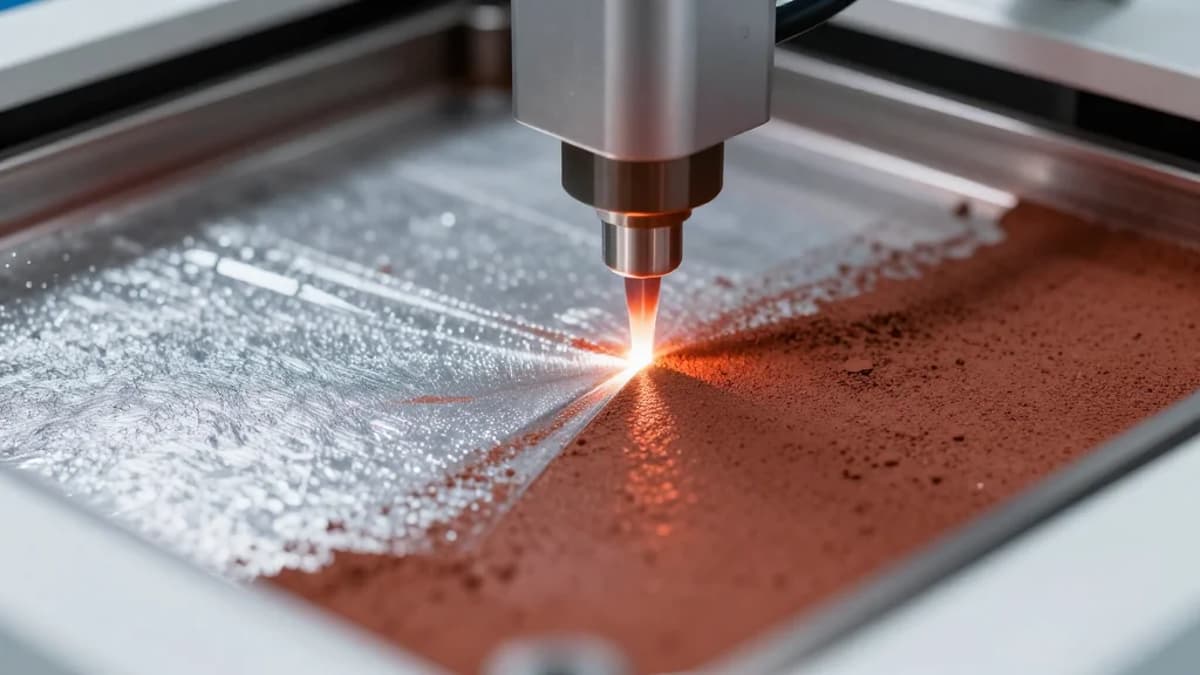
Researchers at the University of Nottingham’s Centre for Additive Manufacturing (CfAM), in collaboration with the Manufacturing Technology Centre (MTC) and Autodesk Research, have analyzed how interface orientation affects defect formation and microstructure evolution in laser powder bed fusion (LPBF) of IN718 and GRCop‑42. Published in Additive Manufacturing Letters, the study evaluates horizontal, vertical, and angled interfaces to determine how deposition sequence and recoating direction influence alloy mixing and phase formation in aerospace‑relevant bimetallic parts.

The work focuses on components such as rocket combustion chambers, where IN718 provides high‑temperature strength and GRCop‑42, a Cu‑Cr‑Nb alloy developed by NASA, enhances heat dissipation.

Backscatter and compositional analysis of horizontal IN718/GRCop‑42 interfaces showing lack‑of‑fusion defects and grain refinement behavior. Image via Bulloch et al., Additive Manufacturing Letters.

Multi‑material LPBF using selective powder deposition

To produce the bimetallic samples, the researchers used an AconityMIDI+ LPBF system equipped with a 1 kW continuous‑wave ytterbium fibre laser (80 µm spot diameter) and a Schaeffler Aerosint selective powder deposition (SPD) recoater. The SPD system enables spatially controlled multi‑material deposition in a single recoating pass, allowing different powders to be placed in defined regions of each layer.

Samples were fabricated with horizontal interfaces, vertical interfaces, and 45° angled transitions between IN718 and GRCop‑42. For each geometry, both deposition sequences were tested. In some builds, IN718 was deposited onto GRCop‑42; in others, the order was reversed. The recoating direction was also varied relative to the interface plane to assess how powder spreading affected alloy distribution and interfacial microstructure.

Schematic of the Schaeffler Aerosint selective powder deposition (SPD) recoater used for multi‑material LPBF. Image via Bulloch et al., Additive Manufacturing Letters.

Deposition sequence influences horizontal interface defects

For horizontal interfaces, deposition order proved critical. When IN718 was deposited onto GRCop‑42, lack‑of‑fusion (LoF) defects formed at the interface. Backscatter imaging revealed unmelted IN718 particles. The authors attribute this behavior to the high thermal conductivity of the copper alloy substrate, which dissipates heat rapidly and reduces melt‑pool temperature. Increasing laser power during the first few IN718 layers mitigated these defects.

Reversing the sequence altered the outcome. Depositing GRCop‑42 onto IN718 did not generate LoF defects. Instead, significant alloy mixing occurred at the interface. X‑ray diffraction indicated a small additional peak near the interface consistent with a body‑centered cubic α‑Cr phase in copper‑rich regions above the transition line, while electron backscatter diffraction (EBSD) revealed grain refinement and evidence of epitaxial growth.

Recoating direction affects vertical and angled interfaces

For vertical and angled interfaces, the orientation of the interface relative to the recoating direction played a critical role.

  • When the interface plane was perpendicular to the recoating direction, significant crossing of the first‑deposited material into the second region occurred. In some cases, porosity associated with powder deposition irregularities was observed, distinct from the thermal‑conductivity‑driven LoF defects seen in horizontal interfaces.

  • When the interface plane was aligned parallel to the recoating direction, a gradual compositional transition developed across the interface. The authors suggest that this gradient effect may help reduce stress concentrations caused by thermal mismatch between the alloys.

Compositional maps of vertical and angled IN718/GRCop‑42 interfaces demonstrating material crossover and gradient formation depending on recoating direction. Image via Bulloch et al., Additive Manufacturing Letters.

Microstructural evolution at the interface

Microstructural analysis revealed clear differences based on mixing behavior. Regions with significant Ni contamination in Cu‑rich areas exhibited columnar‑to‑equiaxed grain transitions and localized grain refinement, with finer grains located in the Cu‑rich regions and coarser equiaxed grains in the Ni‑rich regions of the interface. In samples with sharper compositional boundaries, columnar dendritic structures were retained.

Overall, the study demonstrates that interface orientation relative to both build direction and recoating direction directly influences alloy mixing, phase evolution, and defect formation in IN718/GRCop‑42 bimetallic LPBF structures.

While the authors show that defect‑free interfaces are feasible under certain configurations, they note that further tensile and fatigue testing is required to determine how orientation‑driven microstructural differences affect mechanical performance under thermal cycling.

Interface reliability remains a key barrier in multi‑metal additive manufacturing

Recent research initiatives have similarly focused on the challenge of joining dissimilar metals for extreme environments. A UK‑led program exploring additive manufacturing methods for fusion‑energy materials is investigating how metals such as tungsten and copper can be combined to withstand severe thermal gradients. Like the Nottingham study, this work reflects a broader technical constraint: while multi‑metal systems promise tailored thermal and mechanical performance, reliable control of the interfacial microstructure remains a critical barrier to deployment in high‑temperature applications.

Advances in hardware are also expanding multi‑material capabilities. Researchers at ETH Zurich recently demonstrated a high‑speed multi‑material powder‑bed fusion system designed to improve material placement efficiency. Yet machine capability alone does not resolve metallurgical complexity. As the Nottingham findings suggest, deposition sequence, recoating direction, and interface orientation can significantly alter mixing behavior and defect formation, indicating that process–structure understanding will be as essential as hardware innovation for aerospace and other extreme‑environment applications.

Read Original Article
0

Comments

Want to join the conversation?

Loading comments...