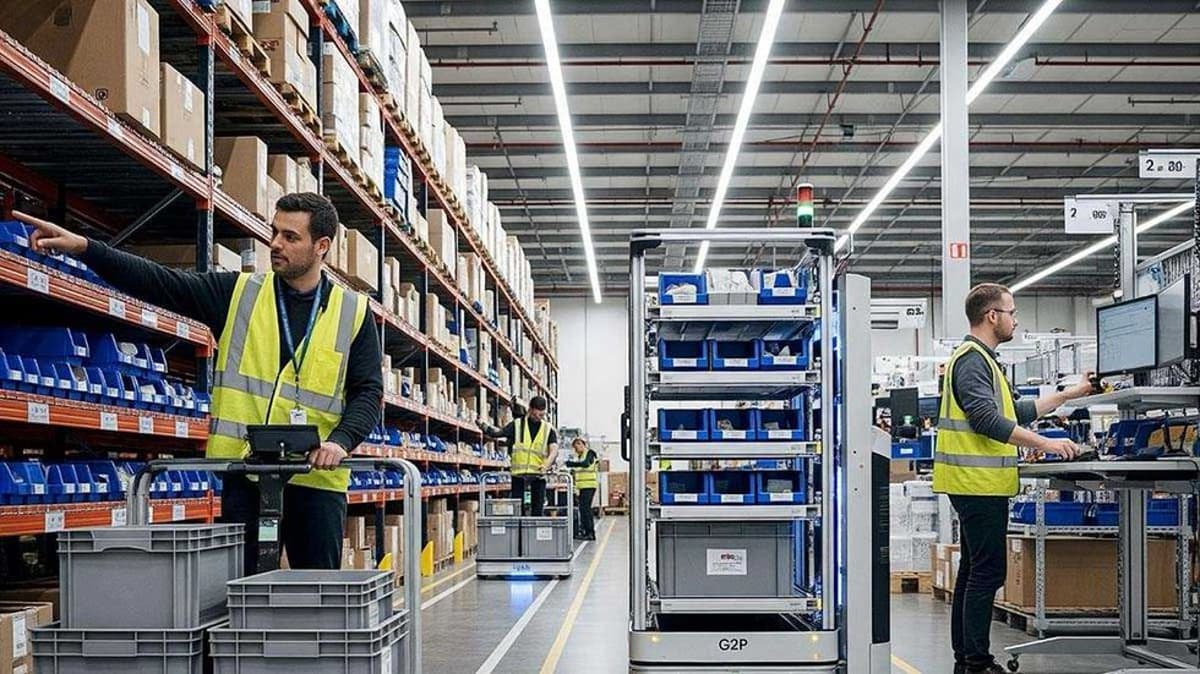
Unlock the ROI of Mobile Robots: Roboteon Launches New Complimentary Robotics Investment Impact Analysis
•February 24, 2026
0
Why It Matters
The complimentary analysis lowers the barrier for firms to quantify automation benefits, accelerating adoption of warehouse robotics and improving cost efficiency in a tight labor market.
Key Takeaways
- •Complimentary simulation assesses warehouse robotics ROI.
- •Vendor‑independent tool uses client data for accurate modeling.
- •Analysis delivers robot‑human staffing, cost per pick, throughput.
- •2‑3 week turnaround, minimal client effort required.
- •Supports business case building amid labor shortage pressures.
Pulse Analysis
The warehouse automation market is entering a pivotal phase, driven by a persistent labor shortage and the rapid maturation of autonomous mobile robots (AMRs). Industry forecasts from Interact Analysis anticipate a 20.1% year‑over‑year increase in AMR shipments, reaching 259,000 units globally by 2026. As retailers and distributors scramble to maintain throughput, the pressure to justify capital expenditures on robotics has intensified, making robust ROI calculations essential for strategic planning.
Roboteon's new complimentary Robotics Investment Impact Analysis addresses this need with a sophisticated, vendor‑agnostic simulation engine. By ingesting a client’s actual warehouse layout, order profiles, and operational assumptions, the tool generates granular metrics such as optimal robot‑human ratios, cost per pick, dwell times, and utilization rates. The analysis is delivered in 2‑3 weeks, requiring minimal effort from the participating organization, and offers “what‑if” scenario testing that surpasses generic online calculators. This data‑driven approach equips decision‑makers with concrete evidence to compare robotics against alternative fulfillment strategies.
For businesses, the service translates into faster, more confident investment decisions. A clear, quantified business case can unlock financing, align stakeholder expectations, and reduce the risk of under‑performing automation projects. Moreover, the ability to model multiple vendor solutions without lock‑in fosters competitive bidding and future‑proofing as new robotic technologies emerge. In an industry where speed to value is paramount, Roboteon's analysis positions firms to capture efficiency gains, mitigate labor constraints, and sustain growth in an increasingly automated supply chain ecosystem.
Unlock the ROI of Mobile Robots: Roboteon Launches New Complimentary Robotics Investment Impact Analysis
0
Comments
Want to join the conversation?
Loading comments...