Why It Matters
The MIL‑STD‑810H certification validates Windform’s suitability for rugged defense and aerospace missions, accelerating adoption of additive manufacturing in high‑risk sectors. This breakthrough could shorten development cycles, lower part counts, and drive cost efficiencies for U.S. defense and space programs.
Key Takeaways
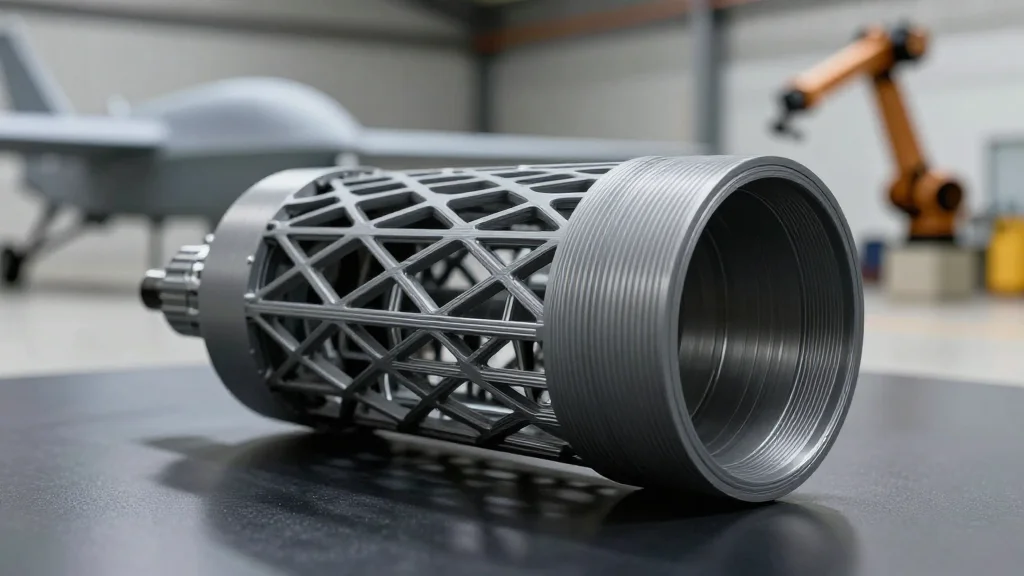
- •Windform GT meets MIL‑STD‑810H for defense UAV components
- •CRP USA displays 3D‑printed Formula SAE steering wheel and 12,000‑mile intake manifold
- •TuPOD 3D‑printed CubeSat deployer launched from ISS, enabling TubeSat missions
- •Materials originated in motorsport, now qualified for aerospace and defense
- •Production‑ready additive manufacturing reduces part count and lead times
Pulse Analysis
Additive manufacturing is moving from niche prototyping to mission‑critical production, and XPONENTIAL 2026 provides a high‑visibility platform for that shift. CRP USA’s presence highlights how its Windform® composite line, originally engineered for the extreme stresses of motorsport, has matured into a versatile material system trusted by aerospace and defense customers. By exhibiting functional parts—such as a Formula SAE steering wheel and a high‑boost intake manifold—the company demonstrates real‑world performance, not just laboratory data, reinforcing confidence among engineers seeking durable, lightweight alternatives to metal.
The recent achievement of MIL‑STD‑810H compliance for Windform GT marks a pivotal moment for additive manufacturing in defense. This U.S. Department of Defense standard tests components against temperature extremes, vibration, shock, and humidity, ensuring they can survive harsh operational environments. Certification signals that 3D‑printed parts can meet the same rigorous durability thresholds as traditionally machined parts, opening doors for faster, on‑demand production of UAV structures and other mission‑essential hardware. For defense contractors, this translates into reduced lead times, lower inventory costs, and the ability to iterate designs rapidly without compromising reliability.
Beyond defense, CRP USA’s portfolio bridges motorsport, space, and commercial aviation, illustrating the scalability of its technology. The TuPOD CubeSat deployer, the first fully 3D‑printed satellite released from the International Space Station, showcases the material’s suitability for vacuum and thermal cycling conditions. Coupled with aerospace components like KySat‑2 structures, the breadth of applications underscores a strategic advantage: a single material family can serve disparate sectors, simplifying supply chains and fostering cross‑industry innovation. As the aerospace and defense markets increasingly prioritize rapid, low‑cost manufacturing, Windform’s proven track record positions it as a key enabler of next‑generation, high‑performance parts.
Untitled
Comments
Want to join the conversation?
Loading comments...