Companies Mentioned
Why It Matters
The extensions lower the technical barrier to automating large‑scale and aluminum welds, letting manufacturers boost productivity and standardize equipment across plants. This strengthens Miller’s position in a market where flexible, high‑precision welding automation is increasingly critical.
Key Takeaways
- •CRX‑30 adds 70‑inch reach for larger weldments
- •Miller AccuGuide improves waypoint accuracy on long‑arm robots
- •Simplified programming reduces training time for welders
- •XR‑AlumaPro torch ensures consistent feeding of 4XXX aluminum wire
- •Advanced Accu‑Pulse software boosts aluminum weld quality
Pulse Analysis
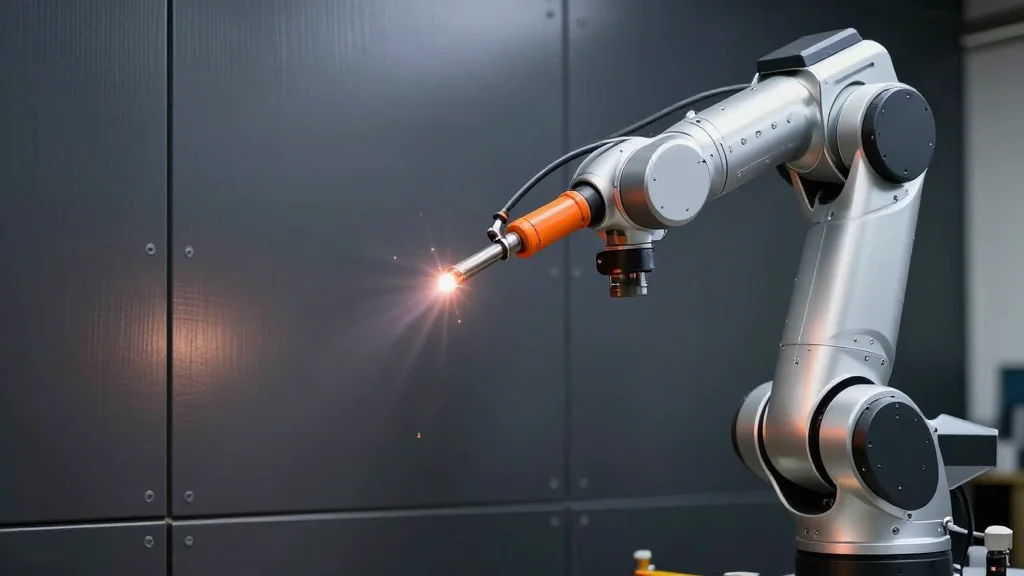
Robotic welding is moving from niche to mainstream as manufacturers chase higher throughput and tighter tolerances. Miller’s Copilot platform, already known for its user‑friendly interface, has become a reference point for shops transitioning from manual to automated processes. By integrating the FANUC CRX‑30, Miller taps into a widely adopted robot line, offering a 70‑inch arm that can span larger structures without sacrificing the precision that modern production demands. The built‑in Miller AccuGuide positioning system further refines waypoint placement, a critical factor when programming long‑reach welds that would otherwise suffer from cumulative error.
The introduction of the XR‑AlumaPro CB torch addresses a long‑standing pain point: reliable aluminum welding. Aluminum’s high thermal conductivity and oxide layer make wire feeding and heat control notoriously tricky, especially with 4XXX series alloys used in automotive and aerospace applications. Miller’s push‑pull torch design, combined with Accu‑Pulse software featuring Profile Pulse sequencing, delivers stable feed rates and fine‑tuned waveforms that mitigate spatter and improve bead consistency. This capability enables manufacturers to automate aluminum joins that previously required skilled manual operators, opening cost‑effective scaling opportunities.
Together, these enhancements signal Miller’s strategic push to cover the full spectrum of welding challenges—from large‑scale structural assemblies to high‑precision aluminum components. The move aligns with broader industry trends toward modular, interoperable automation solutions that can be retrofitted onto existing robot fleets. As companies seek to reduce labor intensity and improve quality metrics, Miller’s expanded Copilot family offers a compelling blend of reach, accuracy, and material‑specific expertise, positioning the firm as a key enabler of the next wave of smart manufacturing.
Untitled
Comments
Want to join the conversation?
Loading comments...