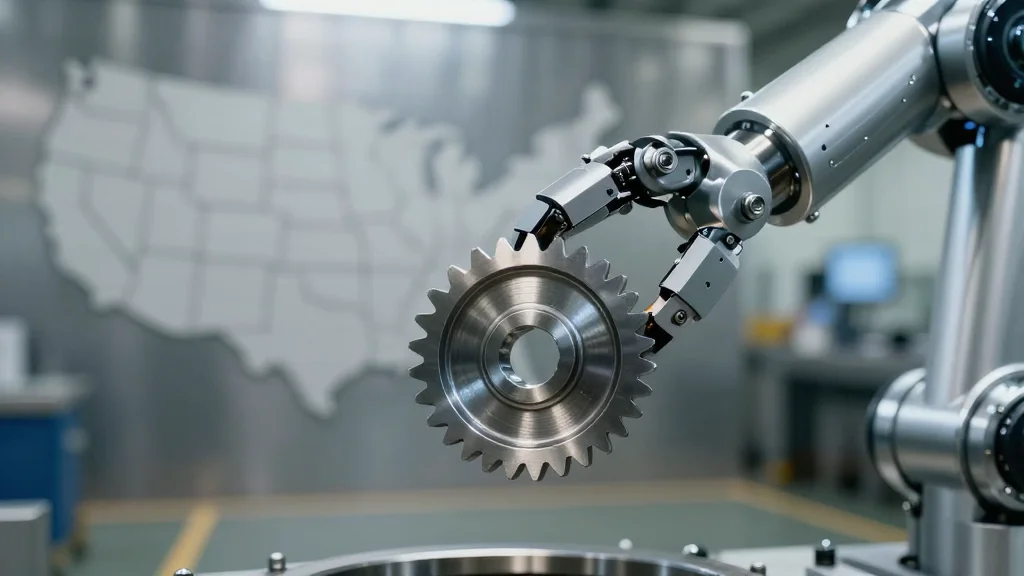
U.S. Manufacturing’s Next Chapter
Companies Mentioned
Why It Matters
Reshoring powered by AI and automation gives U.S. brands tighter control over inventory, higher margins, and a more resilient supply chain, reshaping competitive dynamics in apparel and beyond.
Key Takeaways
- •Walmart backs unspun’s AI‑driven 3D weaving for U.S. apparel production.
- •3D weaving cuts lead times to days, adding 400‑500 bps margin.
- •AI safety fences from Belden reduce workplace injuries and improve quality.
- •Domestic, demand‑driven manufacturing enhances resilience and cuts excess inventory.
- •Success depends on digitally skilled workers and cross‑ecosystem collaboration.
Pulse Analysis
Reshoring has moved from a policy slogan to a technology‑driven reality. Advances in sensor‑to‑edge IoT, 5G connectivity, and cloud‑based AI platforms allow factories to monitor every process in real time, turning the United States into a viable hub for high‑mix, low‑volume production. Companies that once relied on overseas mass‑production are now evaluating domestic sites that can respond instantly to demand signals, reducing lead times and inventory drag.
Unspun’s AI‑enabled 3D weaving exemplifies how digital fabrication can rewrite apparel economics. By converting yarn directly into finished garments, the system eliminates cut‑and‑sew steps, slashing production from months to days. The resulting speed enables on‑season reorders, cutting markdowns that cost the industry billions annually. Early ROI estimates suggest a 400‑500‑basis‑point uplift in gross margins, while the technology’s modular nature supports scaling across multiple U.S. locations, creating a new class of skilled manufacturing jobs.
The broader ecosystem is catching up. Belden’s virtual safety fence, which uses computer‑vision to pause robots when workers enter hazardous zones, showcases AI’s role in improving safety and quality. However, the transition hinges on a digitally literate workforce and coordinated effort among equipment vendors, training institutions, and policymakers. As AI, automation, and edge computing mature, firms that integrate these tools will achieve greater agility, lower costs, and a competitive edge in a market that increasingly values speed, sustainability, and domestic resilience.
U.S. Manufacturing’s Next Chapter
Comments
Want to join the conversation?
Loading comments...