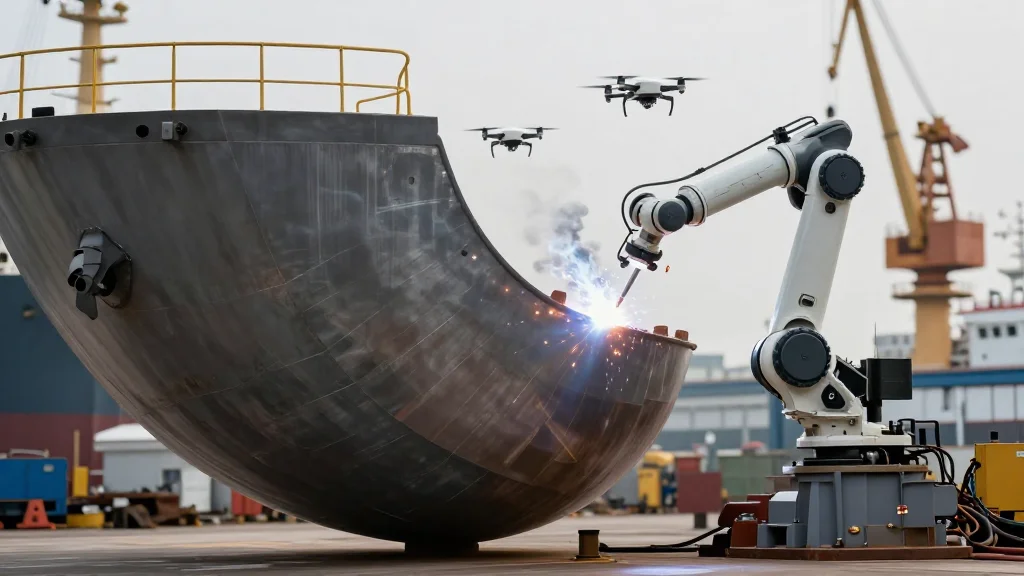
U.S. Navy Warns of Shipbuilding Shortfall, Pushes Autonomous Systems to Revive Domestic Production

Why It Matters
The shipbuilding shortfall threatens U.S. strategic autonomy. A domestic commercial fleet underpins naval logistics, humanitarian assistance, and economic competitiveness. Without a robust industrial base, the United States risks dependence on foreign shipyards for both civilian cargo and military support vessels, a vulnerability that adversaries could exploit in a conflict scenario. Accelerating autonomous manufacturing could also reshape the broader manufacturing landscape. Success in shipyards would demonstrate the scalability of AI‑driven production, potentially spilling over into aerospace, automotive, and heavy‑industry sectors, thereby reinforcing U.S. leadership in advanced manufacturing and creating a new wave of high‑skill, well‑paid jobs.
Key Takeaways
- •U.S. shipyards build fewer than 10 oceangoing commercial vessels per year, just 1% of global tonnage.
- •China constructs 75% of the world’s commercial fleet, and the PLA Navy now exceeds the U.S. in hull count.
- •The National Commission cites a planning failure, not funding, as the root cause of the shipbuilding decline.
- •Autonomous systems could cut ship construction time by up to 30% and reduce dry‑dock idle costs of hundreds of thousands of dollars per day.
- •A bipartisan working group will draft an autonomous‑shipbuilding roadmap by Q4 2026, with a pilot at Norfolk Naval Shipyard in early 2027.
Pulse Analysis
The Navy’s warning is less a surprise than a confirmation of a trend that began in the early 1980s when the Construction Differential Subsidy was eliminated. That policy shift removed a critical price‑competitiveness lever, allowing subsidized Asian yards to undercut U.S. shipbuilders on cost and scale. Over the ensuing four decades, the erosion of skilled labor and the failure to modernize procurement processes created a feedback loop: fewer contracts meant less revenue for yards, which in turn limited investment in new tooling and training. The commission’s focus on autonomous systems is a logical, albeit ambitious, remedy. Automation can address two chronic pain points—labor scarcity and supply‑chain lag—by standardizing repetitive tasks and enabling predictive ordering of components before a vessel enters dry dock.
However, technology alone cannot close the gap. The U.S. must align its acquisition calendar with the realities of shipyard capacity, ensuring that new contracts are awarded with sufficient lead time for workforce ramp‑up and technology integration. Moreover, the proposed $15 billion funding boost, while helpful, must be tied to performance metrics that reward yards for adopting autonomous processes and meeting delivery milestones. Without such accountability, additional dollars risk being absorbed by legacy inefficiencies.
If the Navy’s autonomous‑first roadmap succeeds, it could serve as a blueprint for other heavy‑manufacturing sectors facing similar talent shortages and cost pressures. The ripple effect would be a revitalized industrial ecosystem capable of competing with China’s state‑driven manufacturing model. Conversely, failure to act could cement the United States’ reliance on foreign shipbuilders, weakening both economic and security postures for decades to come.
U.S. Navy warns of shipbuilding shortfall, pushes autonomous systems to revive domestic production
Comments
Want to join the conversation?
Loading comments...