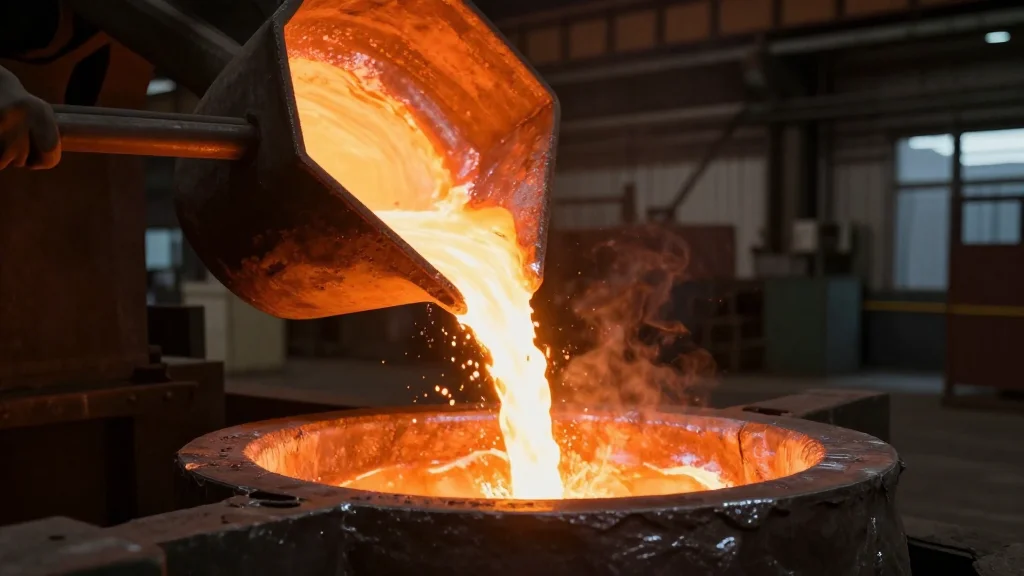
U.S. Steel Invests $1.9 Billion in Arkansas DRI Facility to Tighten Domestic Supply Chain

Companies Mentioned
Why It Matters
The $1.9 billion DRI project gives U.S. Steel a rare opportunity to control every step of the steelmaking process on American soil, from ore extraction to final product. That level of vertical integration can lower input costs, improve product consistency, and shield manufacturers from supply shocks that have historically driven up prices for sectors reliant on steel. For the broader manufacturing ecosystem, a reliable domestic steel source could accelerate investments in high‑value, low‑carbon products. Automakers seeking lightweight, high‑strength steel for electric‑vehicle frames, as well as renewable‑energy firms needing robust structural components, stand to benefit from a more predictable and locally sourced material base.
Key Takeaways
- •U.S. Steel commits $1.9 bn to a new DRI facility at Big River Steel Works in Arkansas
- •Project links Minnesota Keetac ore operations to Arkansas steel production, creating a fully integrated U.S. supply chain
- •Expected to support ~200 permanent jobs and 35 contractor roles; peak construction may employ ~2,000 workers
- •Financing comes primarily from US Steel’s cash flow, with Nippon Steel ready to consider supplemental funding
- •Investment follows a $3 bn prior expansion at Big River and aligns with U.S. policy to secure critical industrial capacity
Pulse Analysis
U.S. Steel’s latest capital outlay marks the most ambitious domestic supply‑chain consolidation in the American steel sector since the early 2000s. By internalizing DRI production, the company reduces its exposure to volatile global iron‑ore prices and freight bottlenecks that have historically eroded margins. This move also positions US Steel to meet the growing demand for specialty steels required in electric‑vehicle frames and offshore wind turbines, markets where supply certainty is a competitive differentiator.
From a strategic standpoint, the investment underscores Nippon Steel’s commitment to accelerating the integration of its U.S. subsidiary, leveraging the parent’s global expertise while navigating U.S. regulatory constraints. The golden‑share arrangement gives the U.S. government a direct line of oversight, reflecting heightened national‑security concerns around critical material production. If the partnership can deliver on cost‑savings and capacity targets, it may set a template for future cross‑border industrial collaborations that balance private capital with public policy objectives.
Looking ahead, the success of the DRI plant will hinge on three variables: the pace of construction, the ability to secure low‑cost renewable electricity for the energy‑intensive process, and the market’s appetite for higher‑grade steel. Should any of these factors falter, US Steel could face under‑utilization risks that would dampen the projected return on investment. Conversely, a smooth rollout could catalyze a wave of similar vertically integrated projects, reshaping the U.S. manufacturing supply chain toward greater self‑sufficiency.
U.S. Steel Invests $1.9 Billion in Arkansas DRI Facility to Tighten Domestic Supply Chain
Comments
Want to join the conversation?
Loading comments...