Velo3D Receives $11.5M Defense Production Agreement for National Security Program
Companies Mentioned
Why It Matters
The contract validates Velo3D’s production‑scale additive technology for defense, accelerating adoption of metal 3D printing in high‑risk, mission‑critical supply chains. It signals broader government confidence in domestic, certified AM capabilities, potentially reshaping procurement timelines and cost structures.
Key Takeaways
- •Velo3D secured $11.5M full‑rate production contract
- •Rapid Production Solution accelerates metal part delivery
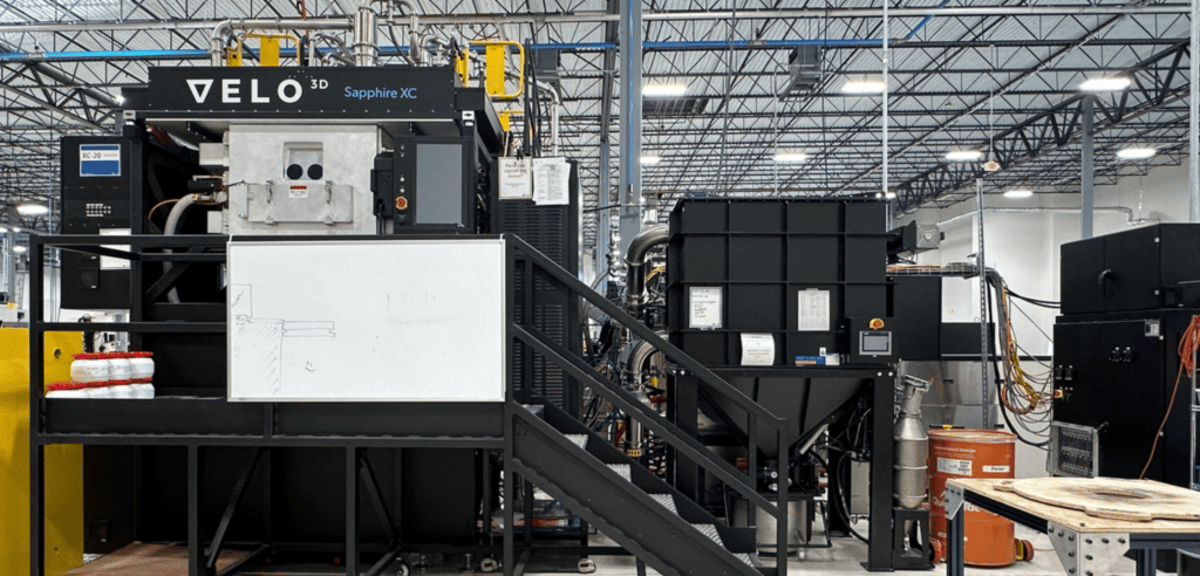
- •Sapphire printers produce parts up to 1‑meter tall
- •First U.S. Army approved additive manufacturer under GVSC CRADA
- •Certification requires fleet‑wide repeatability and traceable processes
Pulse Analysis
Additive manufacturing has moved from a prototyping curiosity to a strategic asset for defense, yet scaling metal 3D printing to full‑rate production remains a hurdle. Traditional procurement cycles often outpace technology maturation, creating a gap that firms like Velo3D aim to bridge. By embedding software‑driven workflow controls and real‑time monitoring into its laser powder‑bed fusion platforms, Velo3D reduces the latency between design and part delivery, addressing the Department of Defense’s push for rapid, on‑demand manufacturing of mission‑critical components.
The technical backbone of the agreement is Velo3D’s Rapid Production Solution, which unites large‑format Sapphire printers with a digital thread that tracks build parameters, material provenance, and post‑process certification. Capable of fabricating parts up to 600 mm in diameter and one meter tall, the system meets high Technology Readiness Level (TRL) and Manufacturing Readiness Level (MRL) thresholds required for Army and other services. Recent qualification under the U.S. Army Ground Vehicle Systems Center’s CRADA framework—completed in under two weeks—demonstrates that Velo3D can satisfy stringent Nadcap and PRI standards for traceability and repeatability across an entire fleet, a prerequisite for full‑rate production contracts.
The $11.5 million deal underscores a broader shift toward domestic, certified additive suppliers in the national‑security arena. As the Department of Defense prioritizes supply‑chain resilience, firms that can guarantee consistent, high‑precision output at scale will capture a growing share of defense spend. Velo3D’s success may prompt other OEMs to accelerate their own certification pathways, intensifying competition while driving down costs for metal additive manufacturing across aerospace, automotive, and energy sectors.
Velo3D Receives $11.5M Defense Production Agreement for National Security Program


Comments
Want to join the conversation?
Loading comments...