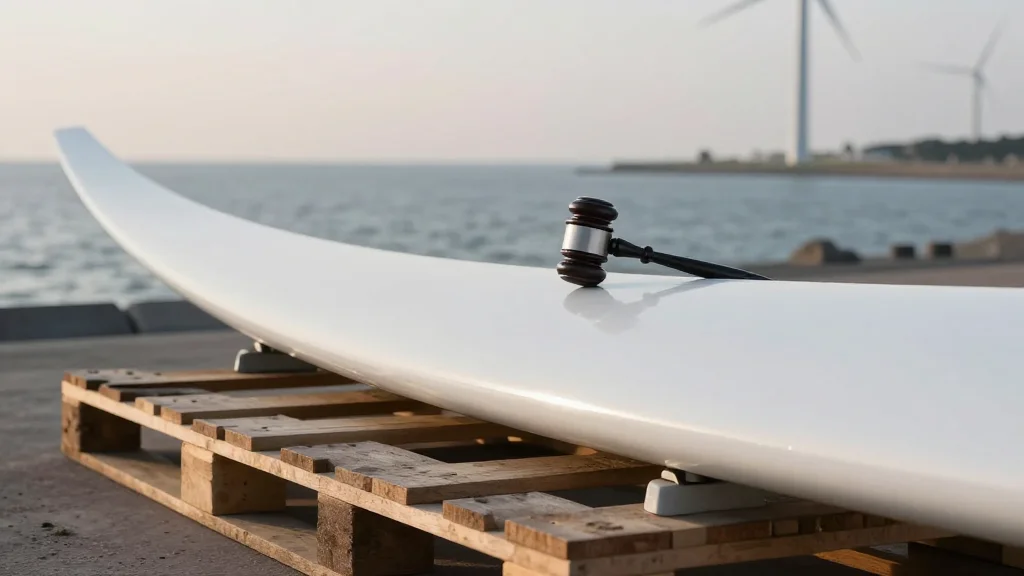
Vineyard Wind Sues GE Vernova over $545 Million Claim in Massachusetts Offshore Wind Dispute

Companies Mentioned
Why It Matters
The lawsuit pits the United States' first commercial‑scale offshore wind farm against its sole turbine supplier, highlighting how contractual disputes can jeopardize project financing and delay clean‑energy delivery. With the Vineyard Wind project slated to power up to 400,000 homes and deliver billions in consumer savings, any disruption reverberates through state energy policy and the broader goal of meeting Massachusetts' renewable‑energy targets. Beyond this single project, the case exposes the concentration risk inherent in offshore wind supply chains. GE Vernova's dominance means that a breach or termination could stall multiple future developments, prompting developers and financiers to reassess risk mitigation strategies, such as diversifying suppliers or securing stronger performance guarantees.
Key Takeaways
- •Vineyard Wind sues GE Vernova, seeking $545 million for blade failures and delays
- •GE Vernova counters with a $300 million claim for withheld payments
- •A $10.5 million settlement was paid to Nantucket businesses after a blade collapse in July 2024
- •The project faces a $2 billion loan repayment deadline this summer, risking foreclosure
- •A hearing is set for Thursday to determine if GE must stay on the contract
Pulse Analysis
The Vineyard Wind‑GE Vernova clash is a litmus test for the resilience of the U.S. offshore wind supply chain. Historically, turbine manufacturers have wielded outsized leverage because of the high capital intensity and technical complexity of offshore projects. GE's decision to invoke a termination clause after months of unpaid invoices underscores the financial pressure developers face when construction overruns collide with tight loan covenants. If the court forces GE to stay, it could reinforce the notion that manufacturers must honor long‑term service obligations, even amid payment disputes, thereby protecting downstream investors.
Conversely, a ruling in GE's favor could embolden other OEMs to adopt stricter payment enforcement, potentially prompting developers to negotiate more robust escrow arrangements or diversify their turbine sources. The $545 million damage claim also signals that developers are willing to pursue aggressive litigation to recoup costs tied to quality‑control failures, a trend that may drive OEMs to tighten manufacturing oversight, especially after the Gaspé bonding issue that led to the blade collapse.
Strategically, the outcome will influence financing structures for upcoming projects like the 1.2‑GW Commonwealth Wind and the 1.5‑GW Sunrise Wind. Lenders may demand higher performance bonds or insurance coverage to hedge against similar disputes. In the broader clean‑energy transition, ensuring reliable turbine supply and maintenance is as critical as securing wind resources; any erosion of confidence in OEMs could slow the pace at which the United States meets its offshore wind capacity goals of 30 GW by 2030.
Vineyard Wind sues GE Vernova over $545 million claim in Massachusetts offshore wind dispute
Comments
Want to join the conversation?
Loading comments...