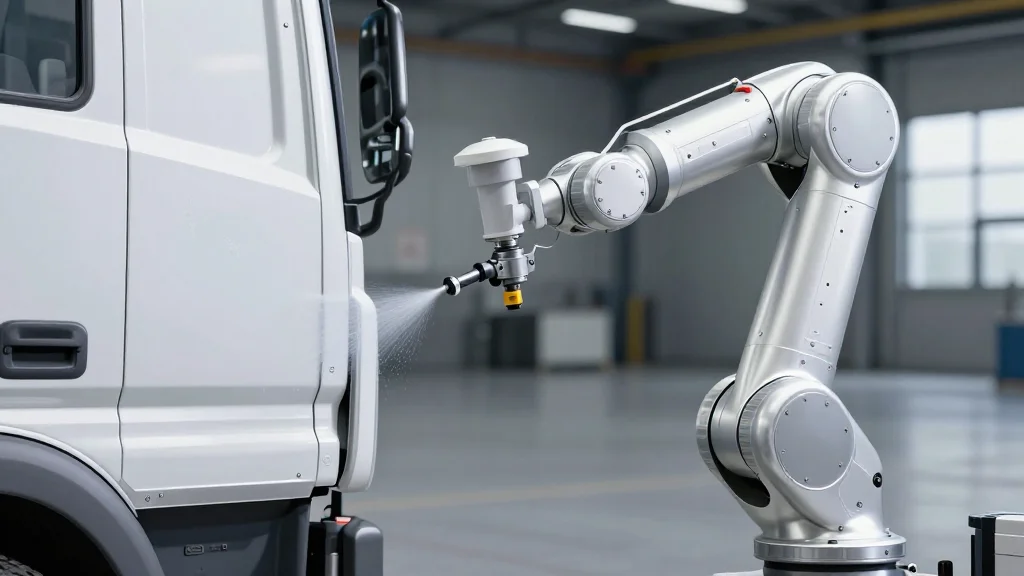
Volvo Boosts Robot-Heavy Truck Assembly at New River Valley Plant

Companies Mentioned
Why It Matters
The Dublin plant’s robot expansion illustrates how legacy automakers are re‑engineering their production lines to stay competitive in an era of rising labor costs and rapid AI advancement. By investing $500 million in robotics, Volvo signals that large‑scale automation is no longer a niche experiment but a core component of its growth strategy. For the broader manufacturing sector, Volvo’s approach offers a template for blending human expertise with machine precision. The emphasis on upskilling workers mitigates the social risks of automation, while the projected efficiency gains could set new cost benchmarks for heavy‑truck production, influencing pricing and supply dynamics across the industry.
Key Takeaways
- •Volvo invested $500 million to build a second plant in Dublin, VA, featuring 170 collaborative robots.
- •Robots now handle paint and door‑attachment tasks, while 3,000 workers perform complex final assembly.
- •Magnus Koeck projects full automation could be achievable within 15 years.
- •Virginia Tech’s Mehdi Ahmadian warns that physical labor is being replaced by intellectual labor.
- •Volvo aims to double robot count by 2035 and retrain 500 employees for advanced roles.
Pulse Analysis
Volvo’s aggressive automation push reflects a strategic pivot that many traditional manufacturers are forced to make as AI and robotics become cost‑effective at scale. Historically, the automotive sector has relied on mass‑production line techniques pioneered by Ford, but the current wave of collaborative robots enables a more modular, flexible approach. This flexibility is crucial for integrating emerging technologies such as electric drivetrains and autonomous driving stacks, which demand frequent hardware and software updates.
From a competitive standpoint, Volvo’s $500 million spend puts pressure on rivals to justify their own capital allocations. Companies that lag in robot adoption risk higher labor exposure and longer cycle times, which could erode market share as fleet operators prioritize cost‑efficient, high‑quality trucks. However, the transition is not without risk: scaling robot usage requires robust data infrastructure, cybersecurity safeguards, and a workforce adept at interpreting robot diagnostics. Volvo’s commitment to retraining 500 workers suggests an awareness of these challenges and a proactive stance on workforce sustainability.
Looking ahead, the success of Volvo’s robot‑heavy model will likely be measured by tangible metrics—unit cost reduction, defect rates, and throughput improvements. If the plant can deliver a 5‑7 % cost reduction as projected, it will validate the capital intensity of automation and could trigger a wave of similar investments across the U.S. manufacturing landscape, reshaping the employment profile of the sector for the next two decades.
Volvo Boosts Robot-Heavy Truck Assembly at New River Valley Plant
Comments
Want to join the conversation?
Loading comments...