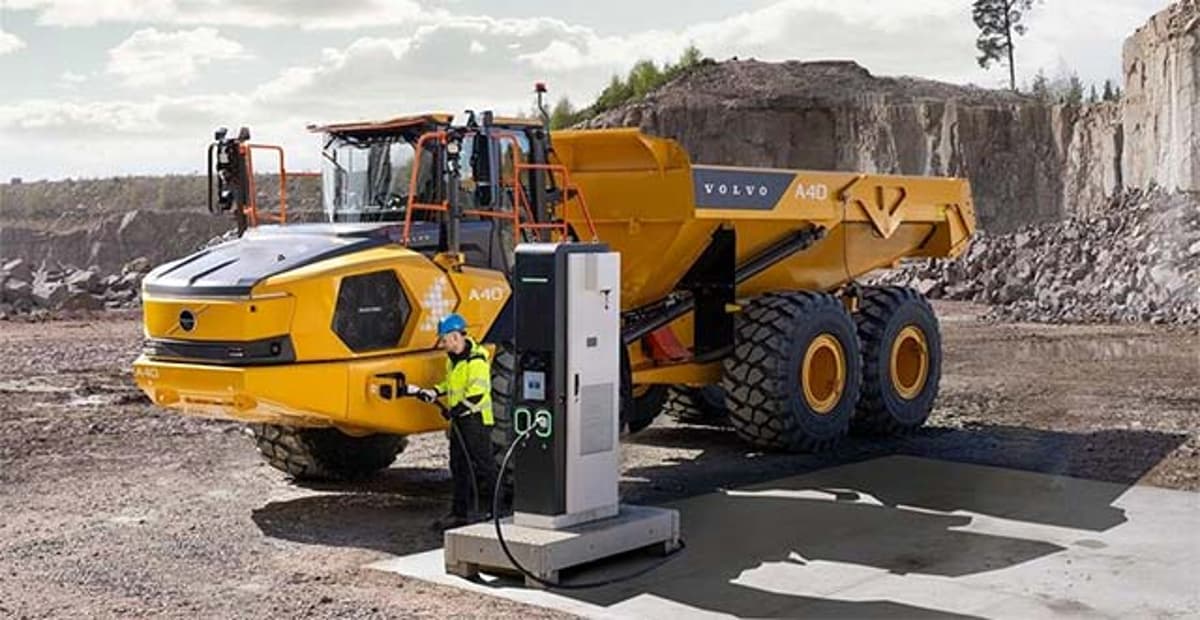
Volvo CE Starts Serial Production of A30 Electric and A40 Electric Articulated Haulers
Companies Mentioned
Why It Matters
The production shift moves heavy‑duty hauling into practical electric use, helping construction and mining firms meet tightening emissions targets while reducing total cost of ownership. Volvo’s lead may accelerate industry‑wide electrification of large equipment.
Key Takeaways
- •Volvo CE begins serial production of A30 and A40 electric haulers
- •A30 carries 29 t, A40 up to 39 t payload
- •Both models offer up to six hours of runtime per charge
- •First deliveries slated for UK and Norway, expanding across Europe 2026
Pulse Analysis
Electrification has already reshaped light‑duty trucks and on‑site machinery, but the heavy‑equipment segment has lagged because of the sheer power and endurance required for quarrying, mining and large‑scale construction. Volvo Construction Equipment, leveraging more than six decades of articulated‑hauler expertise dating back to the 1966 Gravel Charlie, is now bridging that gap with the A30 Electric and A40 Electric. By launching serial production at its historic Braås facility, Volvo signals that battery‑electric power packs are sufficiently robust to replace diesel engines in the most demanding haul‑road applications, marking a watershed moment for the sector.
The A30 Electric delivers a 29‑tonne payload, while the A40 Electric pushes 39 tonnes, both powered by high‑energy‑density lithium‑ion packs that provide roughly six hours of continuous operation before recharging. This runtime aligns with typical shift lengths on many mine sites, allowing operators to schedule a single overnight charge without sacrificing productivity. Early field tests suggest a lower total cost of ownership, driven by reduced fuel expenses, fewer moving parts, and lower maintenance intervals. Moreover, the zero‑emission profile helps operators avoid carbon taxes and meet corporate sustainability goals, making the haulers financially attractive beyond their environmental benefits.
Volvo’s move puts pressure on rivals such as Caterpillar, Komatsu and Liebherr to accelerate their own electric‑hauler programs, potentially sparking a rapid cascade of new models in the next few years. European emissions regulations and the mining industry’s pledge to cut Scope 1 emissions create a receptive market, especially in the United Kingdom and Norway where the first units will be delivered. As infrastructure for high‑power charging expands at mine sites and large construction yards, the economics of electric haul trucks are expected to improve further, positioning them as a mainstream alternative to diesel by the early 2030s.
Volvo CE Starts Serial Production of A30 Electric and A40 Electric Articulated Haulers
Comments
Want to join the conversation?
Loading comments...