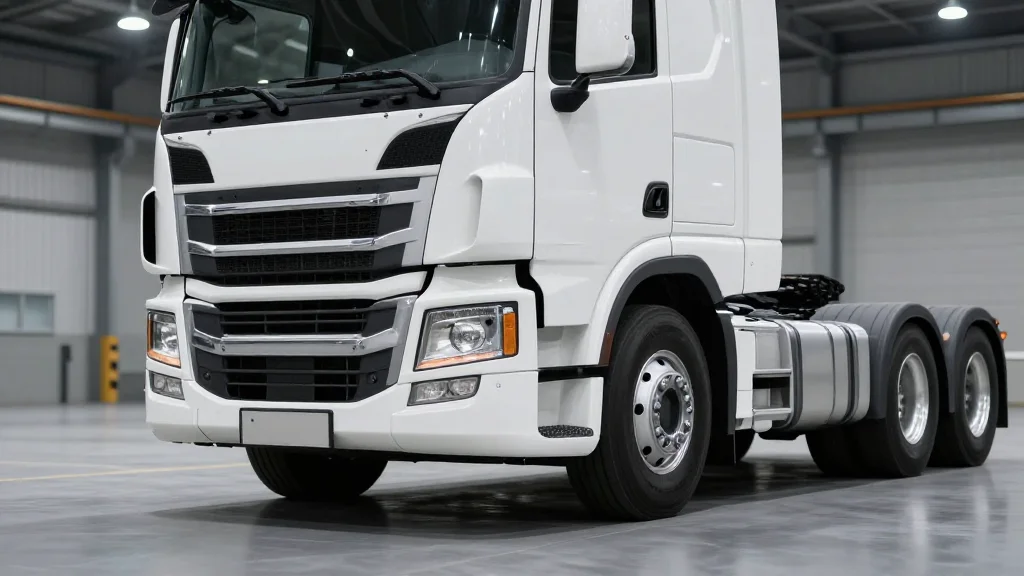
Volvo’s Monterrey Plant Builds First Batch of Test Vehicles
Companies Mentioned
Why It Matters
The Monterrey plant gives Volvo a cost‑effective foothold in Mexico, expanding export capability and helping the company meet its 2030 market‑share target amid intensifying competition.
Key Takeaways
- •Volvo's first Mexico truck plant builds test trucks for VTNA, Mack.
- •$700 million, 1.7 million‑sq‑ft facility slated to start production July.
- •Initial output low; focus on export markets and peak‑demand flexibility.
- •Plant helps Volvo target 25% North American Class 8 share by 2030.
- •Rivals already produce ~14k trucks monthly in Mexico, raising competition.
Pulse Analysis
Volvo Group’s new Monterrey facility marks the Swedish automaker’s first foray into truck manufacturing on Mexican soil. The 1.7‑million‑square‑foot plant, a $700 million investment unveiled in April 2024, has already produced its inaugural batch of test vehicles for Volvo Trucks North America (VTNA) and Mack. Production lines are slated to roll in July, initially delivering a modest volume that will be split between VTNA’s exports to the United States and Canada and Mack’s supply to Mexico, Latin America and North‑American markets. The plant’s strategic location offers a cost‑effective base while preserving the company’s existing U.S. manufacturing footprint.
Volvo’s entry comes as rivals such as Daimler’s Freightliner, International and Paccar’s Kenworth are already churning out nearly 14,000 Class 8 trucks per month from their Mexican sites, accounting for over 95% of the country’s commercial‑vehicle output. By adding flexible capacity in Monterrey, Volvo aims to smooth production peaks that its current U.S. plants cannot absorb, and to support Mack’s ambition to double exports across Central and South America. The move also aligns with the company’s goal of securing a 25% share of the North American heavy‑duty market by 2030.
From an investor perspective, the Monterrey plant adds a layer of geographic diversification that can mitigate tariff risks and labor cost differentials while tapping into growing demand for sustainable trucks in Mexico, Chile and Colombia. As the 2027 NOx emissions standards loom, both VTNA and Mack are positioned to roll out newer, lower‑emission models from the new facility, enhancing their value proposition to fleet operators. Analysts will watch capacity utilization and export volumes closely, as they will be key indicators of Volvo’s ability to close the gap with entrenched competitors and achieve its long‑term market‑share targets.
Volvo’s Monterrey Plant Builds First Batch of Test Vehicles
Comments
Want to join the conversation?
Loading comments...