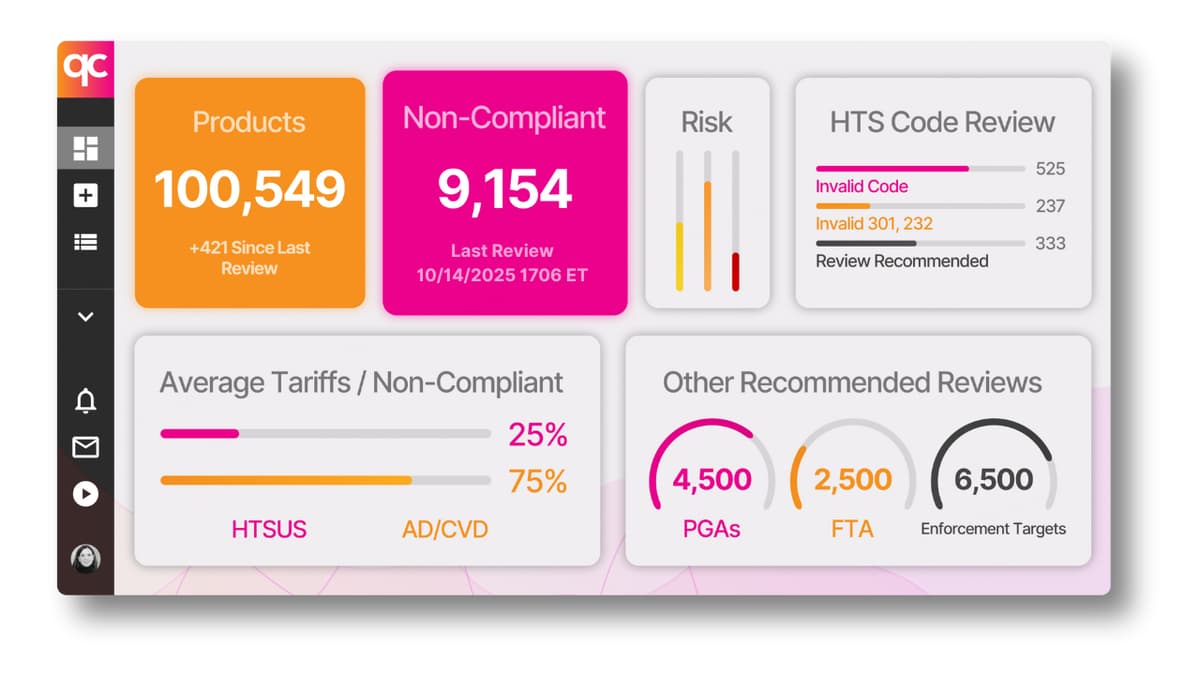
Ways Tariffs Are Affecting Business: Learn to Manage Pressures
Why It Matters
Embedding trade compliance upstream protects margins and reduces exposure to costly classification errors, giving manufacturers a competitive edge in a volatile global trade environment.
Key Takeaways
- •Tariff volatility forces product design to consider duties early
- •SKU‑level classification errors can erode margins across high‑volume catalogs
- •AI platforms automate HTS code selection and monitor regulatory changes
- •Continuous compliance transforms trade from reactive to strategic cost control
Pulse Analysis
The global trade landscape has shifted from a predictable schedule to a rapid‑fire series of tariff adjustments, especially under Section 301, Section 232 and AD/CVD measures. Manufacturers now see duty exposure as a variable that can change before a product leaves the design board, compelling engineering and sourcing teams to embed tariff analysis into the earliest stages of development. This upstream approach not only prevents surprise landed‑cost spikes but also aligns product architecture with the most favorable trade classifications, a necessity when raw‑material costs for steel and aluminum are soaring.
Most firms still rely on spreadsheets, email threads and external brokers, creating a visibility gap that leads to classification drift and costly errors. With thousands of SKUs differing only in material coating or heat‑treatment, a single mis‑code can multiply across high‑volume shipments, inflating duties and triggering customs holds. Artificial‑intelligence solutions such as Quickcode.ai address this by ingesting unstructured product data, suggesting the optimal HTS code, and continuously scanning regulatory updates. However, AI must operate in a human‑in‑the‑loop model; expert oversight ensures explainability, auditability and compliance with the “reasonable care” standard demanded by customs authorities.
Treating trade compliance as a strategic function unlocks margin protection, risk mitigation and new revenue streams such as duty drawback. When duty payments are accurately tracked, companies can reclaim a portion of tariffs on exported finished goods, turning a cost center into a profit enhancer. Integrated compliance platforms also provide finance teams with real‑time cost forecasts, enabling dynamic pricing and better cash‑flow planning. As tariff volatility persists, firms that embed AI‑driven monitoring and cross‑functional data governance will outpace competitors stuck in reactive, manual processes.
Ways tariffs are affecting business: Learn to manage pressures
Comments
Want to join the conversation?
Loading comments...