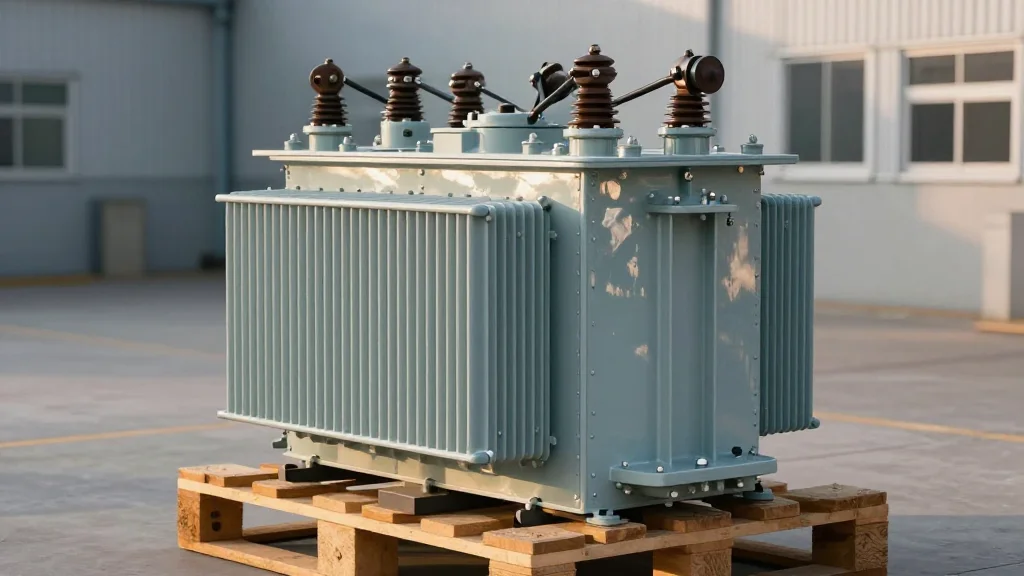
What Does Trump’s Wartime Powers Flex Mean for Transformers and Other Grid Equipment Shortages?
Companies Mentioned
Why It Matters
The action could reshape U.S. grid supply chains by unlocking federal resources for domestic manufacturing, but limited funding and competing fossil‑fuel priorities may blunt its effectiveness.
Key Takeaways
- •DPA memo flags transformer and grid component shortages as “dangerously limited.”
- •FY2026 DPA funding left about $323 million, insufficient for large‑scale rollout.
- •NEMA urges DOE guidance; EEI backs domestic manufacturing boost.
- •Critics warn DPA may prioritize fossil‑fuel exports over grid resilience.
- •Lead times for distribution transformers now exceed a year, double historic levels.
Pulse Analysis
Rising electricity demand, driven by data‑center growth and climate‑related peak loads, has exposed a fragile U.S. power‑grid supply chain. Transformers, high‑voltage conductors and substation gear are now backordered for more than twelve months, a stark departure from historic lead times. The Defense Production Act, a Cold‑War‑era tool for national‑security manufacturing, offers a legal pathway to accelerate domestic production, but its effectiveness hinges on clear priorities and sufficient financing.
Industry voices are cautiously optimistic. The National Electrical Manufacturers Association (NEMA) and the Edison Electric Institute (EEI) see the DPA determinations as a catalyst for expanding U.S. manufacturing capacity, potentially reducing reliance on overseas suppliers. However, the remaining FY 2026 DPA budget—roughly $323 million—covers only a fraction of the estimated billions needed to overhaul the grid’s critical components. Without additional appropriations or a dedicated funding stream, the initiative may fall short of its ambitious targets.
Political dynamics add another layer of uncertainty. Environmental groups warn that the DPA could be leveraged to prioritize coal, oil and natural‑gas export projects, diverting scarce resources away from grid resilience and clean‑energy technologies. This tension underscores a broader debate over the nation’s energy strategy: whether to reinforce legacy fossil‑fuel infrastructure or accelerate the transition to renewable sources. The outcome will shape the reliability, affordability, and decarbonization trajectory of America’s power system for years to come.
What does Trump’s wartime powers flex mean for transformers and other grid equipment shortages?
Comments
Want to join the conversation?
Loading comments...