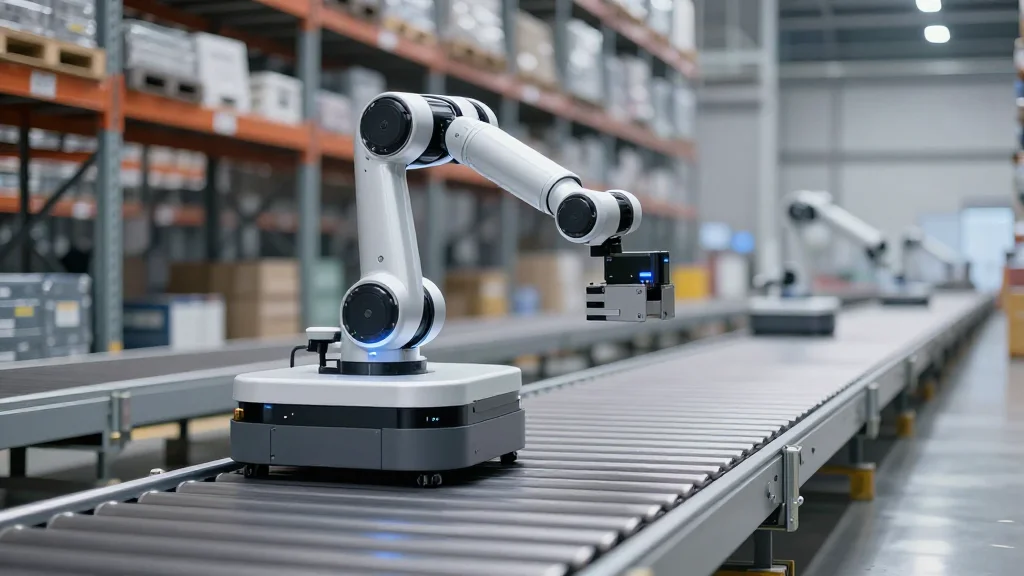
Why Flexibility Is Becoming the Core of Warehouse Automation
Why It Matters
Flexible automation lets companies reconfigure space and labor quickly, protecting margins amid demand swings and accelerating delivery performance across the logistics sector.
Key Takeaways
- •AI‑driven robots enable rapid reconfiguration of storage layouts
- •Modular automation can cut capital spend by up to 30%
- •Interoperable systems improve order‑to‑ship time by 20%
- •Workforce upskilling bridges human‑robot collaboration gaps
Pulse Analysis
The warehouse floor is no longer a static assembly line; it is evolving into a dynamic, data‑rich environment where machines and software communicate in real time. Rising e‑commerce volumes, same‑day delivery promises, and unpredictable demand spikes have forced logistics operators to abandon single‑purpose conveyer belts in favor of AI‑guided robots that can be redeployed across aisles with a few clicks. This shift reduces the need for costly over‑building and allows firms to match capacity to order flow, a critical advantage in today’s fast‑moving market.
At the heart of this transformation are modular automation platforms that combine plug‑and‑play hardware with open‑source software standards. By decoupling hardware from control logic, companies can integrate new robotic arms, autonomous mobile robots or smart shelving without overhauling existing infrastructure. Interoperability also means that warehouse management systems can orchestrate disparate devices—ranging from vision‑guided pickers to collaborative cobots—through a unified data layer, delivering end‑to‑end visibility and predictive analytics. AI algorithms continuously learn from sensor feeds, optimizing routing, inventory placement and labor allocation to squeeze out incremental efficiency gains.
For executives, the business case extends beyond operational speed. Flexible automation reduces upfront capital expenditures, shortens ROI cycles, and mitigates the risk of stranded assets when market conditions change. Moreover, it empowers a hybrid workforce where humans focus on exception handling while robots manage repetitive tasks, fostering higher job satisfaction and lower turnover. As supply chains become more resilient and customer expectations rise, adaptability will be the decisive factor separating industry leaders from laggards.
Why Flexibility is Becoming the Core of Warehouse Automation
Comments
Want to join the conversation?
Loading comments...