Why High-Fidelity 3D Still Can’t Scale to Millions of Users (And How Miris Fixed It)
•March 1, 2026
0
Why It Matters
By removing per‑user GPU requirements and enabling adaptive, progressive 3D delivery, Miris can unlock high‑fidelity interactive experiences for e‑commerce, digital twins, and AR at internet scale, reshaping the economics of immersive content.
Key Takeaways
- •Traditional 3D delivery relies on full downloads, causing latency.
- •Pixel streaming needs costly GPU servers, limiting scalability.
- •Miris streams adaptive 3D data, similar to video streaming.
- •Adaptive fidelity reduces bandwidth, works on any device.
- •Serverless model cuts costs, scales linearly with usage.
Pulse Analysis
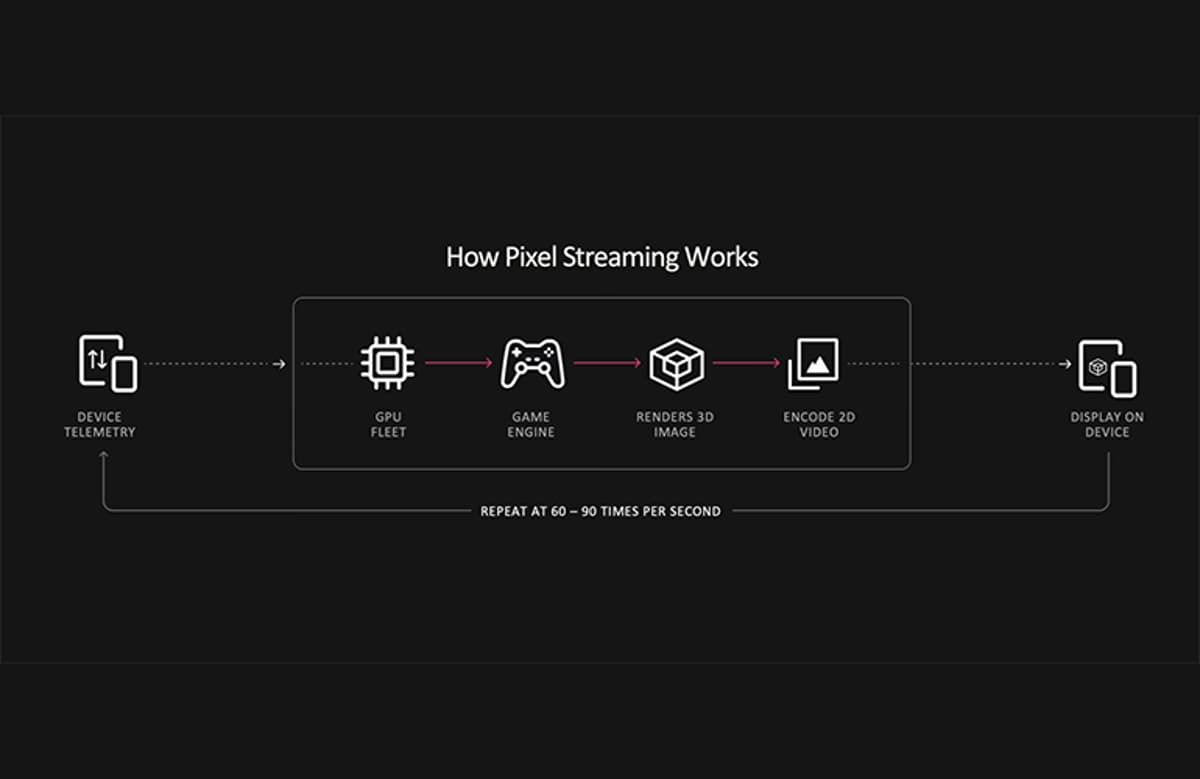
The surge of immersive retail, robotics, and digital‑twin applications has exposed a fundamental bottleneck: delivering high‑fidelity 3D at scale. Conventional pipelines force developers to package entire geometry and textures into downloadable binaries, or to rely on pixel‑streaming that offloads rendering to cloud GPUs. Both models suffer from long load times, prohibitive hardware costs, and capacity constraints that prevent millions of concurrent users from accessing rich 3D content.
Miris tackles this problem by re‑imagining the delivery stack as a true streaming service for spatial data. Borrowing the adaptive‑bitrate principles that transformed video, Miris transmits a highly optimized field‑based representation that progressively refines level‑of‑detail in real time. The protocol evaluates network bandwidth, client GPU capacity, scene complexity, and user gaze to prioritize the most relevant data, delivering instant interactivity that sharpens as more information arrives. Crucially, the system is serverless: once assets are pre‑conditioned, distribution occurs via a CDN‑like network, eliminating the need for per‑user GPU farms and reducing costs to a linear bandwidth model.
The implications span multiple sectors. Advertisers can embed photorealistic 3D products within standard ad slots without the usual megabyte limits, while architects and real‑estate firms can showcase full‑scale, high‑detail models on any laptop or mobile device. Digital twins become instantly accessible to field technicians, and e‑commerce platforms can offer interactive product configurators that load instantly and improve with user focus. As Miris moves from private beta to public release, its adaptive 3D streaming could make immersive experiences as pervasive and cost‑effective as streaming video today.
Why High-Fidelity 3D Still Can’t Scale to Millions of Users (And How Miris Fixed It)
0
Comments
Want to join the conversation?
Loading comments...