Why Manufacturing Execution Is Becoming More Software-Defined
Companies Mentioned
Why It Matters
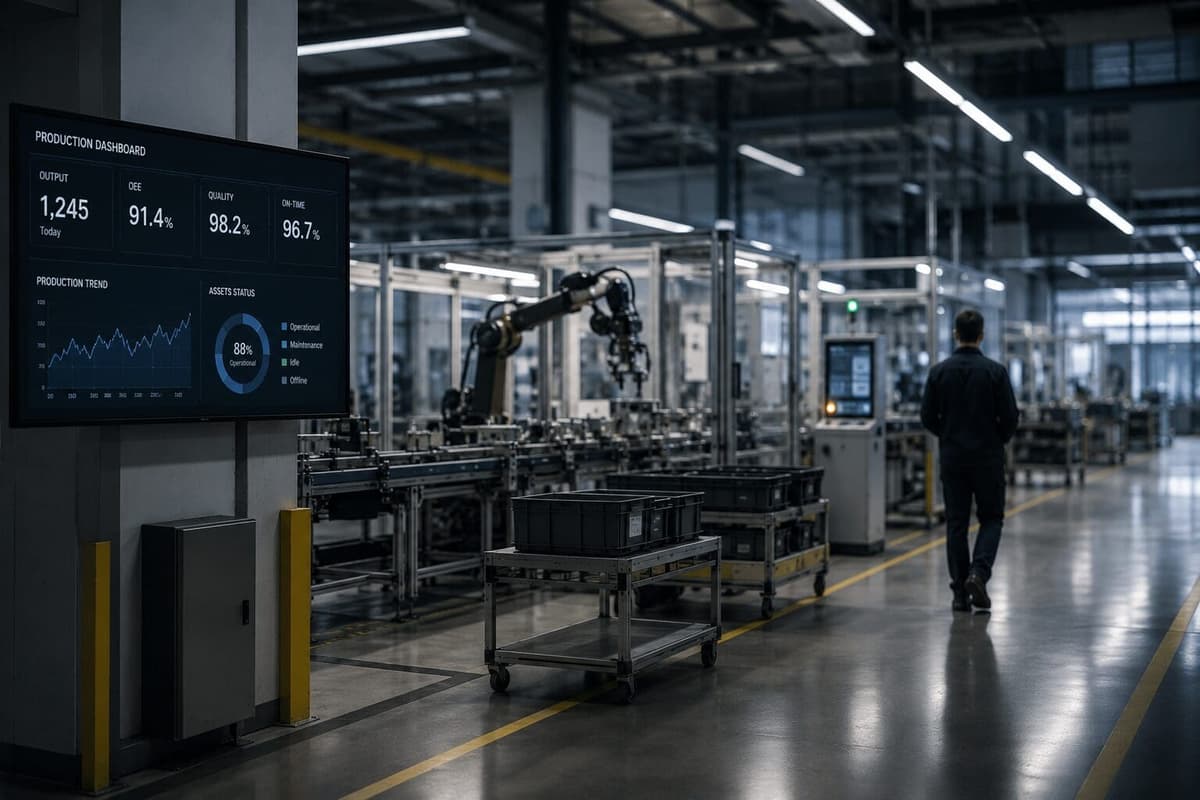
Software‑defined execution transforms manufacturing from a static production line into a responsive ecosystem, giving firms a decisive edge in an increasingly unpredictable market. The ability to synchronize disparate functions faster than competitors can translate directly into higher margins and market share.
Key Takeaways
- •Software-defined execution layers coordinate assets, data, and workflows.
- •Adaptive orchestration reduces downtime from supply, labor, and logistics disruptions.
- •Graph‑AI and digital twins enable real‑time context awareness on the shop floor.
- •Manufacturers invest heavily in industrial data fabrics and event‑driven architectures.
- •Competitive edge shifts from hardware density to coordinated operational intelligence.
Pulse Analysis
The manufacturing landscape is shedding its reliance on deterministic hardware optimization and embracing a software‑first mindset. As geopolitical tensions, transportation bottlenecks, and ever‑shorter product cycles erode the predictability of traditional factories, firms need a coordination layer that can ingest disparate signals—supplier alerts, inventory levels, labor availability—and reconfigure production on the fly. This operational agility is becoming the new benchmark for competitiveness, eclipsing raw equipment throughput.
Enabling technologies are converging to make this vision practical. Digital twins provide a live replica of the plant, allowing AI models to simulate outcomes before changes are applied. Graph‑oriented AI and Multi‑Component Platforms (MCP) map relationships between machines, workers, and logistics, delivering context‑aware recommendations. Event‑driven architectures and industrial data fabrics stitch together legacy control systems, ERP, and IoT sensors, creating a unified data fabric that supports near‑real‑time decision making. Together, these tools turn the factory floor into a responsive, data‑rich environment.
For executives, the strategic implication is clear: capital allocation must shift from pure automation hardware to integrated orchestration platforms. Companies that embed adaptive software layers can mitigate disruptions, accelerate time‑to‑market for customized products, and extract higher value from existing equipment. The market is already rewarding early adopters, with venture capital flowing into firms that specialize in operational intelligence and AI‑driven execution. Over the next decade, manufacturers that master software‑defined coordination will likely outpace peers in profitability and resilience.
Why Manufacturing Execution Is Becoming More Software-Defined
Comments
Want to join the conversation?
Loading comments...