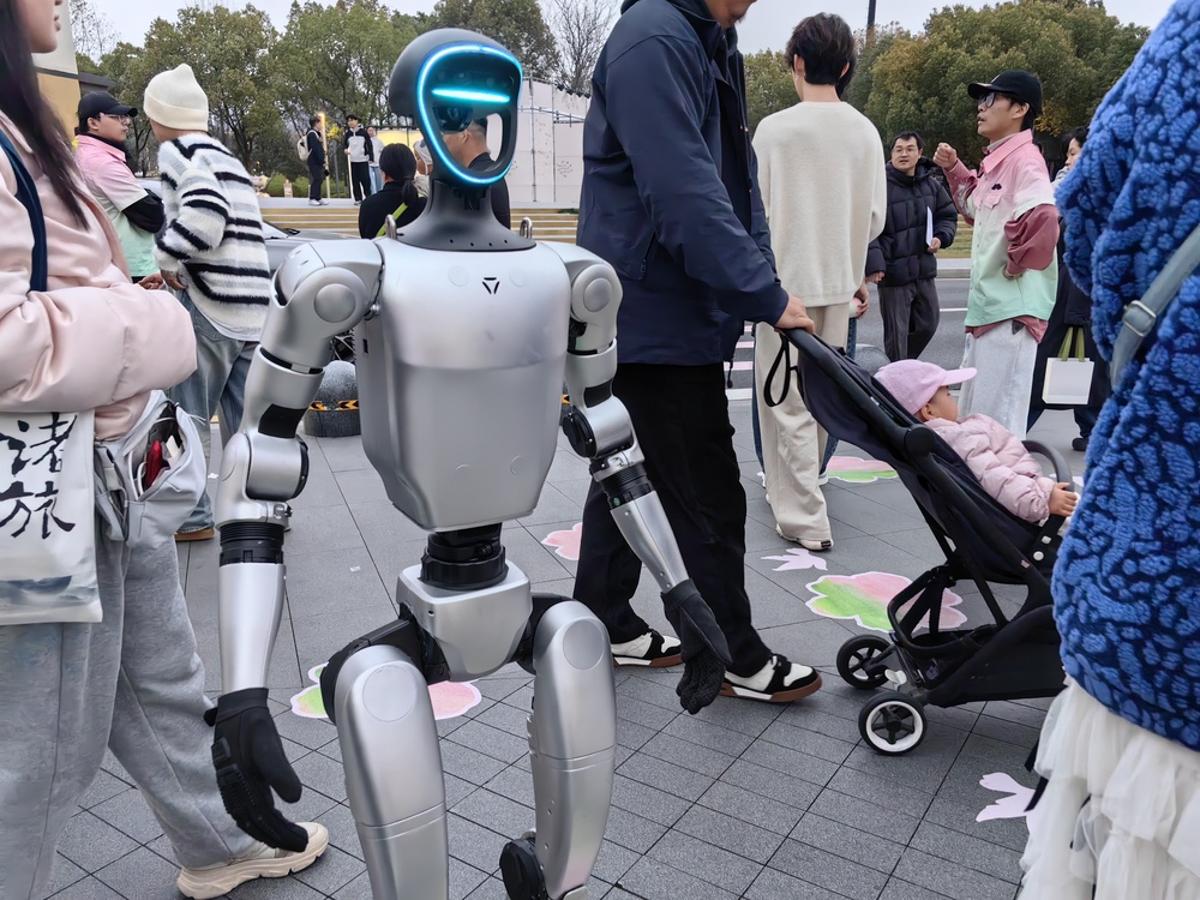
Wingzz China: Chinese Robotics and Technology Have Moved Beyond the Demonstration Phase
Why It Matters
China’s ability to turn prototypes into production‑ready solutions faster threatens Europe’s competitive edge in automation and AI, forcing a rethink of innovation timelines and investment priorities.
Key Takeaways
- •Chinese firms ship inexpensive robots for warehouse cleaning and logistics
- •AI models like DeepSeek prove high performance without massive budgets
- •Platforms such as Douyin Shop predict purchases before consumers search
- •BYD integrates batteries, chips, software, and manufacturing under one roof
- •Europe risks falling behind as Chinese firms learn and scale faster
Pulse Analysis
The Chinese technology landscape has entered a phase where robotics are no longer novelty acts but workhorses embedded in daily operations. Start‑ups and incumbents alike—Unitree, UBTech, DEEP Robotics—focus on affordable machines that handle inspections, logistics and cleaning, allowing small and medium‑size enterprises to experiment without prohibitive capital outlays. This pragmatic approach accelerates adoption curves, turning what was once a proof‑of‑concept into a scalable service layer that underpins supply‑chain efficiency and labor productivity.
Parallel to hardware, artificial‑intelligence development in China is becoming increasingly cost‑effective and open. DeepSeek’s large‑language model demonstrates that cutting‑edge performance can be achieved without the multi‑billion‑dollar budgets typical of Western labs. Major cloud providers such as Alibaba, Baidu and emerging players like Zhipu AI embed these models directly into SaaS tools, automating customer service, inventory forecasting and software development. European firms, many still in pilot phases, risk lagging behind as Chinese companies embed AI into core business workflows, turning it from a gimmick into a utility.
For Europe, the strategic risk lies not in price differentials but in learning velocity. China’s integrated ecosystems—spanning chips, batteries, sensors and cloud infrastructure—enable rapid iteration from prototype to platform to nationwide infrastructure. Companies such as BYD and CATL illustrate how vertical integration shortens time‑to‑market and creates self‑reinforcing feedback loops. European leaders must therefore accelerate their own operational discipline, invest in cross‑functional tech stacks, and cultivate partnerships that mirror China’s engine‑room approach, or risk watching Chinese standards become the global baseline.
Wingzz China: Chinese robotics and technology have moved beyond the demonstration phase
Comments
Want to join the conversation?
Loading comments...