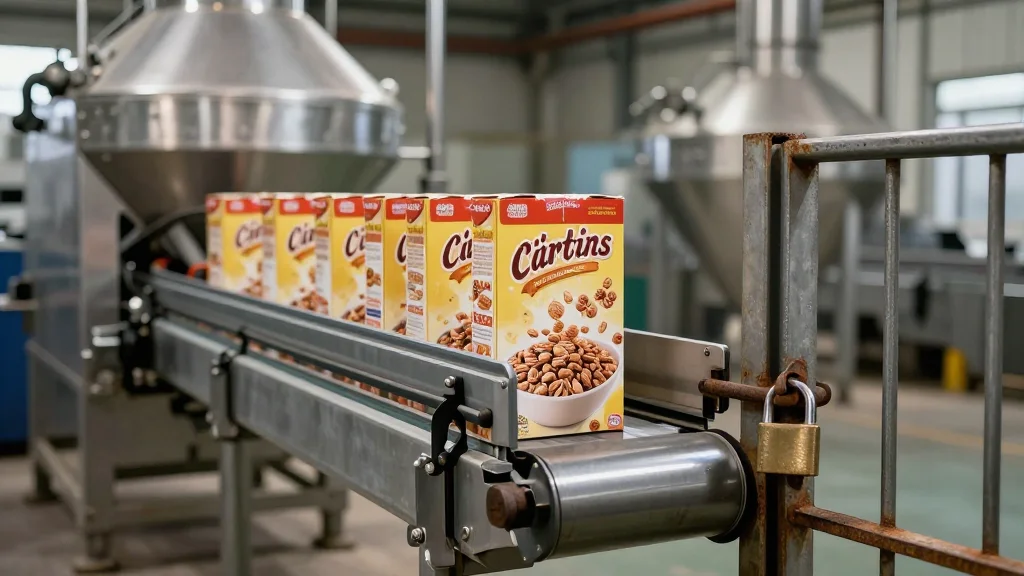
WK Kellogg to Shut Omaha Cereal Plant, Cutting 451 Jobs

Companies Mentioned
Why It Matters
The closure of WK Kellogg's Omaha plant highlights a broader transformation in the U.S. food manufacturing landscape, where legacy product lines are being reevaluated in light of shifting consumer health preferences and stricter regulatory expectations. By eliminating over 450 jobs, the move not only reshapes the regional labor market but also serves as a bellwether for other manufacturers facing similar demand contractions. For the cereal industry, the shutdown reinforces the urgency of diversifying product portfolios and investing in flexible manufacturing capabilities that can adapt to rapid changes in consumer taste. Companies that fail to align their production capacity with market realities risk further plant closures and deeper supply‑chain disruptions.
Key Takeaways
- •WK Kellogg files WARN notice to close Omaha cereal plant, ending 451 positions.
- •Layoffs occur in two phases: ~100 workers (July 20‑Aug 3) and ~350 workers (Aug 4‑18).
- •Cold‑cereal sales dropped >13% from 2.5 bn boxes (2021) to 2.1 bn boxes (2025).
- •Shift toward protein‑rich, less‑processed foods and FDA pressure on synthetic dyes drive the closure.
- •Plant shutdown part of a supply‑chain modernization plan announced in August 2024.
Pulse Analysis
WK Kellogg's decision to shutter its Omaha facility reflects a strategic pivot that many legacy food manufacturers are forced to make. The cereal segment, once a staple of American breakfast culture, has been eroding for years as consumers gravitate toward alternatives perceived as healthier. By consolidating production, Kellogg can achieve economies of scale at its remaining plants, but the trade‑off is a loss of regional manufacturing capacity and a potential hit to brand loyalty in the Midwest.
Historically, large‑scale cereal production relied on high‑volume, low‑margin operations. The current market, however, rewards agility and the ability to innovate quickly with new formulations that meet clean‑label expectations. Kellogg's move may accelerate investment in advanced processing lines at its other sites, positioning the company to launch reformulated products that omit synthetic dyes and reduce added sugars. Competitors that have already embraced such changes—like General Mills with its revamped Cheerios line—could capture market share if Kellogg's transition stalls.
Looking ahead, the Omaha closure could set a precedent for further rationalization across the industry. If consumer trends continue to favor protein‑rich snacks and plant‑based alternatives, manufacturers may need to reallocate resources away from traditional cereal lines altogether. The key question for WK Kellogg will be whether its streamlined supply chain can sustain profitability while delivering the next generation of breakfast products that align with evolving dietary standards.
WK Kellogg to Shut Omaha Cereal Plant, Cutting 451 Jobs
Comments
Want to join the conversation?
Loading comments...