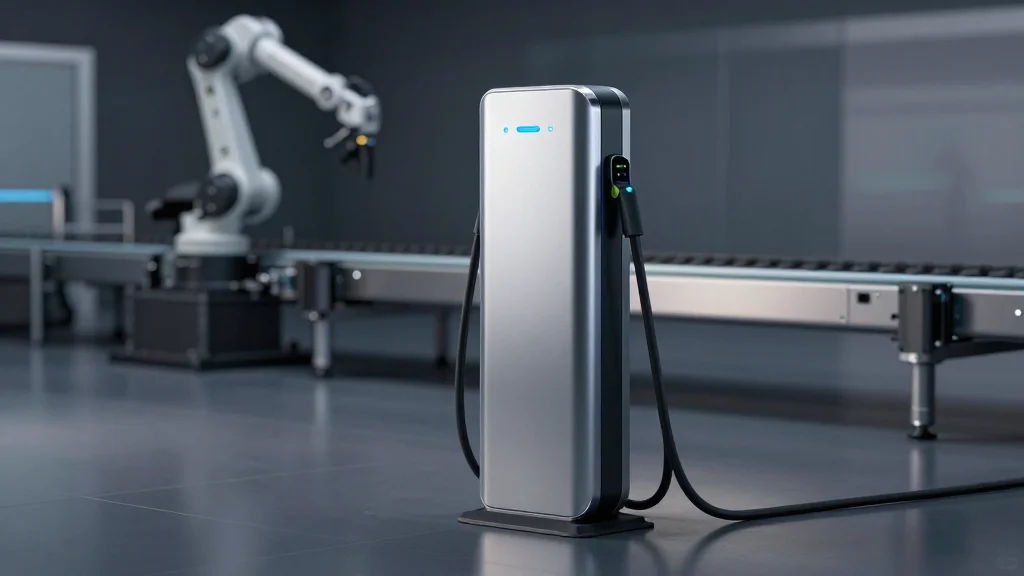
XCharge Launches First European EV Charger Assembly Plant in Spain

Companies Mentioned
Why It Matters
The Silla plant signals a shift from a purely import‑based EV‑charging supply chain to a more localized, resilient model. By manufacturing in Europe, XCharge can respond faster to market demand, tailor solutions to regional grid realities, and reduce carbon emissions associated with long‑distance logistics. The facility also bolsters Spain’s industrial diversification, creating high‑skill employment and reinforcing the country’s role in the continent’s broader decarbonisation agenda. For the European EV ecosystem, domestic production of advanced chargers like GridLink reduces bottlenecks in infrastructure rollout, a critical factor for meeting the EU’s target of 30 million electric vehicles on the road by 2030. Competitors will likely accelerate their own manufacturing investments, intensifying competition and driving further innovation across the sector.
Key Takeaways
- •XCharge opened a 3,000‑sq m assembly plant in Silla, Valencia, Spain.
- •Full production of GridLink fast chargers expected in 2027.
- •GridLink delivers up to 200 kW with a 215 kWh battery, expandable to 430 kWh.
- •Plant supports Spain’s EV market, which is rapidly expanding toward EU targets.
- •XCharge’s European footprint now includes facilities in Madrid and Hamburg.
Pulse Analysis
XCharge’s decision to build a manufacturing base in Spain reflects a broader industry trend toward supply‑chain localisation. Historically, most EV‑charging hardware has been produced in Asia, creating lead‑time challenges and exposing OEMs to geopolitical risk. By moving assembly to the EU, XCharge not only shortens delivery cycles but also gains regulatory goodwill, as European policymakers increasingly favour domestic production for strategic sectors.
The GridLink platform is a tactical response to a persistent pain point: the high cost of upgrading distribution grids to accommodate ultra‑fast chargers. By embedding a sizable battery buffer, XCharge sidesteps the need for costly grid reinforcement, making high‑power stations viable in regions with limited infrastructure. This approach could accelerate deployment in suburban and rural locales, where grid capacity is a major barrier.
Competitively, XCharge’s move may force rivals such as ABB, Siemens and ChargePoint to reconsider their own manufacturing footprints. If XCharge can achieve cost parity or advantage through local sourcing and reduced logistics, it could capture a larger share of the projected €30 billion European market. However, success hinges on scaling production efficiently, maintaining quality, and navigating Spain’s labor and regulatory environment. The upcoming 2027 ramp‑up will be a litmus test for the viability of a European‑centric charging hardware model.
In the longer term, the Silla plant could become a nucleus for ancillary innovation—battery chemistry, power‑electronics, and renewable‑energy integration—potentially spawning a regional cluster akin to Germany’s automotive hubs. Such clustering would reinforce Europe’s strategic autonomy in the clean‑mobility transition, aligning industrial policy with climate objectives.
XCharge Launches First European EV Charger Assembly Plant in Spain
Comments
Want to join the conversation?
Loading comments...