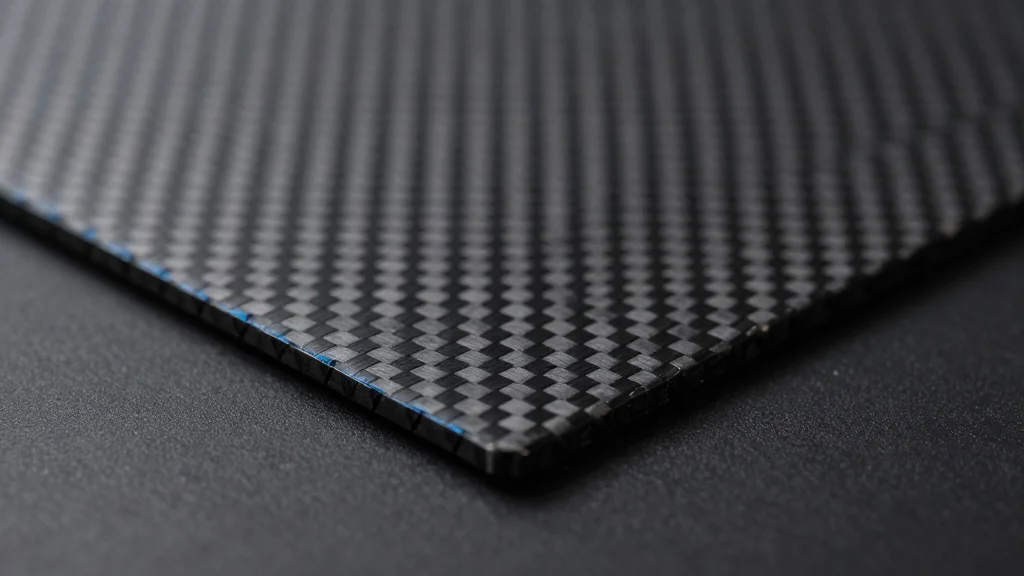
Xenia Materials Introduces the High Modulus Upgrade
Why It Matters
The HM Upgrade lets manufacturers create lighter, stiffer components without a weight penalty, unlocking higher‑performance designs in sectors where every gram counts. It strengthens Xenia’s position in the competitive reinforced‑thermoplastic market.
Key Takeaways
- •HM Upgrade adds ~15% tensile modulus to thermoplastic composites.
- •Tensile strength and flexural modulus also rise ~15% with HM.
- •Impact resistance can improve up to 20% depending on matrix.
- •Compatible with Xecarb® across PA, PP, PEBA polymer families.
- •Opens new lightweight opportunities in aerospace and high‑performance sectors.
Pulse Analysis
The reinforced thermoplastic composite market has been under pressure to deliver higher stiffness while maintaining the lightweight advantage that makes these materials attractive for aerospace and high‑performance engineering. Xenia Materials’ High Modulus Upgrade arrives at a time when designers are seeking incremental gains without redesigning entire supply chains. By integrating high‑modulus carbon fibres into its existing Xecarb® platform, Xenia offers a plug‑and‑play solution that can be adopted across multiple polymer matrices, reducing the time to market for upgraded parts.
From a technical standpoint, the HM Upgrade delivers an average 15% uplift in tensile modulus, tensile strength at break, and flexural modulus, all while keeping the compound’s density unchanged. This balance of stiffness and weight is rare; most traditional approaches that increase modulus add bulk or require heavier resins. Additionally, impact resistance improvements of up to 20% broaden the material’s suitability for applications that face dynamic loading, such as motorsport chassis or protective sports equipment. The ability to apply the upgrade to polymers ranging from PA66 to PP and PEBA means manufacturers can select the optimal matrix for thermal, chemical, or processing requirements without sacrificing performance.
Industry implications are significant. In aerospace, a 15% stiffness gain can translate to thinner wing skins or fuselage panels, directly reducing fuel burn. Motorsport teams gain a competitive edge with chassis that resist deformation under extreme loads while staying within strict weight limits. For industrial and consumer‑grade products, the enhanced durability promises longer service life and lower warranty costs. As competitors race to offer comparable high‑modulus solutions, Xenia’s broad polymer compatibility and immediate availability position it as a go‑to partner for OEMs seeking next‑generation composite performance. The rollout underscores a broader shift toward modular, performance‑focused upgrades rather than wholesale material overhauls.
Xenia Materials introduces the High Modulus Upgrade
Comments
Want to join the conversation?
Loading comments...