The New Warehouse
Locus Array: The Next Leap in Warehouse Fulfillment Automation
Why It Matters
Labor shortages and rising labor costs are major challenges for U.S. warehouses, and fully autonomous robots like Locus Array promise to mitigate those pressures while boosting throughput and accuracy. The technology’s quick, low‑cost deployment means midsize and large distributors can adopt advanced automation faster, making the episode especially relevant as the industry seeks scalable solutions ahead of the 2026 holiday season.
Key Takeaways
- •Locus Array automates picking, packing, and inventory tasks
- •Ten‑foot robot handles six tote sizes simultaneously
- •Omnidirectional base achieves five‑millimeter positioning accuracy
- •Reduces labor reliance, enabling 24/7 warehouse operations
- •Quick deployment: DHL site live in four weeks
Pulse Analysis
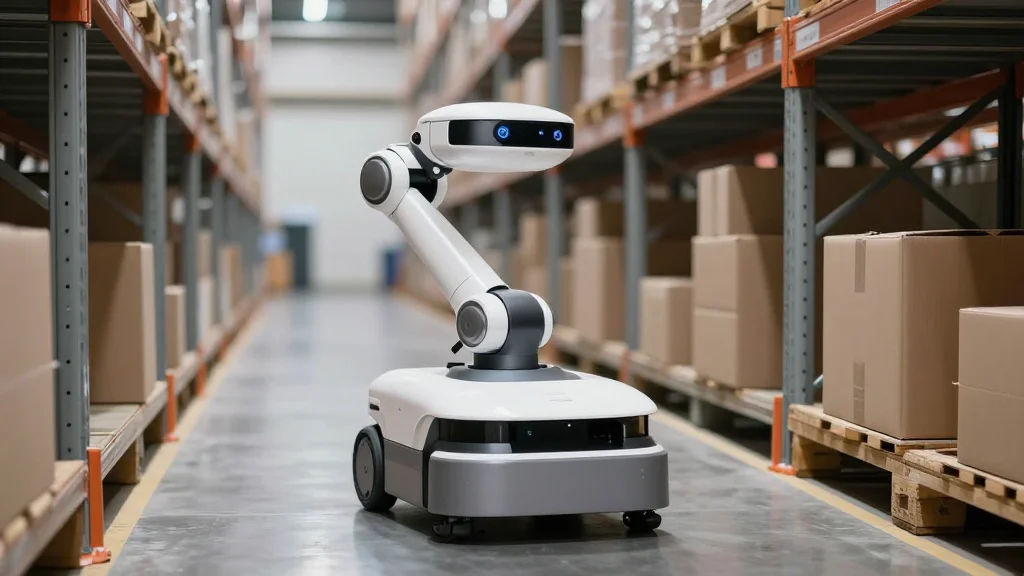
The Locus Array unveiled at Modex 2026 represents a leap in autonomous fulfillment robotics. Standing ten feet tall, the system combines an omnidirectional base, a robotic arm, and a tote‑carriage that can hold up to six order totes of varying dimensions. AI‑driven cameras on the arm and carriage identify items, perform picks, and verify inventory in real time, while the robot independently transports totes through narrow aisles, drops completed orders at flow racks or conveyors, and even conducts overnight re‑slotting and counting. All operations occur without human intervention, delivering end‑to‑end pick‑to‑pack automation.
Labor scarcity and rising wage pressures have forced distributors to seek technology that can sustain 24/7 throughput. Locus Array addresses these challenges by eliminating the need for pickers on the floor, reducing labor costs and turnover risk. Its lightweight design integrates with standard totes and racking, allowing a four‑week rollout—as demonstrated by DHL’s rapid deployment—without major facility modifications. The robot’s five‑millimeter positioning accuracy maximizes storage density, while its AI inventory counting provides continuous cycle‑count data, improving accuracy and reducing shrink. Together, these features promise faster order fulfillment, higher SKU coverage, and a clear ROI for midsize to large warehouses.
From a strategic perspective, the Array’s ability to handle both picking and put‑away in a single platform differentiates it from collaborative AMRs that require human supervision. By covering 100 % of SKUs and supporting batch consolidation through the Locus One intelligence layer, the system minimizes travel distance and boosts order density. Ongoing R&D promises expanded grasp capabilities, targeting the remaining 30‑40 % of difficult‑to‑pick items. As more operators adopt fully autonomous fulfillment, the competitive bar for warehouse automation will rise, making early adoption a potential market advantage. Interested firms can request a demo at LocusRobotics.com and join the growing waiting list.
Episode Description
Welcome to this episode of The New Warehouse Podcast. Kevin chats with Kait Peterson of Locus Robotics live from MODEX 2026. The conversation centers on Locus Array, a new autonomous system built to move beyond pick-assist robotics.
Peterson explains how Array was built to answer those demands while working within standard racking and tote environments. This episode offers a close look at where fulfillment automation is heading.
Learn more about our sponsor IFS Softeon here.
Follow us on LinkedIn and YouTube.
Support the show
Comments
Want to join the conversation?
Loading comments...