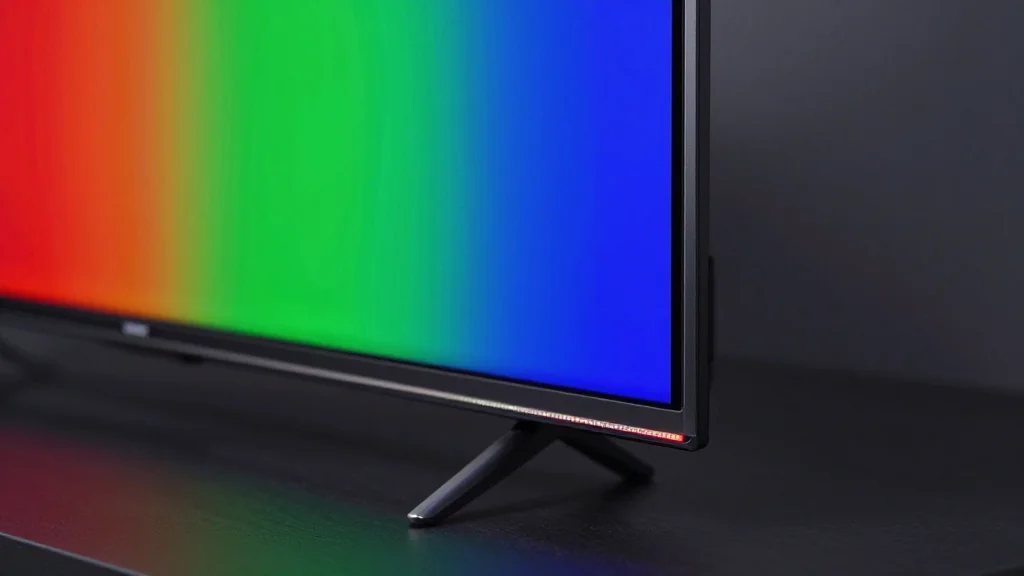
Samsung Launches $27,700 Micro RGB R95H TV, Aiming to Outshine OLED and QLED

Why It Matters
Samsung’s Micro RGB R95H marks the first mass‑market TV that combines true RGB LED backlighting with advanced AI integration. By delivering OLED‑level colour accuracy without burn‑in risk, Samsung challenges the long‑standing dominance of OLED in the premium segment and forces rivals to accelerate their own RGB or AI‑centric roadmaps. The high price point also tests the elasticity of the luxury TV market, where consumers weigh immersive visual performance against cost. If the AI Vision Companion proves useful, it could redefine the TV’s role from a passive screen to an interactive hub, influencing future hardware and software strategies across the consumer tech ecosystem. Additionally, the launch underscores a broader industry shift toward display technologies that prioritize colour volume and energy efficiency over raw resolution. Samsung’s decision to focus on 4K panels, despite the availability of 8K, reflects realistic consumer bandwidth constraints and may set a new benchmark for premium TV specifications in the coming years.
Key Takeaways
- •Samsung unveils Micro RGB R95H with integrated red, green and blue LEDs, 165 Hz refresh and AI Vision Companion
- •Flagship 115‑inch model priced at AU$42,000 (≈ $27,700), with smaller 85‑inch and 55‑inch options at AU$9,999 and AU$2,499
- •Micro RGB technology claims 100 % BT.2020 colour gamut and OLED‑level contrast without burn‑in risk
- •AI Vision Companion, built on Bixby, Perplexivity and Microsoft Copilot, aims to answer user queries on‑screen
- •Competes directly with OLED and QLED flagships; only Samsung and Hisense currently offer 65‑inch RGB LED TVs
Pulse Analysis
Samsung’s Micro RGB rollout is a calculated gamble that leverages two converging trends: the pursuit of ever‑richer colour reproduction and the integration of conversational AI into home entertainment. Historically, premium TV battles have been fought on the axes of contrast (OLED vs. QLED) and resolution (4K vs. 8K). By introducing true RGB LED backlighting, Samsung sidesteps the inherent limitations of quantum‑dot QLEDs—namely, colour purity—and offers a pathway to OLED‑like performance without the longevity concerns of organic panels. This technical edge could force OLED manufacturers to accelerate their own colour‑volume improvements or lower prices to stay competitive.
The pricing strategy, however, is equally pivotal. At roughly $27,700 for the top model, Samsung is targeting a niche of affluent early adopters who value cutting‑edge display tech and AI convenience over cost. The inclusion of Vision AI Companion, which aggregates multiple large language models, signals Samsung’s ambition to make the TV the central hub of the smart home. If users embrace on‑screen AI assistance—especially for sports and gaming—the TV could become a gateway for Samsung’s broader ecosystem, driving sales of compatible appliances and services.
Market reaction will hinge on two factors: real‑world performance and perceived value of the AI features. Early lab tests suggest the colour gamut advantage is tangible, but consumer content rarely exploits the full BT.2020 space, potentially muting the advantage. Meanwhile, AI assistants on TVs have historically struggled with accuracy and latency. Samsung’s success will depend on delivering a seamless, low‑friction experience that genuinely reduces phone‑hand usage, as Simon Howe predicts. Should the R95H meet these expectations, it could redefine the premium TV value proposition and set a new benchmark for integrated AI‑display solutions across the industry.
Samsung launches $27,700 Micro RGB R95H TV, aiming to outshine OLED and QLED
Comments
Want to join the conversation?
Loading comments...