BCM Resources Corp Hires Drillers for Upcoming Thompson Knolls Exploration Program
•March 6, 2026
0
Key Takeaways
- •BCM launches fully funded 2026 drill campaign
- •RC rig will drill through fanglomerate to bedrock
- •DD rig will core to 5,250 ft target depth
- •Vector suggests mineralization increase southwest of TK8
- •Expected cost savings and higher productivity
Summary
BCM Resources Corp announced a fully‑funded 2026 drill campaign at its 100% owned Thompson Knolls porphyry‑skarn Cu‑Ag‑Au‑Mo discovery in British Columbia. The program contracts National EWP to operate a Schramm Epiroc 685 reverse‑circulation rig and TonaTec Exploration to run an AtlasCopco Christensen CS4002 diamond drill, targeting depths up to 5,250 feet. A 155.4‑metre intercept in hole TK8 (0.66% Cu, 0.12 g/t Au, 7.4 g/t Ag) revealed a southwest‑directed vector suggesting additional mineralization. The combined RC and DD approach aims to boost productivity while cutting costs.
Pulse Analysis
The Thompson Knolls project sits on a classic porphyry‑skarn system in British Columbia, hosting copper, gold, silver and molybdenum mineralization that aligns with the province’s growing base‑metal portfolio. BCM’s 2023 drill hole TK8 returned a 155.4‑metre interval grading 0.66 % Cu, 0.12 g/t Au and 7.4 g/t Ag, confirming a robust near‑surface envelope. Since that intercept, the company’s geological team has mapped a clear southwest‑directed vector, suggesting that the high‑grade core may extend deeper and laterally. This geological backdrop underpins the rationale for an aggressive 2026 drilling push.
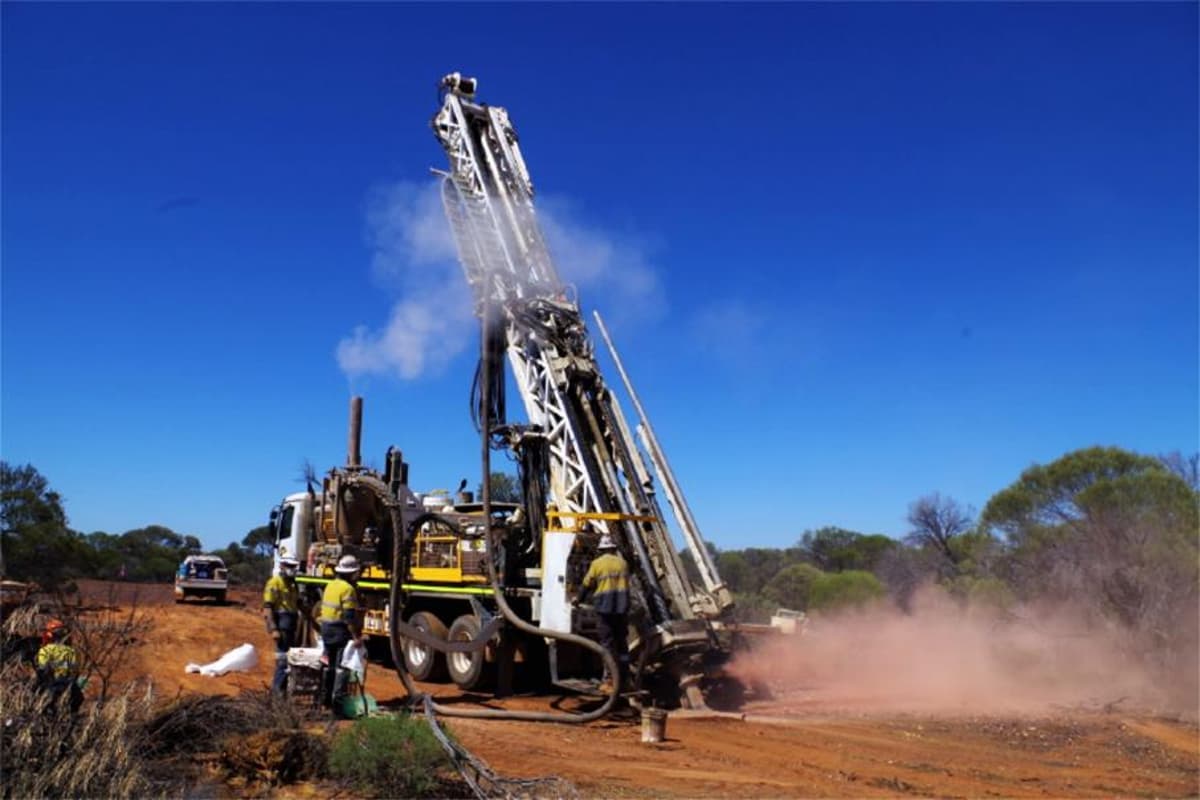
To test the vector, BCM contracted National EWP for a Schramm Epiroc 685 reverse‑circulation rig and TonaTec Exploration for an AtlasCopco Christensen CS4002 diamond drill. The RC rig will cut through the overlying fanglomerate and reach bedrock to a depth of roughly 900 metres, while the DD rig can core beyond 1,600 metres, delivering continuous samples to the target horizon. Combining both methods reduces non‑productive time, cuts per‑metre costs, and provides high‑resolution core for metallurgical testing, a synergy that many junior explorers seek but rarely achieve at this scale.
If the southwest extension proves mineral‑rich, BCM could quickly upgrade its resource estimate, positioning the Thompson Knolls deposit as a multi‑metal flagship in a market hungry for copper and critical minerals. The fully funded nature of the campaign signals confidence from existing shareholders and may attract new capital, especially as ESG‑focused funds look for projects with clear pathways to production. Moreover, the cost‑effective drilling plan sets a benchmark for peers, highlighting how strategic rig selection can accelerate discovery while preserving cash reserves.
Comments
Want to join the conversation?