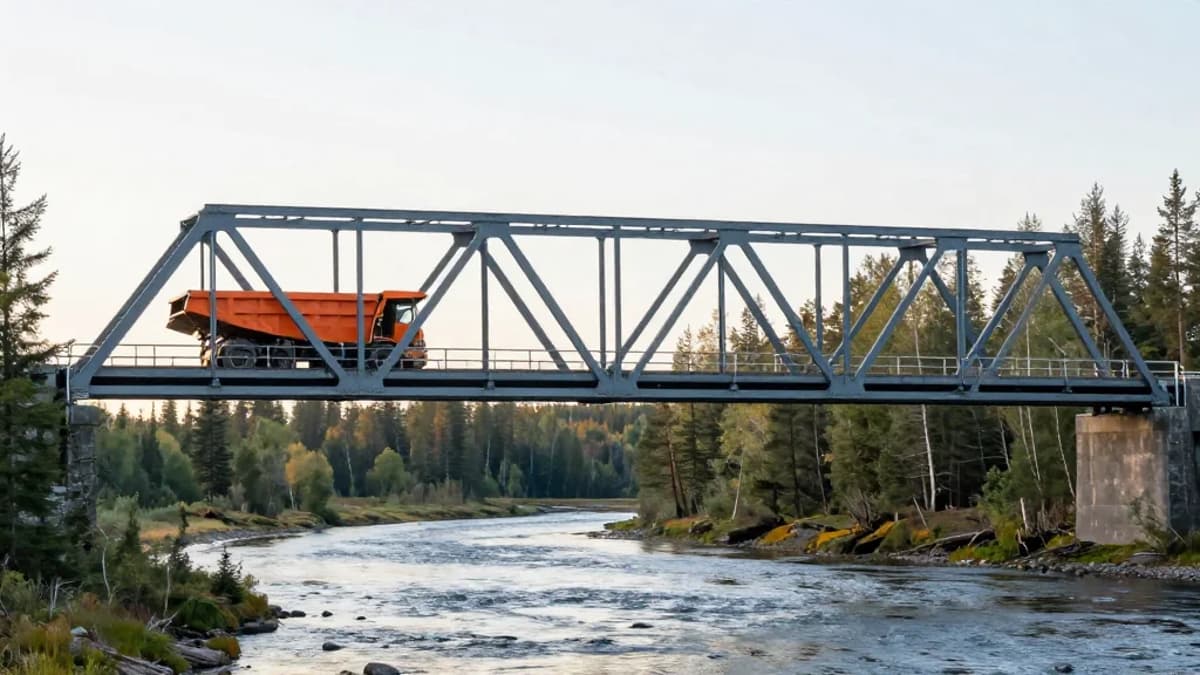
Construction Begins on Berens River Bridge, a Key Link for Frontier Lithium’s PAK Project – by Ian Ross (Northern Ontario Business – February 24, 2026)
•February 26, 2026
0
Why It Matters
The bridge unlocks critical logistics for Frontier Lithium’s PAK project, accelerating production timelines while delivering lasting infrastructure benefits to remote Indigenous communities.
Key Takeaways
- •M.D. Steele wins Berens River bridge contract.
- •Bridge links Pikangikum to Frontier Lithium’s PAK mine.
- •Project enables permanent road access for remote mining site.
- •Expected to boost economic activity for local First Nations.
- •Construction start marks milestone for regional infrastructure development.
Pulse Analysis
Frontier Lithium’s PAK project, a high‑grade lithium‑bearing deposit in the Canadian Shield, has long been constrained by limited access routes. The remote location, 175 kilometres north of Red Lake, requires reliable transportation for heavy equipment, ore shipments, and workforce mobility. By establishing a permanent crossing over the Berens River, the company can transition from seasonal ice roads to year‑round logistics, reducing operational risk and aligning with investors’ demand for scalable, low‑carbon supply chains.
The bridge contract awarded to Manitoba‑based M.D. Steele Construction reflects a growing trend of Indigenous‑led decision‑making in northern infrastructure. Pikangikum First Nation and the Whitefeather Forest Community Resource Management Authority jointly selected the contractor, ensuring that local priorities and environmental stewardship are embedded from the outset. This partnership not only secures jobs for community members during construction but also positions the bridge as a shared asset that will support broader economic activities, from tourism to small‑scale trade, beyond the mine’s lifespan.
From a macro perspective, the project signals confidence in Canada’s emerging lithium sector, a critical component of the global energy transition. Government support, highlighted by Northern Development and Growth Minister George Pirie’s involvement, underscores the strategic importance of linking resource projects to reliable infrastructure. As the bridge nears completion, it is poised to catalyze further investment in the region, enhance supply chain resilience, and deliver long‑term socioeconomic benefits to Indigenous populations, setting a precedent for collaborative development in remote resource corridors.
Construction begins on Berens River bridge, a key link for Frontier Lithium’s PAK project – by Ian Ross (Northern Ontario Business – February 24, 2026)
0
Comments
Want to join the conversation?
Loading comments...