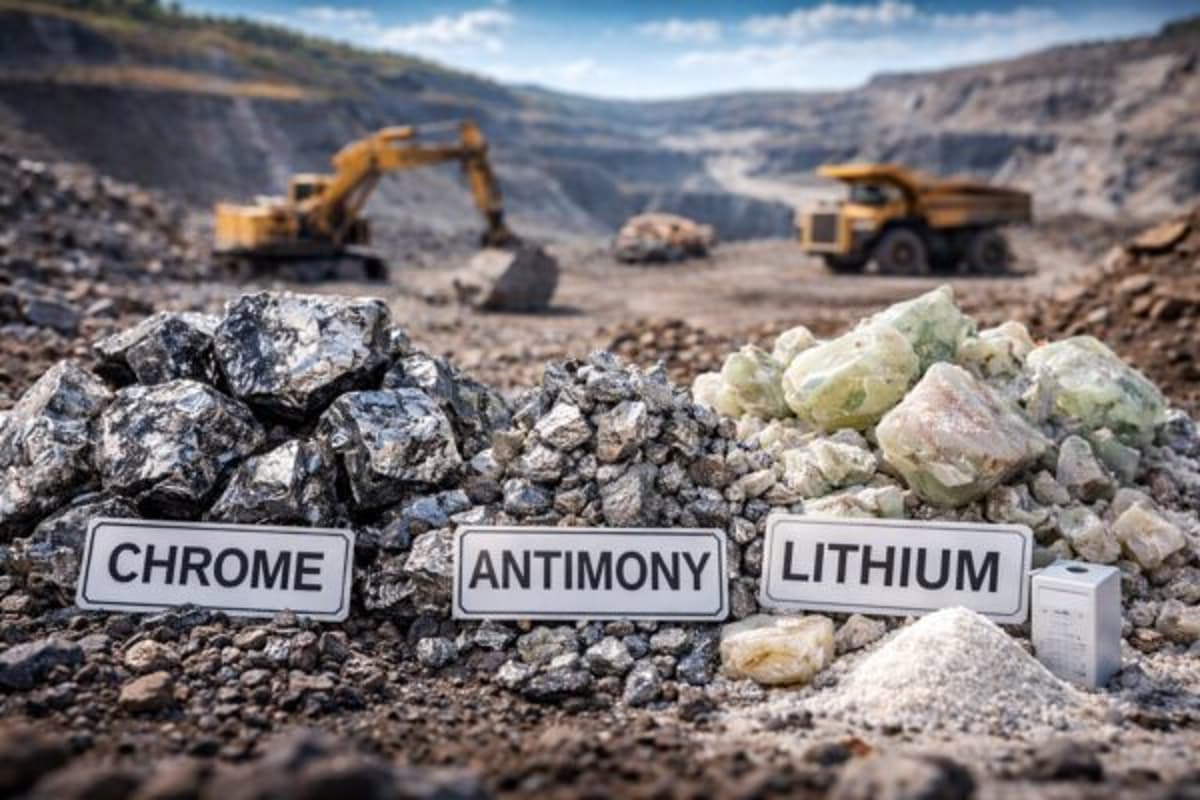
Daily Mineral Prices – 5 March 2026
•March 5, 2026
0
Key Takeaways
- •Lithium carbonate peaks $26,000 per tonne
- •Spodumene spikes to $2,260/t amid demand surge
- •EV battery demand fuels lithium price volatility
- •Antimony trades between $10k‑$13.5k per tonne
- •Chrome concentrate holds $280‑$330/t range
Summary
The Daily Mineral Prices report for March 5 2026 highlights notable movements across several key commodities. Lithium carbonate and hydroxide prices range from $12,000 to $27,000 per tonne, reflecting heightened volatility linked to electric‑vehicle battery demand. Spodumene concentrate surged to $2,190‑$2,260 per tonne as supply tightens, while chrome concentrate remains stable at $280‑$330 per tonne. Antimony trades between $10,000 and $13,500 per tonne, indicating steady market interest.
Pulse Analysis
Lithium’s price trajectory continues to dominate headlines as battery manufacturers scramble to secure raw material supplies. While spot prices for battery‑grade lithium carbonate hover between $12,000 and $26,000 per tonne, futures in China trade near $20,000, underscoring market uncertainty. Analysts attribute this volatility to fluctuating electric‑vehicle demand, policy shifts in key producing nations, and the lag between mining output and battery assembly. Long‑term forecasts still span $11,000‑$28,000 per tonne, suggesting that investors should brace for continued price swings.
Spodumene, the primary source of lithium, has experienced a sharp price rally early in 2026, reaching $2,190‑$2,260 per tonne CIF China. The surge reflects tighter supply as major mines face operational constraints and rising ore grades become scarce. This upward pressure not only inflates lithium hydroxide and carbonate costs but also forces downstream manufacturers to reassess inventory strategies. Companies that can lock in multi‑year contracts or diversify sourcing are better positioned to mitigate the impact of these supply bottlenecks.
Beyond lithium, the report shows relative stability in other industrial minerals. Chrome concentrate remains within a narrow $280‑$330 per tonne band, providing predictability for stainless‑steel producers. Antimony, used in flame retardants and alloys, trades between $10,000 and $13,500 per tonne, reflecting steady demand from electronics and automotive sectors. Together, these price signals offer a snapshot of the broader commodities landscape, where battery‑related metals dominate headlines while traditional minerals maintain modest, yet crucial, roles in global manufacturing supply chains.
Comments
Want to join the conversation?