Smart Fabrics Become Functional Fashion with Rare Earth Technology
Key Takeaways
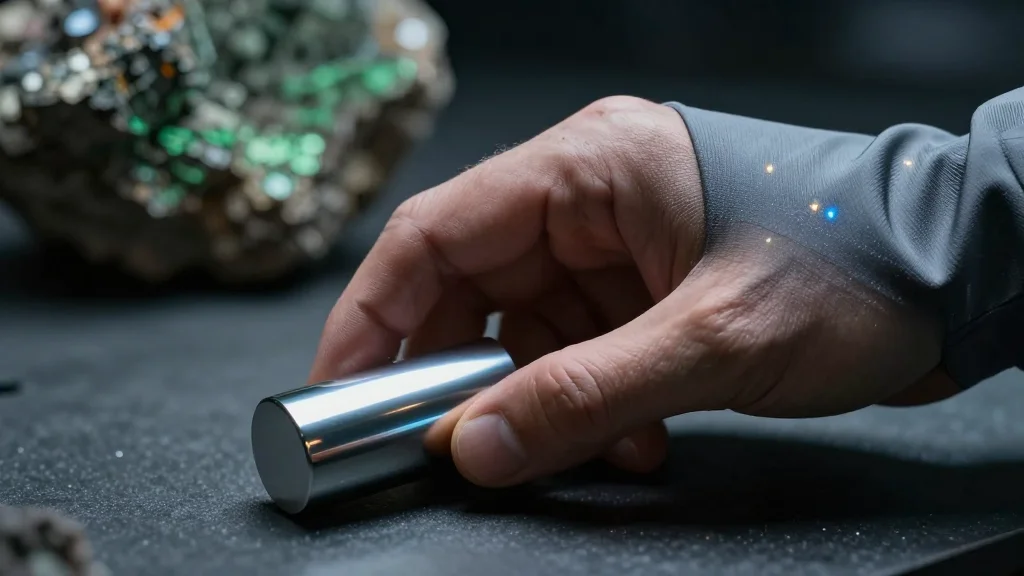
- •NdFeB magnets power micro‑motors in smart garments
- •Rare earth phosphors enable embedded LED color displays
- •Supply bottlenecks concentrate in China’s processing facilities
- •Modular, removable electronics improve washability and recyclability
- •Market projected to grow 25‑30% annually to 2030
Pulse Analysis
The transition from traditional textiles to e‑textiles marks a fundamental shift in apparel engineering. By embedding sensors, actuators and light‑emitting components directly into fabric, manufacturers can deliver continuous physiological monitoring, posture correction and visibility features without bulky accessories. Rare‑earth elements are the silent workhorses behind this capability: neodymium‑based NdFeB magnets generate the magnetic flux needed for tiny vibration motors, while yttrium, europium and terbium phosphors produce vivid colors for safety‑critical displays. These materials enable the high power‑density and efficiency required for lightweight, battery‑friendly modules that can survive daily wear.
However, the promise of smart fabrics is tightly coupled to a fragile supply chain. The majority of rare‑earth mining and processing capacity remains in China, creating price volatility and geopolitical risk for manufacturers. Heavy rare earths such as dysprosium and terbium, essential for temperature‑stable magnets, are especially scarce, prompting industry moves toward grain‑boundary diffusion techniques that cut usage by up to 50 %. Designers are also embracing modular architectures that isolate rare‑earth‑laden components in detachable pods, simplifying washing, repair and eventual recycling. Emerging hydrometallurgical recycling methods could recover valuable magnets and phosphors, but collection logistics must improve to make circularity viable at scale.
Market dynamics reinforce the strategic importance of these materials. The global smart‑textile market, valued at about $3.5 billion in 2022, is projected to expand at 25‑30 % per year, driven primarily by healthcare monitoring and industrial safety applications. Hospitals report up to a 38 % reduction in readmissions when patients wear sensor‑integrated garments, while factories see fewer heat‑stress incidents thanks to real‑time biometric alerts. As demand accelerates, firms that secure diversified rare‑earth sources, adopt repairable designs, and comply with emerging standards will capture the most value, positioning smart fabrics as a cornerstone of the next wave of connected health and workplace safety solutions.
Smart Fabrics Become Functional Fashion with Rare Earth Technology
Comments
Want to join the conversation?