The Fast Lane: 3 Ways To Get More Critical Minerals, Now
Key Takeaways
- •Seaweed-based polymers can extract rare earths from seawater and waste streams
- •New solvent process recovers graphite and SEI components from spent batteries
- •MFI tool quantifies hidden inputs, enabling lower‑cost, lower‑energy supply‑chain designs
- •Licensing portal gives U.S. firms access to lab‑originated mineral technologies
- •Domestic rare‑earth sourcing cuts dependence on China’s market dominance
Pulse Analysis
The United States faces a growing strategic gap in critical minerals, a category that underpins everything from defense electronics to renewable‑energy infrastructure. While the federal government maintains a list of 60 essential minerals, supply constraints and price volatility have intensified as China controls roughly 70% of rare‑earth mining and 90% of its processing. National laboratories, historically focused on basic research, are now commercializing applied solutions through licensing programs, offering a fast‑track for companies to adopt domestically sourced alternatives without building new extraction facilities from scratch.
Among the most promising breakthroughs is a bio‑inspired approach that leverages seaweed‑derived alginate polymers to bind and concentrate rare earth elements from dilute sources such as seawater, mine‑drainage runoff, and industrial effluents. This method sidesteps the high‑energy, high‑waste profile of traditional mining while creating a renewable feedstock for high‑tech applications like lasers and electric‑motor magnets. In parallel, a solvent‑based recycling technique for lithium‑ion batteries captures both graphite anodes and the solid‑electrolyte interphase, turning what was previously a low‑value waste stream into a high‑purity material for new cells. By lowering energy consumption and eliminating the need for virgin graphite imports, the process strengthens the domestic battery supply chain and supports clean‑energy targets.
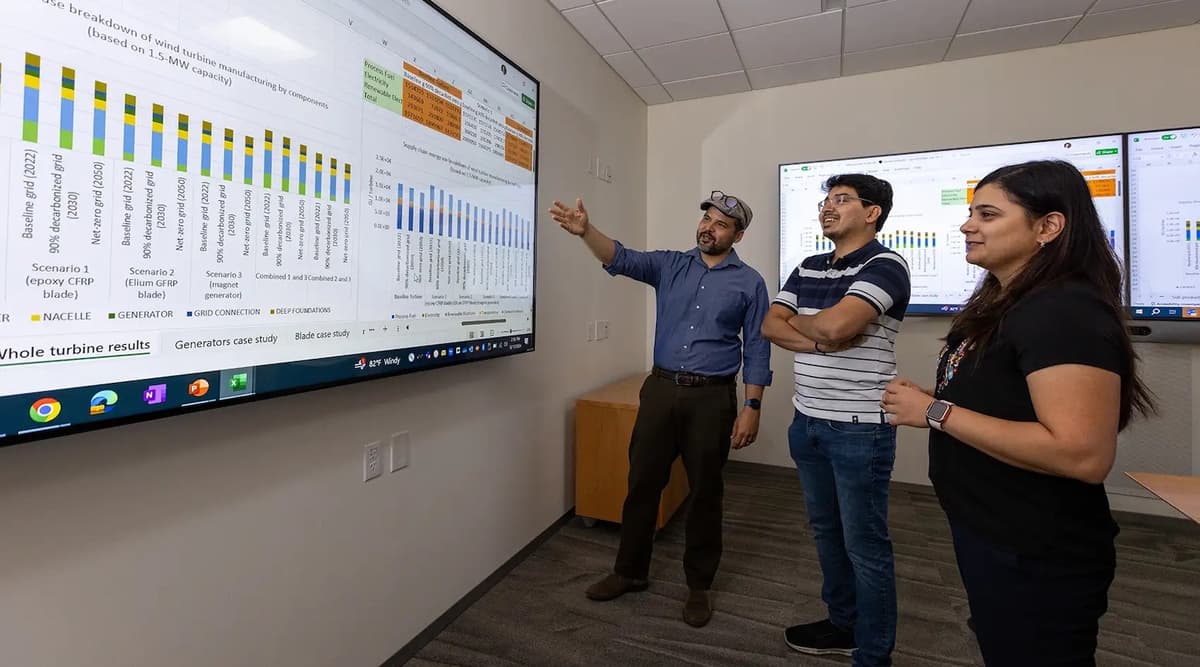
The Materials Flows through Industry (MFI) tool adds a data‑driven layer to these physical innovations. By quantifying the hidden material and energy footprints of products—from copper wire to bio‑insecticides—MFI enables manufacturers to model alternative recipes that cut costs, reduce water use, and shrink carbon emissions. This analytical capability is especially valuable for firms navigating complex, multi‑tiered supply networks where mineral shortages can cascade into production delays. Together, the licensing platform, the bio‑mining and recycling technologies, and the MFI analytics create a synergistic ecosystem that not only mitigates geopolitical risk but also drives competitive advantage for U.S. industry.
The Fast Lane: 3 Ways To Get More Critical Minerals, Now
Comments
Want to join the conversation?