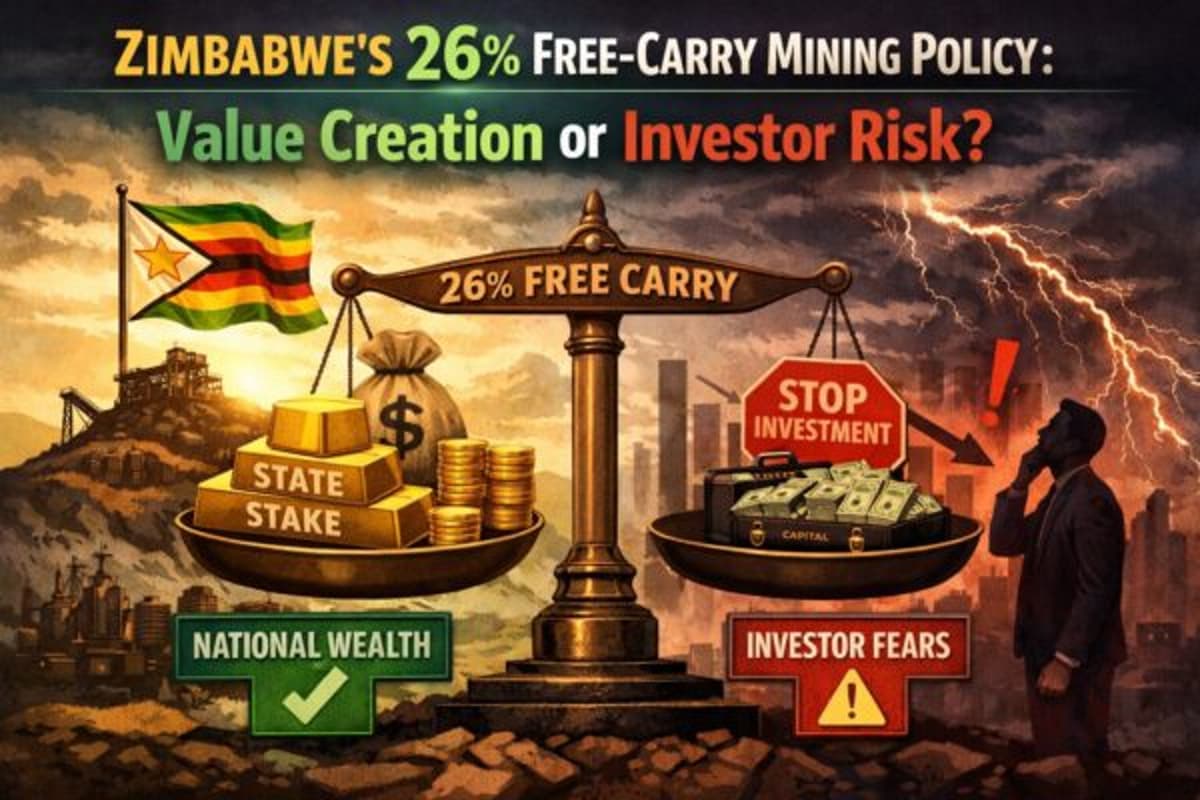
Zimbabwe’s 26% Free-Carry Mining Policy: Value Creation or Investor Risk?
Key Takeaways
- •Zimbabwe aims for 26% free‑carry stake in new mining licences
- •Free‑carry gives state equity without capital, shifting risk to investors
- •Production sharing could deliver similar revenue without diluting ownership
- •Lithium projects face potential renegotiation, risking capital inflows
- •Policy mirrors Africa’s rising resource‑nationalism, testing investment climate
Pulse Analysis
Zimbabwe’s upcoming 26% free‑carry mining policy marks a decisive shift toward state participation in mineral projects without upfront funding. Under a free‑carry arrangement, the government receives equity as a condition of the licence, entitling it to a proportional share of dividends while bearing no exploration or construction costs. This model promises a direct revenue stream for the treasury, but it also re‑writes the financial assumptions that attracted investors to Zimbabwe’s rich deposits, especially as the policy is set to be introduced in 2026 after a period of negotiation with existing operators.
For investors, the free‑carry proposal introduces a new layer of uncertainty. Companies that have already sunk hundreds of millions of dollars into lithium projects—building processing plants and hiring thousands of workers—now face the prospect of surrendering a quarter of their future profits without compensation for the capital already deployed. The lack of a guaranteed dividend payout further complicates matters; if firms retain earnings for reinvestment, the state’s free‑carry stake could yield little cash. A production‑sharing alternative, where the government takes a slice of output rather than equity, would align incentives, avoid valuation disputes, and preserve 100% ownership for miners, potentially maintaining the investment climate.
Zimbabwe’s move is part of a broader African trend of resource nationalism, echoing recent contract renegotiations in Tanzania, Congo and Ghana. While asserting sovereign rights over mineral wealth can boost public revenues, the execution must balance fairness with predictability. If Zimbabwe can negotiate transparent, mutually beneficial terms—perhaps by adopting production‑sharing frameworks—it could set a precedent for responsible state participation. Conversely, a heavy‑handed free‑carry rollout risks capital flight, undermining the very fiscal gains it seeks to achieve.
Zimbabwe’s 26% Free-Carry Mining Policy: Value Creation or Investor Risk?
Comments
Want to join the conversation?