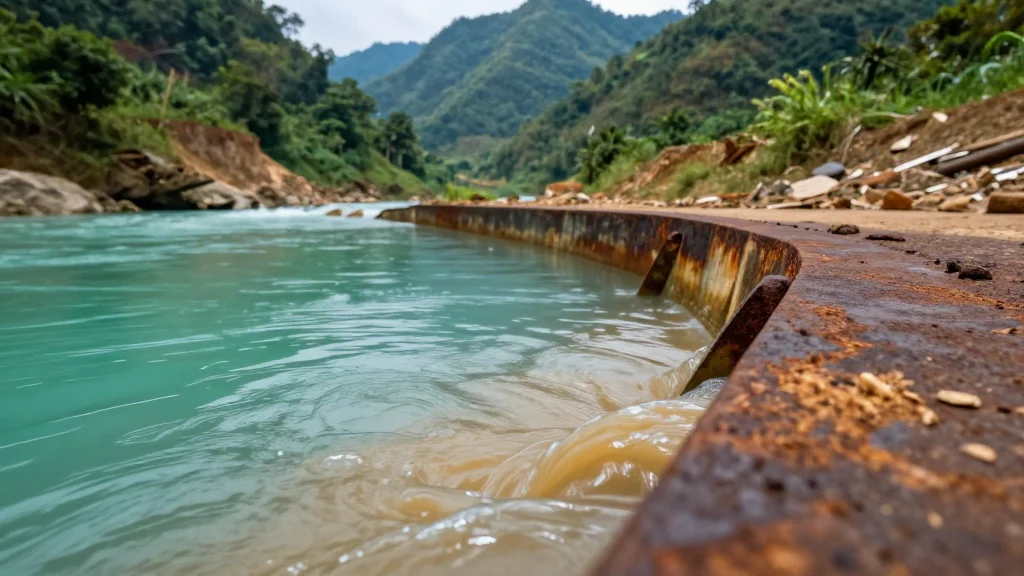
600 Thai Residents Walk 68 Km to Demand Action on Heavy‑Metal River Pollution From Mining

Why It Matters
The protest spotlights a hidden but escalating environmental disaster that threatens the health of millions across the Mekong River Basin. Heavy‑metal contamination can cause chronic illnesses, reduce agricultural productivity, and undermine food security, especially for low‑income farmers who already earn less than $150 a month. Moreover, the crisis illustrates how unregulated mining in conflict‑prone Myanmar can generate cross‑border externalities, challenging Thailand’s ability to protect its own water resources without regional cooperation. If left unchecked, the pollution could trigger broader social unrest, strain public‑health systems, and erode confidence in governmental capacity to manage transnational environmental risks. Beyond immediate health impacts, the situation raises strategic questions about Southeast Asia’s reliance on critical‑mineral extraction for global supply chains. As demand for gold, rare‑earths and other minerals surges, the region faces a trade‑off between economic gains and environmental stewardship. The Thai peace walk may catalyze stricter oversight of mining practices, encouraging both governments and multinational buyers to prioritize responsible sourcing and invest in cleaner extraction technologies. The outcome will influence not only local livelihoods but also the broader geopolitical dynamics of the Mekong basin, where water security is increasingly intertwined with economic development and regional stability.
Key Takeaways
- •600 residents marched 68 km from Tha Ton to Chiang Rai over six days, ending on World Environment Day.
- •Heavy‑metal levels (arsenic, mercury, cadmium) in Kok, Sai, Ruak and Salween rivers exceed safety thresholds.
- •A June 2026 health survey of 424 residents showed 70% altered water use and spent up to $80/month on clean water.
- •Stimson Center identified 2,675 mines in SE Asia; 843 are in the Mekong Basin, with ~33% opened in the last 2.5 years.
- •Protesters demand a bilateral task force with Myanmar, real‑time water monitoring, and emergency clean‑up funding.
Pulse Analysis
The Thai peace walk marks a rare convergence of grassroots activism and trans‑border environmental governance. Historically, Thailand has struggled to enforce pollution controls on upstream sources, relying on diplomatic channels that often stall amid Myanmar’s internal conflicts. The march forces Bangkok to confront a dilemma: either negotiate with non‑state actors controlling the mines—risking political legitimacy—or impose stricter import bans on minerals linked to contamination, potentially upsetting global supply chains for critical minerals.
From a market perspective, the spotlight on unregulated mining could accelerate a shift toward responsible‑sourcing certifications. Multinational electronics firms, already under pressure to audit their supply chains, may demand greater traceability from Myanmar miners, prompting a wave of investment in cleaner processing technologies or a pivot to alternative sources. In the short term, however, the protest could depress local economies dependent on mining revenues, heightening social tensions in border provinces.
Looking ahead, the success of the protest will hinge on the Thai government's response. A swift, coordinated bilateral task force could set a precedent for regional environmental cooperation, reinforcing Mekong Basin governance frameworks. Conversely, a tepid reaction may embolden further illegal mining, deepening health crises and fueling future protests. The stakes extend beyond Thailand; they touch on the broader sustainability of Southeast Asia’s mineral boom and the health of the Mekong’s 70 million‑person watershed.
600 Thai Residents Walk 68 km to Demand Action on Heavy‑Metal River Pollution from Mining
Comments
Want to join the conversation?
Loading comments...