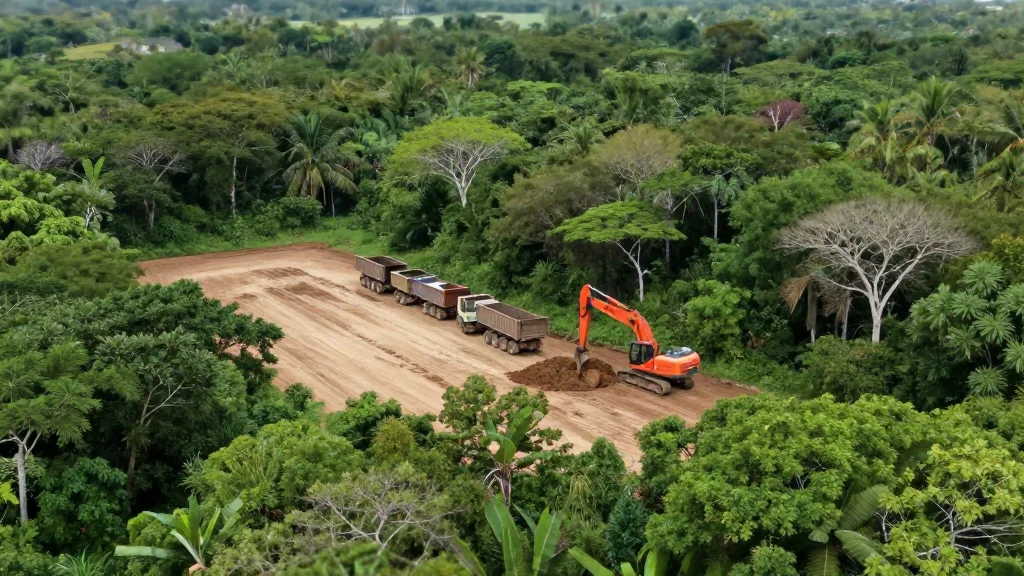
African Mine Infrastructure Triggers 34‑Times More Deforestation Than Mines Themselves

Why It Matters
Deforestation linked to mining infrastructure threatens Africa’s biodiversity, water security and climate mitigation potential. Forest loss accelerates carbon emissions, erodes soil, and disrupts livelihoods of local communities, compounding the social conflicts already tied to extractive industries. For global manufacturers and investors, the hidden environmental impact raises ESG risks and could trigger stricter regulations or consumer backlash if supply chains are not cleaned up. The study also reframes the narrative around the green‑energy transition. While renewable technologies rely on African minerals, the environmental cost of extracting those minerals could offset climate benefits unless mitigated. Transparent reporting and robust land‑use policies will be essential to align mineral supply with sustainability goals.
Key Takeaways
- •34 hectares of forest cleared for every hectare of active mine site (2001‑2020).
- •187,000 hectares of forest lost – an area comparable to Mauritius.
- •Mining extraction in Africa has quadrupled since 1970; demand may rise 40‑fold by 2040.
- •Cobalt and copper mines cause the highest deforestation rates.
- •Study calls for expanded environmental impact assessments that include off‑site infrastructure.
Pulse Analysis
The Sheffield study punctures a blind spot in the mining‑green‑energy equation: the off‑site footprint of roads, settlements and ancillary land use. Historically, ESG frameworks have focused on tail‑pipe emissions and direct site contamination, but satellite‑derived data now makes it possible to quantify the broader ecological cost. This creates a new lever for investors—who can demand granular, location‑specific disclosures—as well as for regulators, who can tighten land‑use permitting processes.
In practice, the findings could reshape financing terms for African mining projects. Multilateral development banks and sovereign wealth funds may start to embed deforestation caps into loan covenants, similar to the forest‑conservation clauses already used in palm‑oil financing. Companies that pre‑emptively adopt zero‑deforestation road‑building standards could gain a competitive edge, securing premium contracts with automakers and tech firms under increasing pressure to certify clean supply chains.
Looking ahead, the challenge will be translating satellite insights into enforceable policy. Many African states lack the technical capacity to monitor vast, remote mining corridors, and corruption can blunt enforcement. International partnerships—perhaps leveraging the UN‑REDD programme or the World Bank’s Forest Carbon Partnership—could provide the necessary technical and financial support. If successful, the sector could shift from a model of unchecked expansion to one where mineral extraction coexists with forest stewardship, preserving the very ecosystems that underpin long‑term economic resilience.
African Mine Infrastructure Triggers 34‑Times More Deforestation Than Mines Themselves
Comments
Want to join the conversation?
Loading comments...