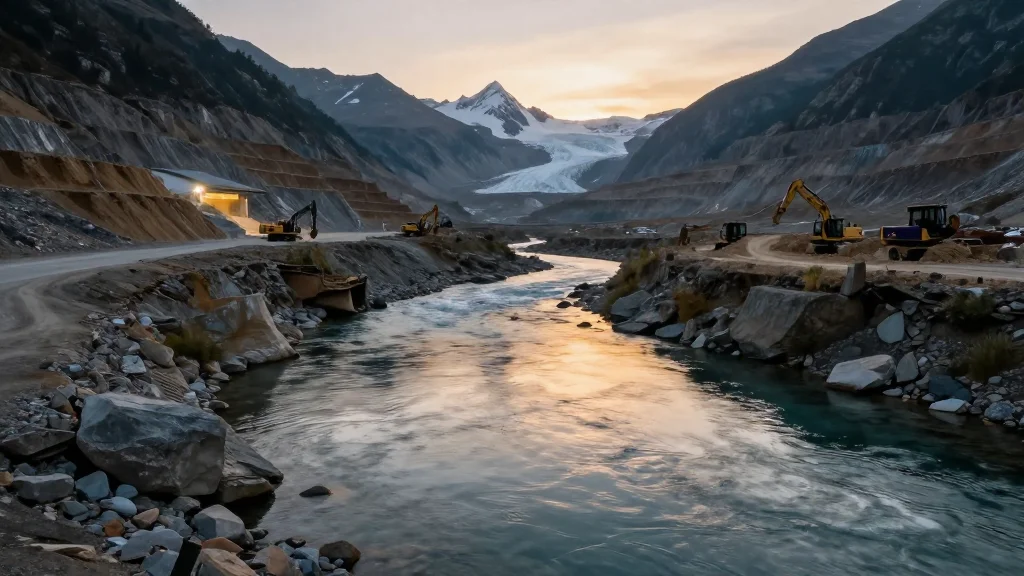
Alaska Senator Reignites Mining Dispute that Could Complicate Canada's Critical Minerals Strategy
Companies Mentioned
Why It Matters
The row injects geopolitical risk into North America’s critical‑mineral supply chain, potentially slowing projects that are vital for clean‑energy and defence objectives. Investors and policymakers must now weigh political pressure alongside technical approvals.
Key Takeaways
- •Senator Sullivan demands formal US‑Canada consultation on BC mining impacts
- •Golden Triangle projects face potential permitting delays despite existing approvals
- •No scientific evidence links BC mines to Alaska water contamination
- •US critical mineral investments total over $60 million, but tied to environmental conditions
- •Dispute adds political risk to North American critical mineral supply chain
Pulse Analysis
The Golden Triangle, a 1,500‑kilometre‑northwest stretch of British Columbia, has become a focal point for Canada’s critical‑minerals push, hosting projects such as Eskay Creek, Kerr‑Sulphurets‑Mitchell and Galore Creek. Senator Dan Sullivan’s recent letters to Prime Minister Justin Trudeau and senior U.S. officials revive a decade‑long cross‑border debate over the Taku, Stikine and Unuk rivers, which flow from B.C. into Alaska. While provincial and federal permits have been secured, Sullivan argues that existing safeguards are insufficient, demanding formal consultation and stricter reclamation bonding. The move reflects broader U.S. concerns about downstream impacts on fisheries, drinking water and Indigenous subsistence, even though independent studies have found no measurable contamination from modern mines.
For investors, the political flare‑up introduces a new layer of uncertainty. Mining analyst Marcus Giannini notes that while financing for projects remains robust, any shift in permitting timelines or the introduction of additional cross‑border oversight could erode confidence. The Canadian government has earmarked nearly $4 billion for its Critical Minerals Strategy and is launching a $2 billion sovereign fund that can take equity stakes, signaling strong domestic commitment. Yet the U.S. has linked its own $60 million‑plus defence‑related co‑investments to environmental performance, suggesting future capital could be conditioned on meeting stricter standards. Companies operating in the region must now navigate not only technical reviews but also the diplomatic currents that could affect project economics.
The dispute underscores the delicate balance between securing a reliable supply of copper, gold, lithium and other critical elements and maintaining trans‑border environmental trust. As the Canada‑U.S.‑Mexico trade framework evolves, policymakers on both sides will need to reconcile divergent regulatory philosophies without jeopardising the joint goal of decarbonisation and defence readiness. A pragmatic approach—leveraging existing bilateral monitoring programs while addressing legitimate community concerns—could defuse tensions and keep the Golden Triangle on track as a cornerstone of North America’s clean‑energy future.
Alaska senator reignites mining dispute that could complicate Canada's critical minerals strategy
Comments
Want to join the conversation?
Loading comments...