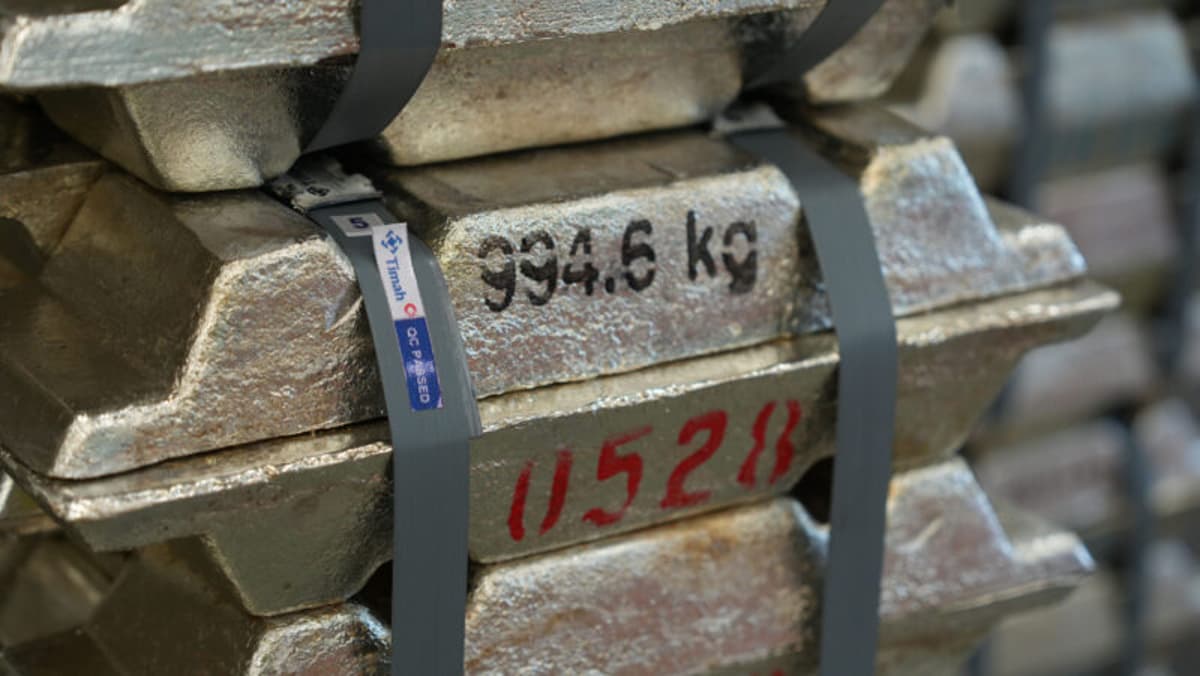
Alphamin Says Tin Price Sustainable as Stars Align

Why It Matters
Alphamin’s strong earnings and dividend potential highlight tin’s emerging role as a critical input for AI‑driven hardware, offering investors a cash‑rich exposure to a market with a structural supply deficit. The price stability supports higher margins for miners and signals continued demand from the tech sector.
Key Takeaways
- •Tin price doubled to $60k/ton, now stabilizing near $48k.
- •Supply gap deepens as Myanmar output fades and Indonesia cuts production.
- •Alphamin projects $158m Q4 earnings and a substantial year‑end dividend.
- •Mine output steadies at ~5,000t per quarter for next 6‑7 years.
- •Exploration budget limited to $10‑20m annually, extending mine life uncertain.
Pulse Analysis
The tin market has entered a rare alignment of supply constraints and demand drivers, pushing prices from roughly $30,000 per tonne in January to a peak near $60,000 and settling around $48,000 today. Weakness in the U.S. dollar has added a speculative lift, but the core shortage stems from the collapse of Myanmar’s artisanal output and Indonesia’s decline from 80,000t to about 50,000t in recent years. At the same time, semiconductor and AI‑related hardware demand is rising, reinforcing a structural floor for tin prices above $40,000 per tonne.
South‑African‑listed Alphamin, a DRC‑based tin producer, is set to report a record‑breaking quarter with earnings estimated at $158 million, largely driven by the price surge. The company maintains a steady output of roughly 5,000 tonnes per quarter and plans to sustain that level for the next six to seven years, barring major exploration success. Management signals a “fat” dividend once year‑end results are released, noting that exploration spend will be modest—$10‑20 million a year—so cash flow remains robust.
Investors should view Alphamin as a relatively low‑cost, cash‑generating play in a market where tin is increasingly tied to high‑tech manufacturing. The firm’s limited JSE float—about 1 % of shares—means liquidity is thin, but the dual listing in Toronto offers broader access. Risks remain, including geopolitical instability around the Bisie mine and the uncertainty of extending the mine’s life through exploration. Nonetheless, with a structural supply deficit and growing semiconductor demand, the outlook for tin and for Alphamin’s dividend profile appears durable.
Alphamin says tin price sustainable as stars align
Comments
Want to join the conversation?
Loading comments...