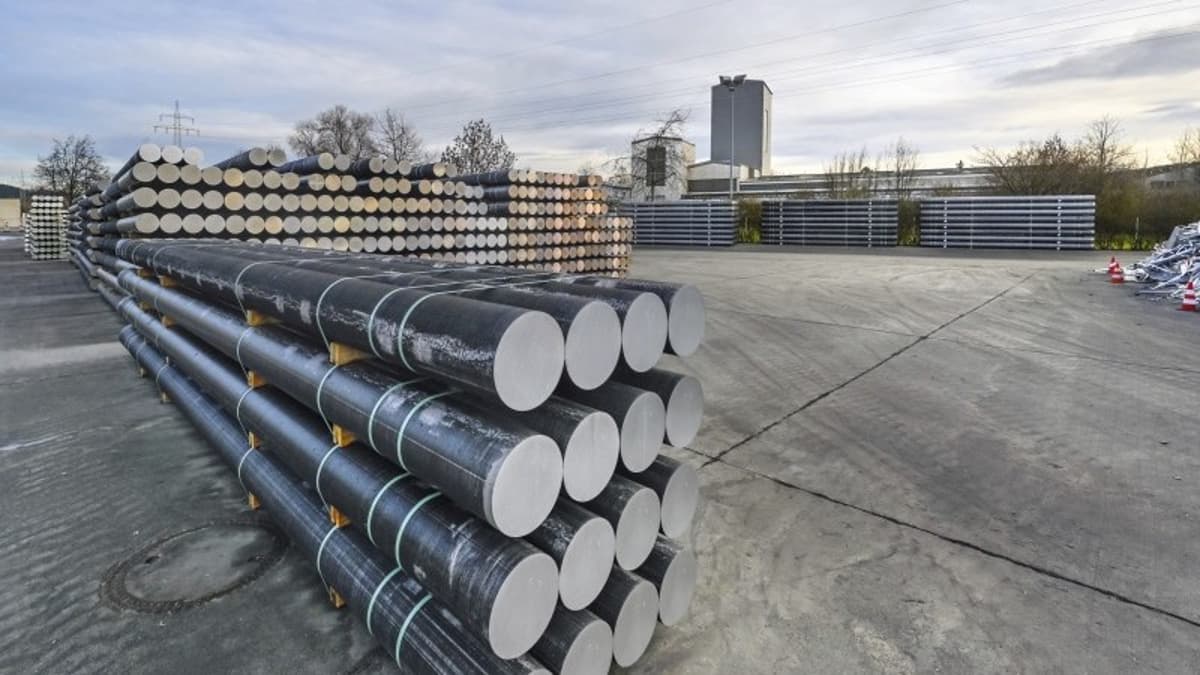
Aluminium Deficit Persists Despite Easing Middle East Tensions
Companies Mentioned
Why It Matters
The persistent deficit keeps aluminium prices elevated, affecting downstream manufacturers and investors who rely on stable metal costs. Understanding the supply‑demand imbalance is crucial for strategic sourcing and risk‑management decisions in the metals sector.
Key Takeaways
- •Global aluminium deficit forecast at 1.8 million tonnes this year.
- •Middle East conflict removed ~3 million tonnes of production capacity.
- •Chinese exports rose 15%‑16% YoY but cannot close the gap.
- •Indonesian new capacity adds only 0.5‑0.8 million tonnes, insufficient.
- •LME stocks down ~40% YTD, keeping price support near $3,500/t.
Pulse Analysis
The recent US‑Iran memorandum of understanding and the extended cease‑fire have eased geopolitical anxieties that once loomed over the aluminium supply chain. While the risk of sudden shipping disruptions through the Strait of Hormuz has receded, the underlying fundamentals remain unchanged: the Middle East conflict has permanently sidelined about three million tonnes of primary aluminium output. This loss translates into a projected 1.8‑million‑tonne global deficit for the year, a gap that cannot be bridged quickly because smelters require months and capital to restart idle plants.
China’s export surge has provided a temporary cushion, with shipments climbing 15% in April and 16% in May, driven by a widening price premium between domestic and international markets. However, Chinese producers are already operating near the government‑imposed 45 million‑tonne capacity ceiling, limiting further output expansion. Meanwhile, Indonesia’s nascent projects are expected to add only 0.5‑0.8 million tonnes, far short of the shortfall. The combined effect is a market still constrained by tight physical supplies, even as inventory levels at the London Metal Exchange have slumped roughly 40% since the start of the year.
For market participants, the implication is clear: price support is likely to persist despite the easing of geopolitical risk. LME aluminium futures are projected to hover around $3,500 per tonne in the third quarter and $3,400 in the fourth, reflecting limited downside risk as inventories remain low. Companies dependent on aluminium—such as automotive, aerospace, and packaging firms—should anticipate continued cost pressure and consider hedging strategies. Investors, meanwhile, can view the metal’s tight fundamentals as a potential catalyst for sustained premium pricing, underscoring the importance of monitoring supply‑side developments and policy shifts in key producing regions.
Aluminium deficit persists despite easing Middle East tensions
Comments
Want to join the conversation?
Loading comments...