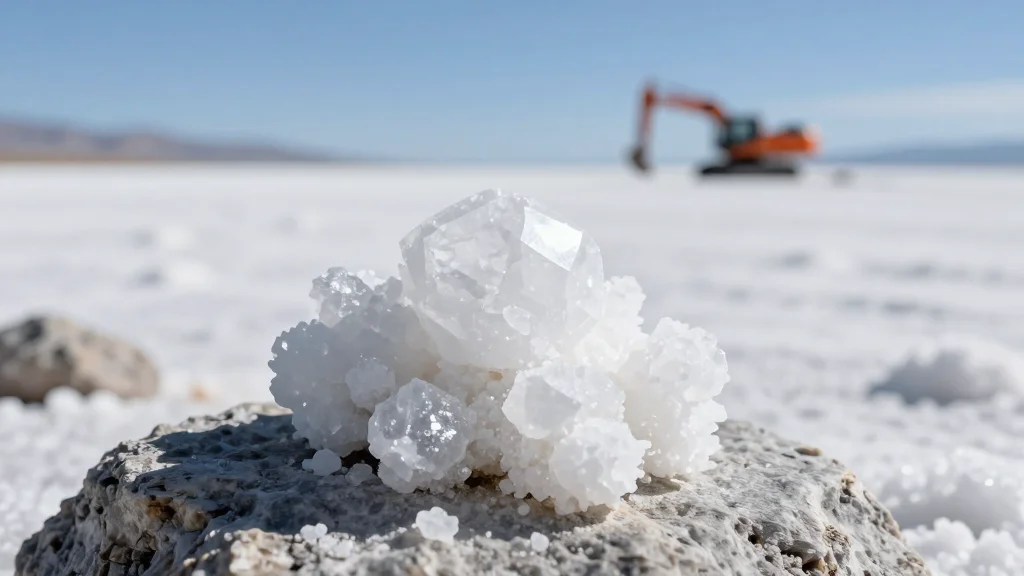
Argentina to Start 8 New Lithium Projects by 2030
Companies Mentioned
Why It Matters
The capacity surge positions Argentina as a top global lithium supplier, bolstering the supply chain for electric‑vehicle batteries and reinforcing the country's economic diversification. The Rigi incentives lower entry barriers, attracting foreign capital and accelerating the region’s transition to a lithium powerhouse.
Key Takeaways
- •Argentina will double lithium capacity to 409,000 t LCE by 2030
- •Eight greenfield projects will add 305,000 t LCE of new capacity
- •Rio Tinto's Rincón will be the country's largest single lithium project
- •Rigi incentive regime offers tax breaks and 30‑year legal stability
Pulse Analysis
Lithium demand is soaring as automakers and energy storage firms chase greener power sources, and Argentina is poised to become a central supplier. By 2030 the nation expects to host 409,000 tonnes of lithium carbonate equivalent capacity, a 157% jump from 2023 levels. This expansion is driven by a wave of greenfield projects that tap the country’s vast salt‑flat brine resources, offering a low‑cost, high‑grade feedstock that competes with Chile and Australia. The influx of capital, estimated at $14 billion for Rigi‑approved ventures, underscores the strategic importance of South America in the global battery value chain.
The eight new projects feature a mix of established miners and newcomers. Rio Tinto’s Rincón, slated for 2028, will add 60,000 t/yr LCE, making it the largest single Argentine operation. Meanwhile, Galán’s 8,000 t/yr Hombre Muerto West and Rio Tinto’s 15,000 t/yr Sal de Vida illustrate the tiered rollout strategy, with several projects slated for 2029‑2030. Joint ventures such as Revotech‑Xizang’s Sal de Los Ángeles and Ganfeng‑Lithium Argentina’s PPG consortium bring Asian capital and expertise, diversifying ownership and fostering technology transfer. Participation in the Rigi regime grants tax holidays, import‑export exemptions, and a 30‑year guarantee against policy reversal, making Argentina an attractive jurisdiction for long‑term mining investments.
The broader market impact is significant. An additional 305,000 t/yr LCE of installed capacity could ease supply constraints that have driven lithium prices to historic highs, potentially stabilizing costs for battery manufacturers. Moreover, the legal certainty offered by Rigi may encourage further foreign direct investment, spurring job creation and regional development. However, ramp‑up timelines and environmental considerations remain challenges; brine projects often take years to reach full output. If Argentina can navigate these hurdles, it will solidify its status as a linchpin in the transition to electric mobility and renewable energy storage.
Argentina to start 8 new lithium projects by 2030
Comments
Want to join the conversation?
Loading comments...