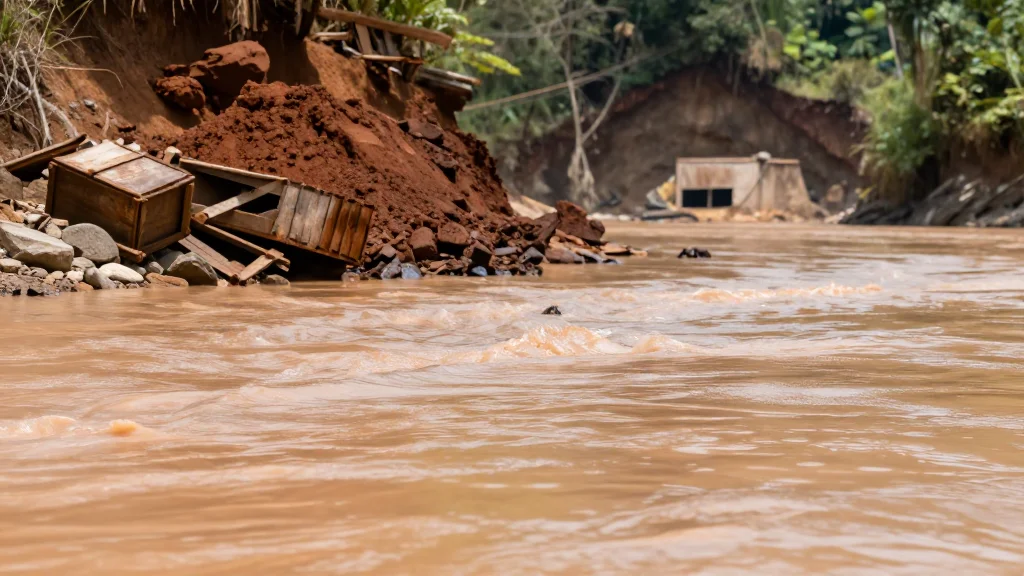
Arsenic Spike in Salween River Tied to 127 Myanmar Mines, Threatening Thailand’s Border Communities

Why It Matters
The arsenic contamination of the Salween River illustrates how unregulated mining in conflict zones can generate transboundary environmental crises, directly endangering public health and local economies. For Thailand, the river is a vital source of food and livelihood; the contamination threatens food security and could strain cross‑border relations with Myanmar, where armed groups control much of the mining activity. On a broader scale, the episode spotlights the hidden costs of the global rush for critical minerals. As governments and corporations chase rare‑earth supplies for AI, EVs and renewable energy, the Salween case may accelerate calls for stricter environmental standards, traceability mechanisms, and international cooperation to ensure that the green transition does not come at the expense of vulnerable communities.
Key Takeaways
- •Independent testing in Sep 2025 found arsenic levels in the Salween River above safe limits
- •Stimson Center identified 127 suspected mines in the Myanmar‑Thai Salween basin (2016‑2026)
- •28 mines opened since 2023; 5 are in‑situ leaching rare‑earth operations
- •Thai authorities warned against eating Salween fish, citing health risks
- •Mining is driven by demand for AI, EV and renewable‑energy minerals, raising supply‑chain scrutiny
Pulse Analysis
The Salween arsenic episode is likely to become a flashpoint in the emerging debate over responsible sourcing of critical minerals. Historically, mineral booms in Southeast Asia have been accompanied by weak regulatory oversight, especially in areas controlled by non‑state armed groups. The current data—127 suspected mines, many operating clandestinely—suggests that the environmental externalities of the rare‑earth rush are already materializing.
From a market perspective, buyers of rare earths are increasingly pressured by ESG investors to certify that their inputs do not cause cross‑border pollution or human‑rights abuses. The Salween case could catalyze a shift toward third‑party verification and greater reliance on mines in jurisdictions with stronger governance, potentially reshaping supply‑chain dynamics for high‑tech manufacturers. Companies that pre‑emptively adopt traceability tools may gain a competitive edge as downstream customers demand cleaner inputs.
Politically, the incident adds another layer to the already complex Myanmar‑Thailand relationship. With the United Wa State Army and other factions controlling mining sites, any unilateral Thai action—such as stricter import bans on fish or demands for environmental remediation—could be perceived as interference, risking escalation. Conversely, joint monitoring initiatives could serve as confidence‑building measures, aligning public‑health goals with broader regional stability. The trajectory of diplomatic engagement will likely determine whether the Salween’s contamination remains a localized health issue or evolves into a broader geopolitical challenge.
Arsenic Spike in Salween River Tied to 127 Myanmar Mines, Threatening Thailand’s Border Communities
Comments
Want to join the conversation?
Loading comments...