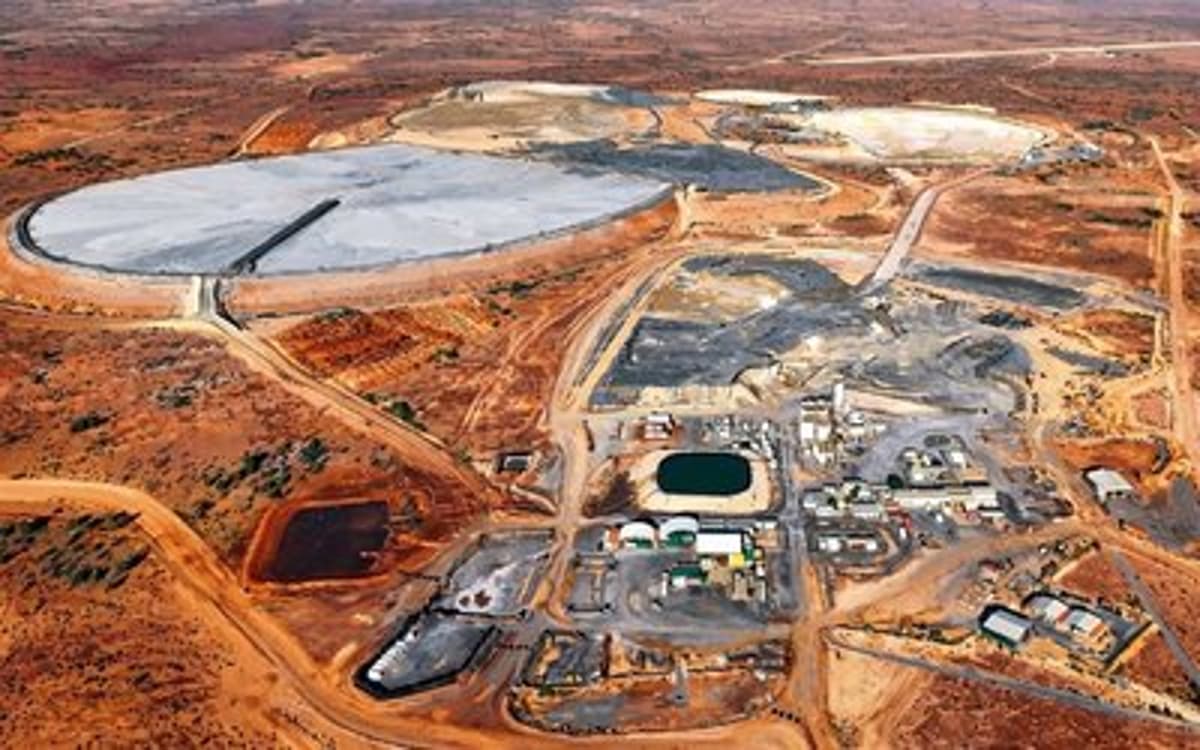
Barton Gold Extends Near-Surface Mineralisation at Challenger Project
Why It Matters
The expanded near‑surface resource lowers capital risk for a staged restart, providing a near‑term feed source while deferring costly underground development. It also positions Barton to extend the life of its fully permitted Challenger operation and enhance shareholder value.
Key Takeaways
- •New assays extend near‑surface mineralisation near Central Gawler Mill
- •Challenger 3 shows 6 m @ 4.46 g/t Au, indicating larger resource
- •South‑Southwest results boost confidence in consistent gold grades
- •DFS targets low‑risk, near‑surface feed to restart operations
- •Planned tailings reprocessing and new pits could extend mine life
Pulse Analysis
Barton Gold (ASX: BGD) is leveraging fresh assay data to reshape the economics of its Challenger project, a historic gold mine in South Australia. The latest reverse‑circulation drilling across the Challenger South‑Southwest deposit and the Challenger 3 target revealed multiple near‑surface intersections with grades exceeding 4 g/t Au, a significant uplift from the baseline resource. By confirming mineralisation close to the Central Gawler Mill, the company can envision new satellite open pits that tap existing processing infrastructure, dramatically reducing the capital outlay typically required for greenfield development.
The implications for resource classification are equally compelling. While Challenger 3 has yet to be modelled under JORC 2012 standards, the breadth and depth of the new intercepts suggest a viable maiden resource that could augment the existing 313,000‑ounce estimate published in September 2025. Compared with other Australian gold projects, the near‑surface grades and shallow depth profile position Challenger as a low‑cost, high‑margin operation, especially when paired with the planned re‑processing of tailings from storage facility 1. This dual‑feed strategy—combining high‑grade tailings with fresh open‑pit ore—offers a flexible feed mix that can be scaled as market conditions evolve.
Strategically, the data underpin a definitive feasibility study focused on a staged, three‑to‑four‑year restart that avoids the technical complexities of underground mining. By prioritising near‑surface extraction, Barton can generate cash flow sooner, fund further exploration at regional assets such as Tarcoola and Wudinna, and potentially extend the mine’s life well beyond its current horizon. The market is likely to view these developments as a de‑risking catalyst, supporting a stronger valuation narrative for Barton Gold as it moves toward operational restart and resource expansion.
Barton Gold Extends Near-Surface Mineralisation at Challenger Project
Comments
Want to join the conversation?
Loading comments...