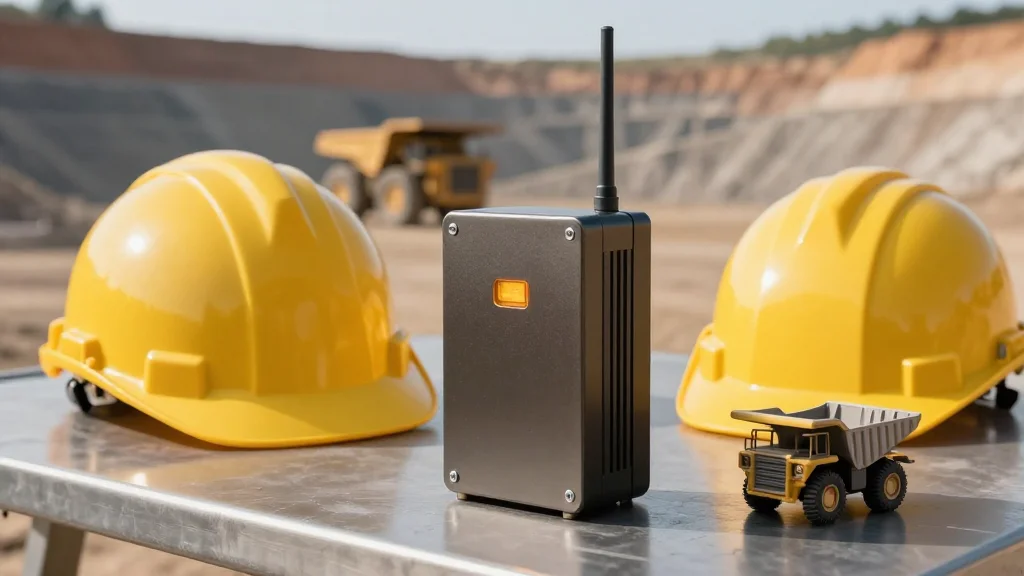
Beyond Line of Sight: How Private 5G Powers Remote Mining at Scale
Why It Matters
Private 5G transforms mining by delivering the reliable, high‑throughput connectivity essential for safety‑critical remote control and future autonomous fleets, directly lifting productivity and reducing operational risk.
Key Takeaways
- •Private 5G cut Wi‑Fi trailer repositioning time by 50%
- •Coverage achieved with six towers versus dozens of Wi‑Fi units
- •Dozing capacity rose 50% after 5G deployment at Cadia
- •Remote operators control equipment from safe locations, reducing exposure
- •5G serves as strategic platform for future autonomous mining
Pulse Analysis
Mining sites have long wrestled with the limits of Wi‑Fi, which struggles to span the kilometers of open‑pit operations and to survive the harsh, temperature‑extreme environments of remote mines. The technology’s reliance on movable trailers creates frequent dead zones, forcing crews to pause production while they chase signal. Private 5G, built on dedicated spectrum and industrial‑grade hardware, offers a purpose‑engineered solution: wide‑area coverage, sub‑millisecond latency, and the bandwidth needed for high‑definition video and sensor streams. By consolidating connectivity into a few robust radio towers, operators can eliminate the logistical overhead of dozens of Wi‑Fi units and keep critical systems online around the clock.
The proof points from Newmont’s global deployments illustrate how private 5G can be scaled across diverse geographies. In Papua New Guinea’s Lihir mine, cellular nodes allowed technicians to relocate equipment away from geothermal hot spots, dramatically reducing exposure to extreme temperatures while preserving network reliability. At Mexico’s Peñasquito, six towers replaced a fleet of mobile Wi‑Fi trailers, delivering seamless coverage across a sprawling open‑pit layout and cutting infrastructure costs. These pilots validated that a lean tower architecture can sustain high‑throughput, low‑latency links even in rugged terrain, laying the groundwork for more sophisticated remote‑control and autonomous applications.
At Cadia Valley, the transition to private 5G unlocked immediate operational gains. Eliminating connectivity‑related downtime enabled a 50 % increase in dozing output, and the network’s capacity now supports plans to expand from two to seven remote‑controlled dozers, plus drills and haulers. Beyond the productivity boost, the technology reframes wireless as a strategic asset rather than a cost center, providing the digital foundation for computer‑vision guidance, real‑time telemetry, and fully autonomous fleets. As the mining sector accelerates its shift toward smart‑mine ecosystems, private 5G will likely become a prerequisite for any operation seeking to balance safety, efficiency, and long‑term competitiveness.
Beyond line of sight: How private 5G powers remote mining at scale
Comments
Want to join the conversation?
Loading comments...