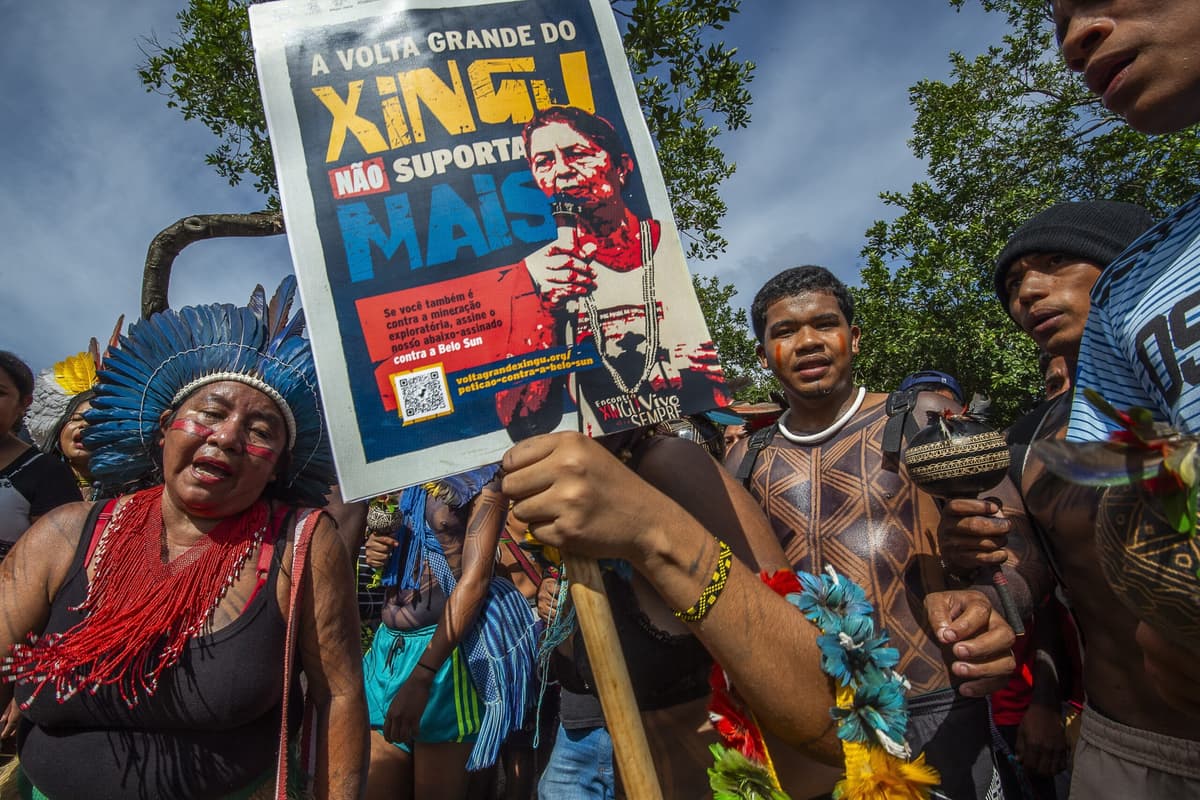
Brazilian State Greenlights Deforestation for Contested Open-Pit Gold Mine
Why It Matters
The approval pits regional economic ambitions against federal environmental safeguards and Indigenous rights, creating regulatory uncertainty that could delay a multi‑billion‑dollar mining venture. The outcome will signal how Brazil balances Amazon protection with resource extraction, influencing investor confidence and ESG standards globally.
Key Takeaways
- •Pará approved clearing ~600 hectares for Belo Sun gold mine.
- •Indigenous groups protest, claim inadequate consultation under international treaty.
- •Federal agencies challenge state approval, citing jurisdiction over rivers and Indigenous lands.
- •Mine targets 6.3 t gold yearly for 17 years, with massive tailings dam.
- •License bans Xingu water withdrawal, leaving water sourcing unclear.
Pulse Analysis
Brazil’s Amazon region continues to be a flashpoint where economic development and environmental stewardship clash. The Pará state secretariat’s recent greenlight for Belo Sun’s open‑pit gold operation underscores a growing trend of sub‑national authorities granting permits that may overstep federal jurisdiction, especially concerning waterways like the Xingu River that are constitutionally protected. This jurisdictional tug‑of‑war not only fuels legal battles but also raises questions about Brazil’s ability to enforce consistent environmental policy across its vast territory.
Indigenous opposition is intensifying as communities argue that the consultation process violated the United Nations Declaration on the Rights of Indigenous Peoples. The proposed tailings dam, capable of holding 35 million cubic metres of waste, threatens to contaminate rivers with mercury and other heavy metals, jeopardizing the livelihoods of the Juruna, Xikrin, Xipaia, Arara and Parakanã peoples. With the license explicitly prohibiting water extraction from the Xingu, the company’s lack of a clear, sustainable water‑sourcing plan further amplifies concerns over irreversible ecological damage.
From a business perspective, the project’s viability hinges on navigating these legal and social hurdles. Investors are increasingly scrutinizing ESG risks, and prolonged litigation could erode the projected returns from the 6.3 tonnes of annual gold output. Moreover, the global gold market is sensitive to supply disruptions, meaning any delay or cancellation could ripple through commodity prices. The case will serve as a barometer for how multinational extractors manage community consent and environmental compliance in high‑risk jurisdictions, shaping future investment strategies in the mining sector.
Brazilian state greenlights deforestation for contested open-pit gold mine
Comments
Want to join the conversation?
Loading comments...