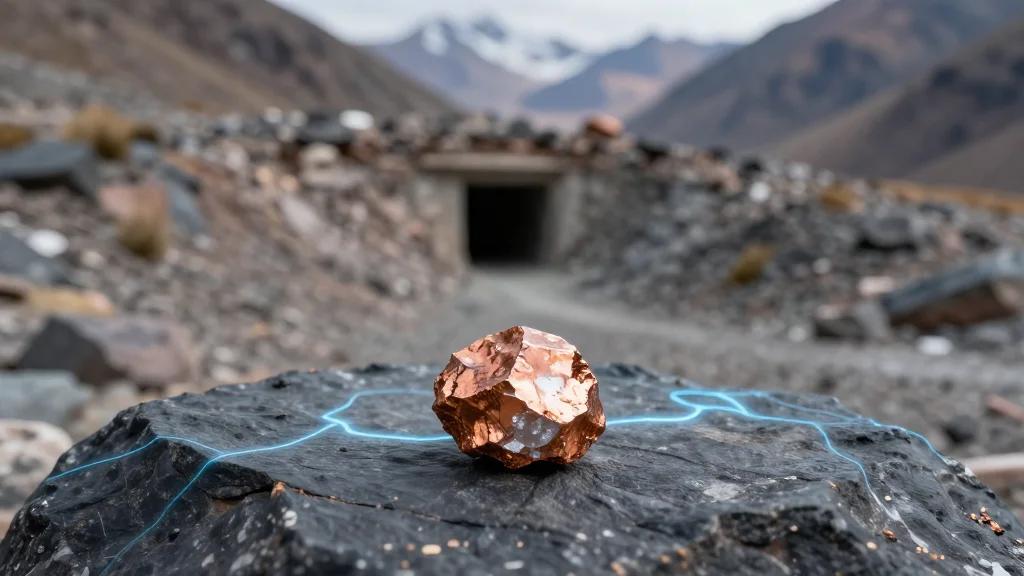
Chile Senate Introduces Bill to Regulate Lithium, Copper and Rare Earths

Why It Matters
Chile accounts for roughly 30% of global copper production and is a leading lithium exporter, making its policy choices pivotal for the supply chains that power electric vehicles, renewable‑energy storage and high‑tech devices. By formalizing a critical‑minerals regime, the country can lock in a competitive advantage, attract downstream investment, and meet the traceability demands of ESG‑focused buyers. The bill also reflects a broader trend where resource‑rich nations are redefining mineral governance to protect strategic assets amid rising geopolitical rivalry. How Chile balances regulatory rigor with investment friendliness will serve as a template for other jurisdictions seeking to modernize extractive industries without stifling growth.
Key Takeaways
- •Five cross‑party senators introduced the critical‑minerals bill on May 7, 2026.
- •The proposal creates a special legal regime covering extraction, processing, traceability and operational continuity.
- •Existing mining legislation remains unchanged; the new framework adds targeted oversight.
- •Bill is currently in the constitutional stage and under review by the Senate’s Mining and Energy Committee.
- •If passed, the law could boost Chile’s attractiveness to battery and tech manufacturers seeking secure, traceable supplies.
Pulse Analysis
Chile’s move to codify a critical‑minerals regime arrives at a moment when global demand for lithium, copper and rare earths is accelerating faster than supply. Historically, Chile’s mining sector has thrived under a stable, investor‑friendly legal framework that emphasized extraction over processing. The new bill represents a strategic pivot: by embedding traceability and encouraging domestic value‑addition, Chile aims to capture more of the economic upside that currently flows to downstream processors in Asia and Europe.
The political composition of the bill’s sponsors—spanning centrist and right‑leaning senators—suggests a rare consensus on the need for policy evolution. This bipartisan backing could smooth the legislative path, but the real test will be in the details. Over‑regulation could raise compliance costs, potentially slowing new projects at a time when the sector needs capital to meet the energy‑transition surge. Conversely, a well‑calibrated framework could unlock financing from ESG‑focused funds that demand transparent supply chains.
Regionally, Chile’s initiative may pressure Argentina to accelerate its own regulatory reforms, especially as Argentina projects $32.7 billion in lithium and copper exports over the next decade. The competition could spark a South American “critical‑minerals race,” prompting both countries to vie for processing facilities, technology partnerships and export contracts. Investors should monitor the bill’s progression through the Senate, the specific standards it eventually adopts, and the response from major mining firms operating in Chile, as these factors will shape the country’s role in the next wave of the global minerals supply chain.
Chile Senate Introduces Bill to Regulate Lithium, Copper and Rare Earths
Comments
Want to join the conversation?
Loading comments...